Community Corner
Reef Check Fdn. Volunteer Divers Check Health of CA Reefs, Make a Difference as Citizen Scientists
Oct. 2nd GALA at Jonathan Club Honors Julie Packard, Ed Begley, + Citizen Scientist of Year
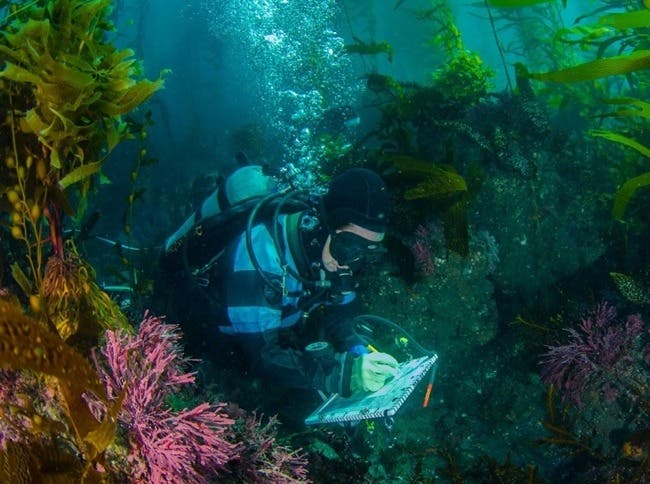
John Manos builds houses during the week, but on summer weekends he drops his construction tools, dons his wetsuit and scuba gear and transforms into an underwater citizen scientist for the Reef Check Foundation. “I want to do what I can to make sure our beautiful kelp forests and fish are here for my grandkids,” says Manos.
Citizen science is a growing movement in the United States, and Reef Check (now in 90 countries) was founded to train volunteers to track the health of coral reefs and the beautiful rocky reefs and kelp forests found in California. Calm, clear warm waters during the Fall months allow Reef Check divers to complete most of the annual reef surveys used to track the condition of California’s reef ecosystems at 80 reefs from San Diego to Fort Bragg. The data are analyzed, and results are displayed online for the public and provided to the California Dept. of Fish & Wildlife to help better manage California’s network of over 130 new or modified Marine Protected Areas. Reef Check’s most recent report on California’s reef ecosystems showed just how low populations of some fish species had declined compared to the 1970s, but also indicated recovery of some species following the establishment of the marine parks during the past 15 years.
Reef Check trains 250 divers per year in California alone through its EcoDiver Training Courses that are offered throughout the summer in a half dozen coastal cities. The volunteer divers are trained to identify, count and in some cases measure 70 key indicator species that include shellfish such as lobster and abalone, fish such as cabezon and kelp bass, and of course the famous California algae such as giant kelp.
Find out what's happening in Pacific Palisadesfor free with the latest updates from Patch.
According to Reef Check’s Director Dr. Gregor Hodgson, “By training volunteer scuba divers in marine biology and organizing reef surveys, we save taxpayers millions of dollars, and provide an educational and fun experience.”
California’s 1000 mile-long coastline is world famous for beaches and scenery, but just offshore, there is an underwater world that rivals Yosemite and Big Sur for beauty and biodiversity. Because these natural wonders are underwater, most people can’t see them, and so this treasure trove of marine life is often underappreciated. Unfortunately, the state’s decades-long growth in population, coastal development, pollution and fishing has placed increasing demands on these near-shore resources. Many organisms that were previously common in high numbers, such as abalone, are now almost gone in Southern California and fish abundance is down in the north.
Find out what's happening in Pacific Palisadesfor free with the latest updates from Patch.
“Many of us enjoy surfing, diving, and eating seafood,” says Manos, “I like the opportunity to appreciate what the ocean does for us and to give back.”
Reef Check’s annual benefit gala will be on Oct. 2nd at the Jonathan Club in Santa Monica, CA. The evening’s honorees include Julie Packard, marine biologist and Executive Director of the Monterey Bay Aquarium; Ed Begley Jr., actor, director and environmentalist; and volunteer diver David Horwich, who will receive the Citizen Scientist of the Year Award for his participation in the Reef Check California program since 2007. For more information on sponsorship and tickets, please visit http://www.reefcheck.org/events/gala2014/, or call 310-230-2371.
Contact Reef Check to become a volunteer diver. Monitoring season has begun, with dives coming up in Malibu, Ventura (the Channel Islands), Dana Point, and more across California.