Politics & Government
TAP-‘Make it Legal to Build’ on YIMBY Movement–Remove Supply Barriers!
Robert Cruickshank-'The Yes In My Backyard or YIMBY movement believes solving housing shortage entails removing impediments to adding supply


It is important on several levels for people on whatever side of the political fence they may be to consider what those on the other side of the fence are saying and 'feeling.' The American Prospect (TAP) is a self-proclaimed progressive publication, meaning, they lean left and would tend to favor Democratic politics. That said, in this politically independent writer’s experience, some on the left are more like classical liberals as opposed to be farther left Marxists, Socialists, fascists, or Communists. As this writer mentioned recently, on perhaps 70 percent of the issues that face every day Americans, an authentic (vs. faux) consensus between the left and right is possible, but it requires a level of patience, thought, and understanding.
With any soul, including yourself, we must be prepared to apply the ancient wisdom of separating the proverbial wheat from the chaff. People error. Sometimes we recognize our own error(s) and seek to correct, privately or publicly.
In Part I, much of what Robert Cruickshank wrote last month for TAP under the Make It Legal to Build topic is provided. Note that agreement on some things doesn't imply agreement on everything or other topics, history, etc. of Cruickshank.
Find out what's happening in Lakelandfor free with the latest updates from Patch.
As is the custom of this series, more on YIMBY vs. NIMBY related as well as other topics are considered in Part II.
Let me borrow from Cruickshank's closing paragraph: "The YIMBY movement stands ready to help turn bills like this into law, at the federal and state level. But without overcoming zoning codes that limit where this housing can be built, these bills and the strong support for housing supply...will founder on the same rocks of NIMBY obstruction that created the country’s housing shortage in the first place."
Find out what's happening in Lakelandfor free with the latest updates from Patch.
Make It Legal to Build
The Yes In My Backyard, or YIMBY, movement believes that solving the housing shortage entails removing impediments to adding supply.
by Robert Cruickshank | December 11, 2024
This article is part of a Prospect symposium on tackling the housing crisis in America.
This summer, the pro-housing, pro-cities Yes In My Backyard (YIMBY) movement won over the highest levels of the Democratic Party to our solutions for the country’s spiraling housing crisis. Former President Barack Obama said in his speech at the Democratic National Convention, “If we want to make it easier for young people to buy a home, we need to build more units—and clear away some of the outdated laws and regulations that made it harder to build homes for working people in this country.”
Vice President Kamala Harris made similar statements in her own speech to the DNC, vowing to “end America’s housing shortage.” In North Carolina a few days earlier, Harris said, “In many places … it’s too difficult to build, and it’s driving prices up … We will take down barriers and cut red tape, including at the state and local levels. And by the end of my first term, we will end America’s housing shortage by building three million new homes and rentals that are affordable for the middle class.”
Without solving the underlying shortage, regulators and prosecutors will always be chasing the bad actors.
MHProNews commentary. The thrust of Robert Cruickshank's remarks are on the surface quite right. The problem here is that he fails to mention that 25 years ago, Congress took up the affordable housing supply and zoning barriers issue. Legislation was passed that addressed zoning barriers and affordable housing supply. Despite strong bipartisan support that included then Senator Joe Biden (DE-D), neither during the Obama-Biden (D) years, nor during the Biden-Harris (D) years were those regulatory tools put to work. In fairness, nor were they put to work as intended during the Bush-Cheney (R) years, nor during the Trump-Pence (R) years.
So, Cruickshank can correctly say what Obama and Kamala Harris said, but that doesn't mean that either of them were consistent with their behavior. It is curious that politicans act as if they didn't have years to do what they talk about doing at some point in the future. That's potential paltering, or worse.
More on that below, but that said, let's pivot back to Cruickshank's narrative via The American Prospect (TAP).
YIMBYs had already been gradually winning the argument in the lower levels of the Democratic Party before Obama and Harris came aboard. And not only Democrats have embraced this agenda. In fact, YIMBY legislation at the state level in Montana, Washington, and even California passed in large part due to Republican votes, sometimes when Democrats could not provide the votes to pass it in state legislatures where their party was in the majority.
MHProNews notes: Give Cruickshank credit. He has frankly said that Republicans helped get deals done on removing zoning barriers for a more YIMBY stance when numbers of Democrats failed to do so. This writer for the Patch previously shared on MHProNews and on the Patch this video from liberal Johnny Harris for the left-leaning New York Times. Johnny Harris frankly called Democrats out for hypocrisy. When no Republicans stood in their way, on housing and other 'equality' or 'equity' issues, Democratic states often trailed Republican ones. So, Cruickshank is correct to argue for YIMBY over NIMBY. But his presentation is arguably missing key facts.
Back to Cruickshank's narrative via TAP.
Yet despite these successes, there is a long way to go toward changing the patterns of land use and housing markets in most of the country’s cities and states. Housing costs remain high, and only a handful of locations have implemented the true YIMBY agenda of making it legal to build the housing that people want to rent or buy.
Harris’s defeat in the November election is unlikely to cause Democrats to turn away from a YIMBY agenda. Instead, state and local Democrats will need to double down on housing abundance in order to address cost-of-living concerns, as well as stop the loss of voters fleeing high-cost blue states for low-cost red states.
MHProNews comments. Cruickshank is again, right and wrong. Yes, YIMBY and building more is necessary. But it is often Democratic areas and Democratic politicos that have caused the very problem that he is describing.
TAP and Cruickshank used a photo of a accessory dwelling unit (ADU) to help illustrate his article and make his point. For more on that, see the more detailed report linked below.

https://www.manufacturedhomeli...
Back to Cruickshank's narrative via The American Prospect (TAP).
Supply and Demand Matter
At the heart of the YIMBY argument is the recognition that decades of deliberate policies to limit the supply of housing have caused housing to become scarce and expensive. YIMBYs believe that elected officials can end the affordability crisis by changing housing laws at the state and local level to enable more homebuilding.
In January, Sen. Elizabeth Warren (D-MA) explained the simple logic behind this conclusion. “America is in the middle of a full-blown housing crisis. There are a lot of ways to measure it, but I’ll start with the most basic: We are 7 million units short of what we need to house people. What can we do? Increase the housing supply. It’s plain old Econ 101.”
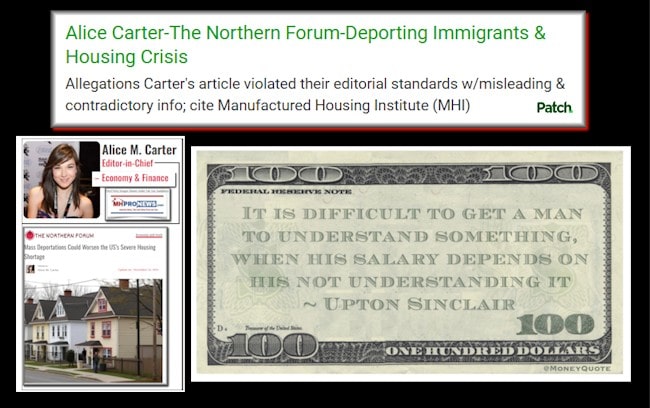
MHProNews comments. Cruickshank and Senator Warren are again, right and wrong. Yes, we need to build millions of units. Yes, we should have barred illegals from crossing into the U.S. that made the housing crisis worse. Yes, we need to encourage those souls to return to their native nations or another one, while still building millions of more units. That was looked at in more depth in the article posted below.
https://patch.com/florida/lake...
Back to Cruickshank's narrative via TAP.
Evidence from cities that have made it easier to build new housing bears out Warren’s statement. Minneapolis is a notable example. Since 2009, the city has pursued many policy proposals core to the YIMBY agenda: making it easier to build multifamily housing, eliminating parking minimums, allowing taller buildings near transit stops, and more. This work culminated in Minneapolis 2040, which eliminated single-family zoning across the city.
As a result, Minneapolis built more housing and stopped the relentless rise in rents and prices. According to Pew, “From 2017 to 2022, Minneapolis increased its housing stock by 12% while rents grew by just 1%. Over the same period, the rest of Minnesota added only 4% to its housing stock while rents went up by 14%.”
Austin, Texas, is another supply success story, with rents falling 9.5 percent between June 2023 and June 2024. While other Sun Belt cities saw rents decline, Austin’s was the largest drop, and market observers attributed it to new supply.
MHProNews tends to agree, but more on that linked below.
Back to Cruickshank's narrative via TAP.
These supply-driven declines also help contextualize monopolistic practices that capitalize on a housing shortage. In August 2024, the U.S. Department of Justice sued RealPage, a consulting and software firm that allegedly violated antitrust laws by collecting competitively sensitive data from all landlords within a metro area and feeding it into algorithms to fix rent prices higher. “Americans should not have to pay more in rent simply because a company has found a new way to scheme with landlords to break the law,” said Attorney General Merrick Garland when filing the suit.
MHProNews tends to agree. In fact, we spotlighted that very case in the reports linked below.

https://www.manufacturedhomepr...
This next one look similar, but is a different report on the same topic above posted on the Patch.

https://patch.com/florida/lake...
Back to Cruickshank's narrative via TAP.
Most YIMBYs support enforcing the law against bad actors. YIMBYs also point out that housing shortages empower these illegal practices, and that RealPage is preying on, not causing, a housing crisis. Without solving the underlying shortage, regulators and prosecutors will always be chasing the bad actors, rather than preventing it in the first place by building more homes.
MHProNews tends to agree, and this is one of his stronger points. This Cruickshank statment ought to be shouted from the rooftops: "housing shortages empower these illegal practices...Without solving the underlying shortage, regulators and prosecutors will always be chasing the bad actors, rather than preventing it in the first place by building more homes.
Give the man 4 or 5 stars for his points above.
Back to Cruickshank's narrative via TAP.
Sometimes these bad actors will openly admit that their profits depend on a lack of housing supply. Blackstone, one of the nation’s largest private equity owners of rental housing stock, routinely uses the housing shortage as a selling point to its investors.
The Blackstone Real Estate Income Trust (BREIT) touted on its own website in late October 2024 that “new construction starts in our key sectors are near 10-year lows, which we believe positions BREIT well for the future.” They cited a 39 percent decline in new multifamily construction starts since 2022 as further evidence. When housing is in short supply, they can charge more rent and pass along the profits to their investors. More supply, however, threatens their bottom line.
MHProNews tends to agree, but there is a point he may be missing. One of the companies in the manufactured housing industry that has arguably been taking advantage of this lack of supply Cruickshank is talking about has been Sun Communities (SUI), led by CEO Gary Shiffman. Sun is among multiple MHI members that have been sued in national class action litigation.

https://www.manufacturedhomepr...
That said, here is what Cruickshank, TAP and others may be missing. Let's start by quoting the part I'd disagree with and then explain why: "More supply, however, threatens their bottom line."
In the case of Shiffman, he admitted during an earnings call that there are times that his company could be making more profit by developing new communities instead of by acquiring existing ones.
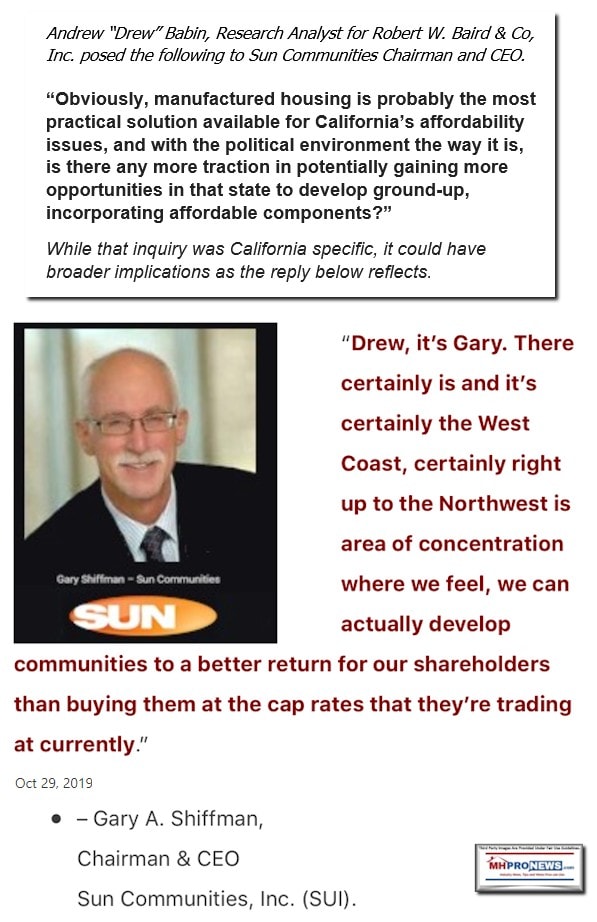
"Drew, it's Gary [Shiffman]. There certainly is and it's certainly the West Coast, certainly right up to the Northwest is area of concentration where we feel, we can actually develop communities to a better return for our shareholders than buying them at the cap rates that they're trade at currently." From a Seeking Alpha earnings call transcript. See that in full context at this link here: https://www.manufacturedhomepr...
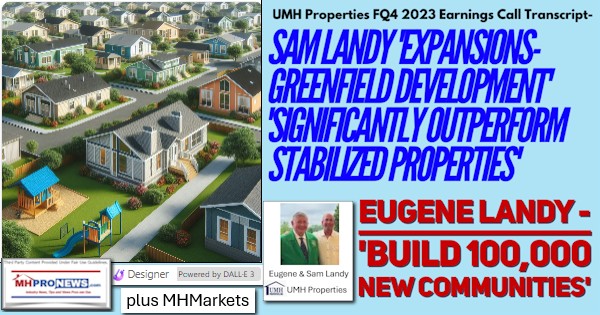
But it isn't just Shiffman who admitted that they could be making more money by developing in many areas. A fellow Manufactured Housing Institute (MHI) member of Shiffman-led Sun is UMH Properties (UMH). Sam and Eugene Landy lead UMH. They said during an earnings call last year that their years of experience demonstrate that more developing is more profitable. They made the argument that the number of land-lease communities should be tripled, and that they want to be involved in that developing.
https://www.manufacturedhomepr...
More on Landy and Shiffman below, but first, let's pivot back to Cruickshank's narrative via TAP.
Supply, demand, and illegal price-fixing are well known to anyone who has had to evacuate their home to escape a hurricane. The supply of hotel rooms and gasoline along the interstate that leads away from the storm zone is limited. There are always more evacuees than there are hotel rooms to accommodate them. Anyone price-gouging should be prosecuted, but that’s cold comfort to the tired family that already had to keep driving when they couldn’t afford a place to stay.
Governments can’t predict with certainty where hurricanes will strike in the future. But they can easily predict the locations of housing demand, and can proactively meet it with new supply.
MHProNews tends to agree, so, let's pivot back to Cruickshank's narrative via The American Prospect (TAP).
The Revolution Won’t Save Us
Critics of the YIMBY movement often charge that the real problem is that housing has become a commodity, rather than a human right, and that new supply will simply be commodified into unaffordability. The experience of Minneapolis and other cities described above suggests that new supply really does help housing become more affordable. Yet the experience of the Soviet Union, where housing was a human right, shows that supply and demand still exists outside of capitalism, and that a housing crisis will still result when supply is inadequate.
MHProNews tends to agree, and commends his point. Back to Cruickshank's narrative via TAP.
When an item is in short supply, access to it will be rationed somehow. In capitalist countries, it is rationed by ability to pay. In the Soviet Union, it was rationed by access to power and privilege. According to a recent study of Soviet housing policy, “demand greatly exceeded supply. As a result, price rationing was replaced by waiting lists and administrative decision-making.”
Anyone connected to political power, such as Communist Party members, or workers in industries like defense that were prioritized by the government, could find housing for their families. Workers in industries that did not receive priority, such as consumer goods, were put on wait lists of ten years or more. In the meantime, Soviet workers were housed, and they did not live on the streets. But they often lived one family to a bedroom in a two- or three-bedroom apartment, in substandard and dilapidated conditions.
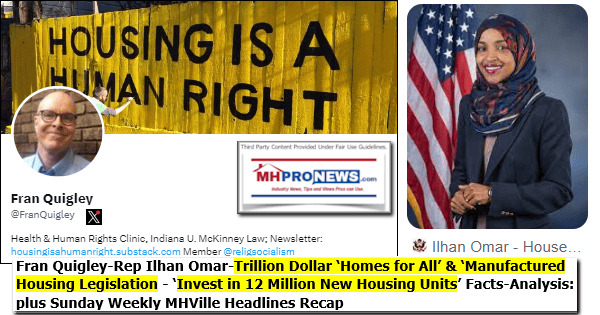
MHProNews tends to agree, give the man 4 or 5 stars for the above. Note that Cruickshank is essentially debunking a typical socialist argument, perhaps the kind used by thinkers like attorney Fran Quigley. That is a possible difference between a liberal and a more socialist-minded leftist.
See also the Johnny Harris NYT video posted above. Back to Cruickshank's narrative via TAP.
With demand outstripping supply and the absence of a formal market, informal and illegal ways of obtaining housing spread rapidly. Bribery, threats, and other forms of corruption were common.
MHProNews says: sad but true. 5 stars for the above. Back to Cruickshank's narrative via TAP.
Not until Nikita Khrushchev took power in the 1950s did the Soviet Union embark upon a major housing construction effort. But this did not fully meet public demand. The lack of housing eroded public confidence in the Soviet system, particularly in Eastern Europe. Families looked to the capitalist West and saw housing abundance, at least in the 1970s and 1980s.
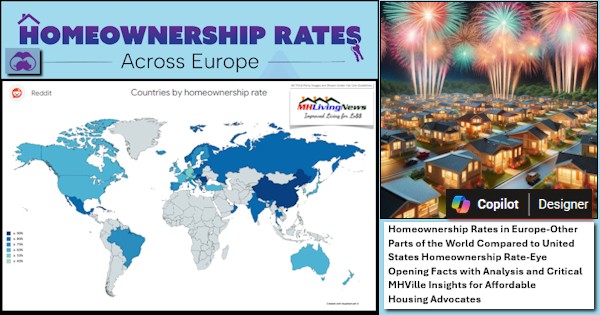
MHProNews note: if someone looks at several former Iron Curtain/Warsaw Pact nations, they often have a higher rate of home ownership today than the U.S. does.
https://www.manufacturedhomeli...
Back to Cruickshank's narrative via TAP.
When he became leader, Mikhail Gorbachev pledged to build enough homes so that every family could have their own apartment by the year 2000. But the Soviet Union collapsed and Gorbachev was ousted from power before this could be achieved.
MHProNews tends to agree. But this can also be viewed through this lens: governments of all kind make promises that all-too-often aren't kept. Sometimes that is paltering, sometimes it is incompetence, corruption, or other factors.
Back to Cruickshank's narrative via The American Prospect (TAP).
In Whose Backyard?
As YIMBYs increasingly find political and policy success here in the United States, battles continue over where new housing should be built. Opponents claim to support additional housing supply, only “not in my backyard.” For example, NIMBYs in Minneapolis have won injunctions in lower courts against the city’s 2040 plan, though an appellate court lifted an injunction earlier this year.
Nowhere is this battle more deeply contested than California. The Golden State’s housing shortage stems from overtly segregationist policies of the past, including zoning changes in the 1960s and 1970s after the end of legal housing discrimination that made it difficult to build multifamily housing near the coast. As a result, California’s sprawl accelerated, intensifying class and racial segregation.
Priced out of owning or renting homes near coastal job centers in Silicon Valley or Los Angeles, service workers regularly drive several hours every day from inland cities such as Stockton and San Bernardino. Many of these workers are Latino and Black. Those residents who can afford to live near the coast are predominantly white. As the state’s climate heats up, more Californians are unable to afford naturally cooler coastal locations, and are increasingly pushed into hotter, drier regions that are also more vulnerable to wildfire.
MHProNews note. Some liberals and many leftists think that climate change is a real thing. There is good evidence that suggests otherwise. There isn't consensus, there has been an attempt to silence opposing views. If the oceans were seriously rising, why did Barack Obama (D) and Joe Biden (D) buy ocean front properties?


https://www.manufacturedhomepr...
See also the video posted by Johnny Harris via that New York Times op-ed. Back to the Cruickshank narrative via TAP.
“Today, true access to the coast—which also means the opportunity to live on the coast—is very limited unless you are a rich person,” said Assemblymember David Alvarez (D) to The Sacramento Bee earlier this year. Alvarez represents low-income Latino cities in coastal San Diego County, and has become embroiled in a battle with the state’s powerful Coastal Commission over where new housing can be built near California’s beaches.
Alvarez and other legislators, along with groups such as California YIMBY (where I work), have encountered persistent opposition from the Coastal Commission in efforts to make it easier to build low-income and middle-income multifamily housing in the state’s Coastal Zone, even when environmentally sensitive and natural areas are excluded and protected.
Alvarez proposed a bill (AB 2560) that would have allowed developers to build denser, multifamily buildings in the urbanized areas of the Coastal Zone, in exchange for setting units aside for low-income residents. Strong opposition from the Coastal Commission and their allies in the state legislature led Alvarez to withdraw that bill shortly before the legislative deadline this August.
Despite this setback, YIMBYs have won other victories to make it easier to afford living on the coast. In 2024, legislators passed SB 1123, making it easier to build starter homes in existing urban single-family zones. This bill was a top priority of California Community Builders, a BIPOC-led group committed to closing California’s racial wealth gap.
Bills like SB 1123, as well as YIMBY-backed bills that enabled California’s boom in accessory dwelling units—small homes, like a backyard cottage, built on existing single-family properties—are also effective at allowing homeowners, small builders, and others with smaller amounts of capital to add to the housing supply, striking a blow against the monopolization of large-scale homebuilding.
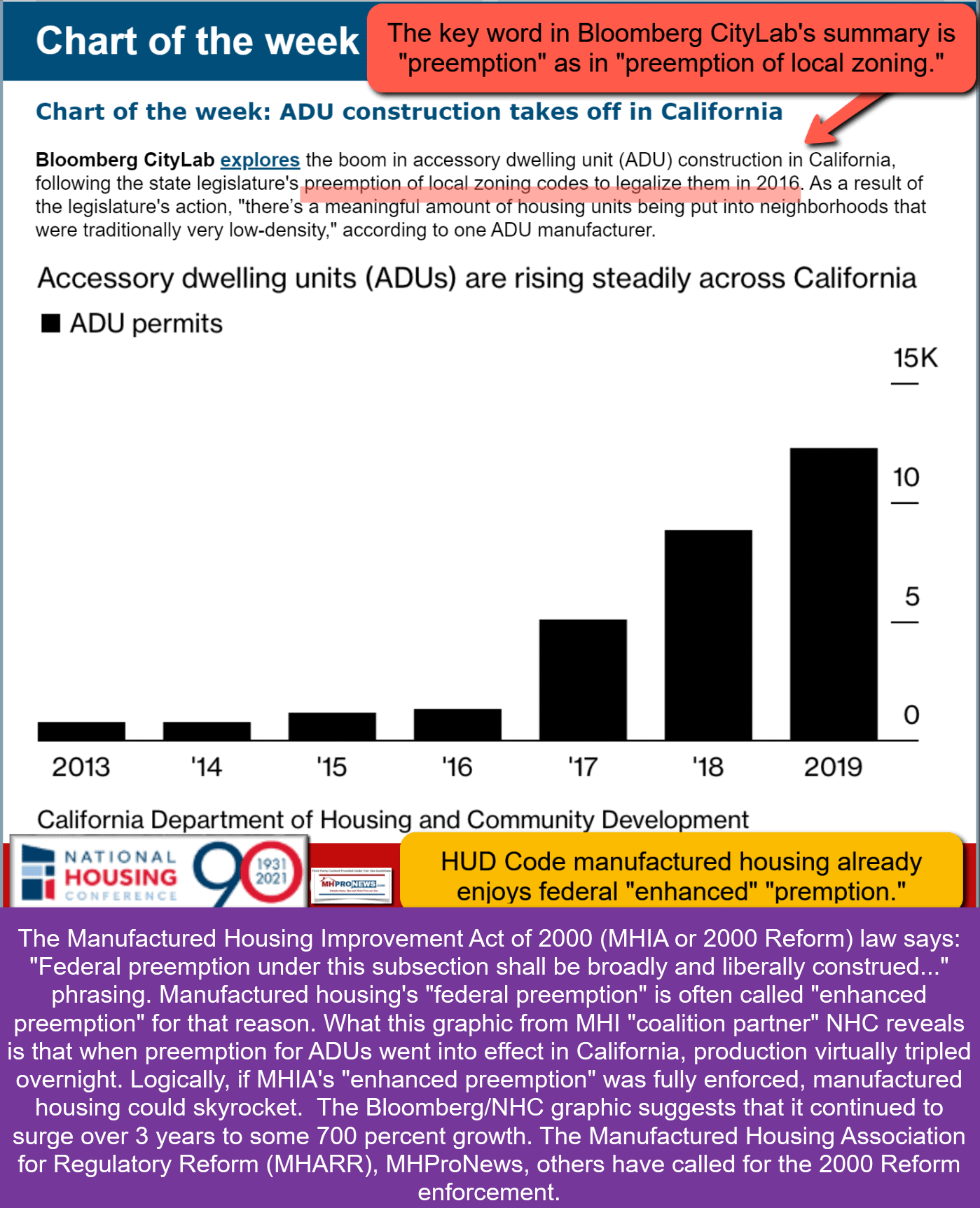
MHProNews note: not to go too deply into those weeds, but what the ADU boom is often attributed to is statewide preemption. Here is how the arguably left-leaning National Housing Conference (NHC) put it, citing left-leaning Bloomberg.
Cruickshank could have saved hundreds of words by pointing more specifically to state (or potentially, federal) preemption over local housing barriers. PREEMPTION is the point that ought to be hammered away on. More on that further below.
One of several things that Cruickshank and others miss in that orbit may miss is that while Biden-Harris (D) were in office, the legal (and moral) argument for the Affirmatively Furthering Fair Housing (AFFH) rule languished. Blacks, Asians, Hispancs asked for that AFFH be enforced. They got...silence.

https://www.manufacturedhomeli...
To borrow Johnny Harris' argument, it smacks of Democratic hypocrisy. Back to the Cruickshank narrative via TAP.
These battles don’t just matter for privately funded development. Restrictive zoning rules in cities up and down California’s coast also limit where publicly funded affordable housing can be built. These restrictions, as well as high permitting fees, also drive up the cost of land and construction.
MHProNews note: four or five stars for the high permitting fees observation. Back to Cruickshank's narrative via The American Prospect (TAP).
In July, Sen. Warren and dozens of colleagues proposed a major housing bill that includes reforming the estate tax to fund a federal subsidy for affordable-housing construction. Her bill also includes “incentives for local governments to eliminate unnecessary land use restrictions that drive up costs,” including the costs of building the affordable housing her bill would subsidize.
The YIMBY movement stands ready to help turn bills like this into law, at the federal and state level. But without overcoming zoning codes that limit where this housing can be built, these bills and the strong support for housing supply from Obama and Harris will founder on the same rocks of NIMBY obstruction that created the country’s housing shortage in the first place.
MHProNews note. We can begin to draw this part of the analysis to a close. Cruickshank and TAP need to be able to look with more clarity at how Democrats are routinely behaving. They may say the right things on several occasions, but when given the opportunity to do what is required, they have often failed to do so. Cruickshank himself pointed to that earlier above when he said that in some places, it is Republican votes that helped get zoning reform over the finish line.
What Cruickshank (at least, not here) didn't clearly acknowledge is that Democratic fingerprints (along with some Republicans too) are on the history of zoning discrimination motivated by racial prejudice for well over a century. In modern times, Democrats are often adept at creating or fostering a problem, and then effectively saying: 'Hey! Here is a problem big government can solve!' But they may play that tune without clearly acknowledging their own role in creating that problem.

https://www.manufacturedhomeli...
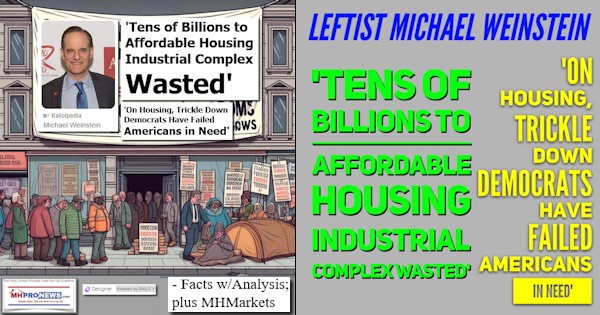
Liberal Michael Weinstein made an important point in making the case that 'tens of billions of dollars are being wasted by the affordable housing industrial complex.' That merits a close look.
https://www.manufacturedhomepr...
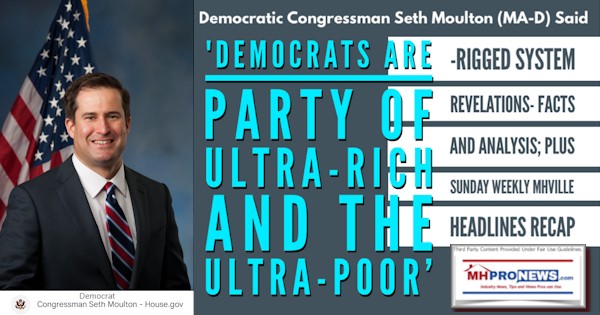
One more point to the left vs. right side of this debate before going back to the key topic of preemption. To his credit, Rep. Seth Moulton, a former Democratic presential candidate himself, acknowledged last year that his party has drifted into a party for the wealthy and elites. The reason that some on the left either miss, or overlook, what happens while they are in power is because Democrats were favored by many on Wall Street. Wall Street is fine with politicians spitting in their eye (verbally), so long as you don't DO something about those words. See Weinstein and Quigley linked reports above and the article below for details.
Part II - Enforcing Federal Preemption and More
Robert Cruickshank's article never used the words manufactured housing, modular housing, or federal "enhanced preemption" for HUD Code manufactured homes. You can't mathematically solve the affordable housing crisis without inherently affordable homes. Details are found below. You can't create enough subsidies, which are paid by taxpayers and/or borrowing (which is paid by taxpayers) to make unaffordable housing affordable.

https://www.manufacturedhomepr...
Someone doesn't personally need to own a manufactured home in order to benefit from others owning manufactured homes. That's a topic addressed in some of the linked articles.
Cruickshank curiously mentions accessory dwelling units (ADUs) twice, but failed to mention that many ADUs are factory-built. Perhaps if he had, it may have occurred to him to look at HUD Code manufactured homes.

https://patch.com/florida/lake...
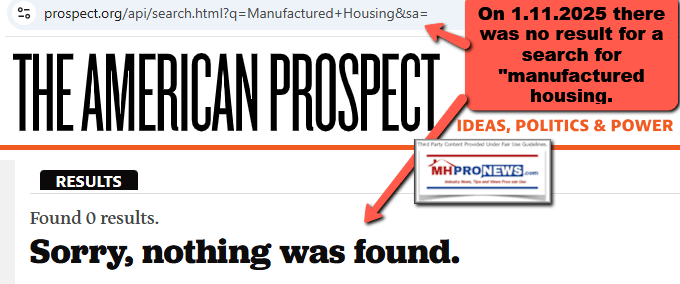
TAP on this date, per their search tool, does not mention manufactured housing. It is hard to solve the affordable housing crisis when the most affordable permanent housing isn't carefully considered.
Another article on TAP about the affordable housing crisis by Ryan Cooper similarly fails to mention manufactured homes or manufactured housing. That's a huge miss.
The Federal Reserve has been doing research on manufactured housing, much of it quite favorable. So have other researchers. The big hit on manufactured housing is often predatory behavior by certain manufactured housing brands. For the record, this writer strongly opposes predatory and corrupt behavior by corporations, public officials, or others and has long been on record for robust antitrust efforts in our industry and beyond.
https://patch.com/florida/lake...
https://patch.com/florida/lake...
In my view, TAP brings forth several interesting and important topics. We would broadly agree on the importance of increasing the supply of affordable housing and the need too for antitrust enforcement and the enforcement of other laws that protect consumer, smaller business, and employee interests.
But on the affordable housing crisis issue, Cruickshank and TAP missed some key points, as was unpacked above.

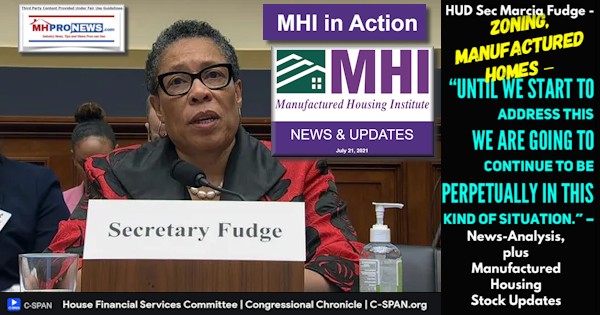
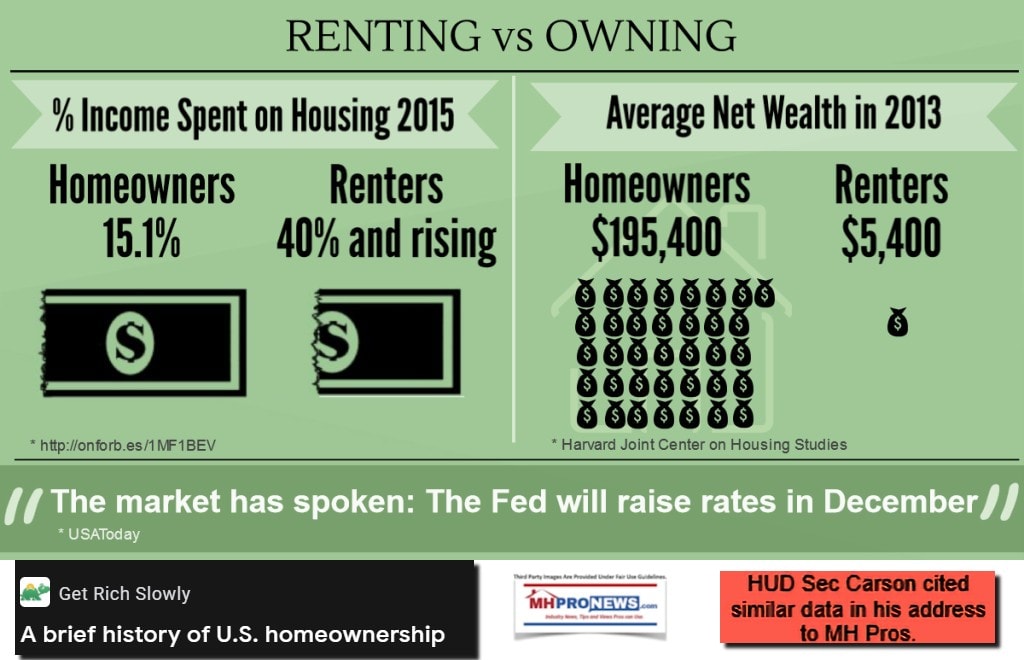
But let's draw towards a close on notes of agreement with Cruickshank. Two HUD researchers, Pamela Blumenthal and Regina Gray pointed out that zoning barriers and a lack of enough new construction are obvious contributing factors to the affordable housing crisis. The irony is that HUD is the primary regulatory of HUD Code manufactured homes, and the Biden-Harris (D) era HUD Secretary, Marcia Fudge, failed to enforce the Manufactured Housing Improvement Act of 2000's "enhanced preemption" provision, even when asked by a Congresisonal rep to do so.
https://www.manufacturedhomepr...
https://www.manufacturedhomeli...
The fastest way to get more construction is to build more manufactured homes. The fastest way to get more manufactured homes is to allow affordable housing buyers to place homes on privately owned land (that they own or buy) without high permitting costs or zoning barriers that block the placement of manufactured homes.
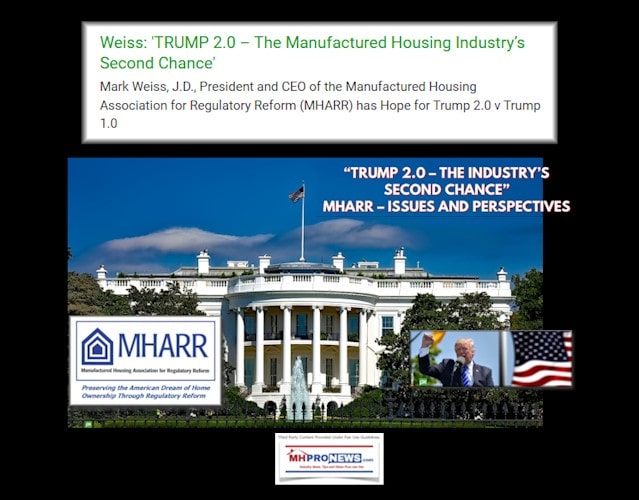
If TAP wants to have some fun, challenge the Trump Adminstration to enforce federal preemption on via the 2000 Reform Law. But if they do so, they should applaud if Trump 2.0 does as asked. See the remarks by the Manufactured Housing Association for Regulatory Reform (MHARR) at this link here or via the report posted below.
It is simple. The key notion is preemption. This ought to be about allowing housing choice.
Without more inherently affordable housing, you can't solve the affordable housing crisis. Period.
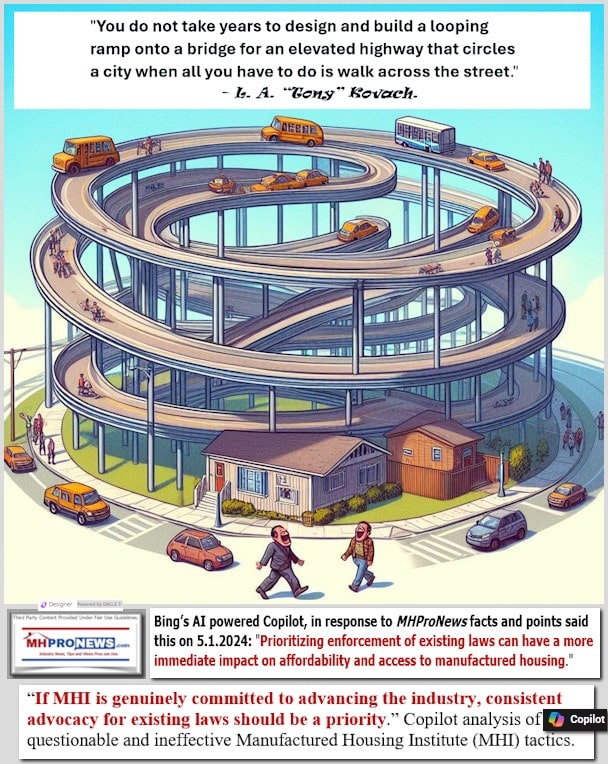
Enforcing federal enhanced preemption for HUD Code manufactured homes has the advantage that it is already law and is thus the fastest path to moving from talk about YIMBY vs. NIMBY and moving to resolution.
https://www.manufacturedhomepr...
> Niskanen Center Praises Manufactured Home ‘Cost Savings’ and ‘Quality’

----
> Unpack SBC's 'Why Self-Checkout Is No Longer Profitable for Retailers'
> LA Wildfire Disaster -What Does It Tell Us About Some in Govt Service?
> Rob Romano-Time To Declassify Everything, Or Another RussiaGate Ahead
> Contemporary Tips from Legend Paul Harvey-Surprising Rest of the Story
> Report: Biden-Harris Federal Agencies Spent Millions Torturing Cats
---
> Lesli Gooch Ph.D.-Award, Coverup, Headfake, Scandal? Rest of the Story
> ALG Unpacks Trump Pitch to Cut Drug Costs by Cutting PBM Middleman
> Is there Evidence that God Exists? Evolution vs. Intelligent Design
> Democratic Voters-Closer Look at Biden’s Acts Before Biden-Harris Exit
> Christian Leaders-Signs of 4th 'Great Awakening' Millions go to Jesus
---
> Attorney John Morgan - Democrat Megadonor on Kamala Harris Campaign
> USA Today - David Plouffe and Dem Advisers on Kamala Harris Revelation
> Majority OK Trump Transition-Mass Deportations-Tariffs- Is it Hopeful?
> Alice Carter-The Northern Forum-Deporting Immigrants & Housing Crisis
> Cartoons-Kamala Day 1, DOGE the Swamp, Brainwashing, & Out In the Cold
---
> The Creepy Line-Peter Schweizer-Dr. Jordan Peterson-Dr. Robert Epstein
> Secret State Miniseries - Fictional TV Series Shed Light on Reality
> Trump Transition Team Asked to Prioritize Affordable Housing Issues
> Top 10 States for Homelessness & Top Cities for Crime=Shocking Lessons
> WashPost-American Dream Fades But Assoc CEO Mark Weiss Shows Solution
---
> Why do Liars Lie? Why do those Engaged in Paltering and Spin Palter?
> Controversy-Manufactured Housing Institute-Lesli Gooch-Mark Bowersox
> ‘Mobile Home Values Rising Faster Than Single-Family’ House-Wow Fact$
> Realtor-What Is a Manufactured Home? The Next Step Beyond Mobile Homes
> Orlando RE Agent Smith-Younger Adults Will Need $8500 Monthly for Rent
---
> Blankley-Goodbye American Dream? Only 10% Polled Can Buy a House; But
---> Frank Rolfe-Special Interests ‘Don’t Want to Solve Affordable Housing'
----> TARK-‘I’m a Teen and Know the Solution to Affordable Housing Crisis’
--> Renting? Rent too High? Odds Are DOJ Suit vs RealPage Matters to You
> New-Certified “Half Price Homes” - Affordable Housing Solution Redux
---
> Solution: “Would-Be Homebuyers Need 80% More Income Than 4 Years Ago”
L. A. “Tony” Kovach is a publisher who has earned multiple awards in history. He and his family live in a manufactured home on private property in Winter Haven, FL. He is the co-founder of Manufactured Home Living News.com (MHLivingNews.com) and Manufactured Home Pro News.com (MHProNews.com), trade publications serving segments of the manufactured home industry. Having worked in several segments of the manufactured home industry for over 3 decades, Kovach is a widely acknowledged and often praised expert on manufactured housing. ###