Politics & Government
South Cobb State Reps Listen to Citizens' HOPE Program Concerns
After kicking off their HOPE program listening tour on Monday night, the state Dems have partnered with Republicans to support Gov. Deal's proposed HOPE program changes.


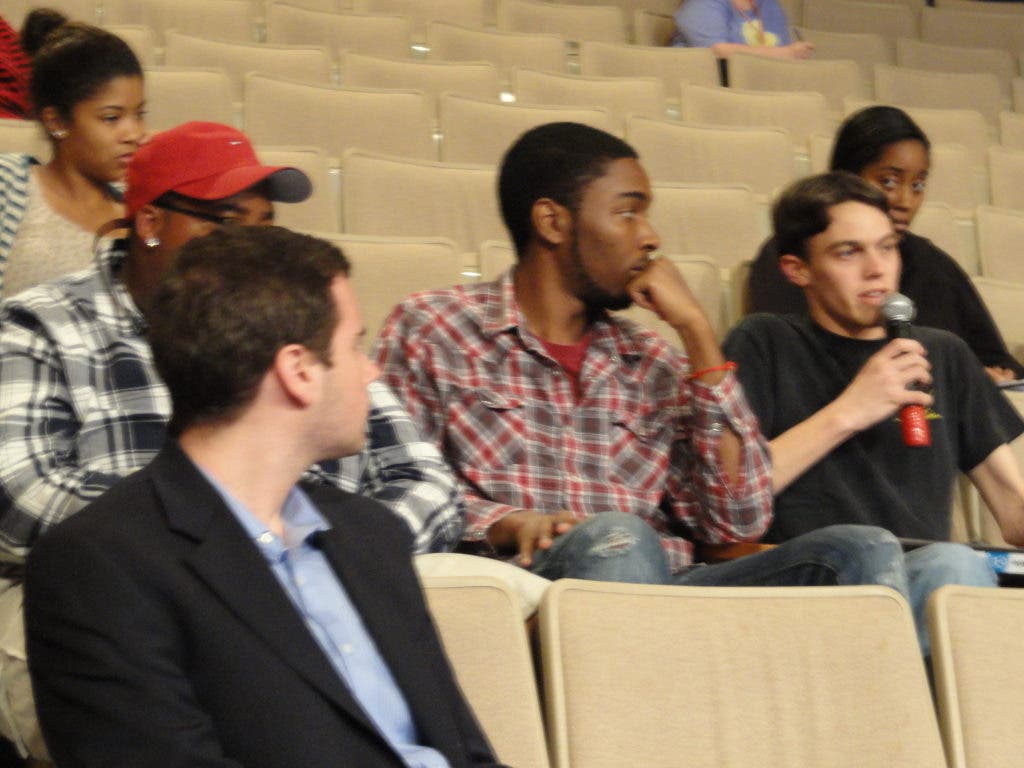


Democratic lawmakers are partnering with Republican leadership today to support changes to the HOPE scholarship program, after being encouraged by input received from their first HOPE scholarship listening tour stop on Monday night at Southern Polytechnic University in Marietta.
Georgia State Representatives, Alisha Morgan and David Wilkerson, who represent Austell and Stacey Evans who represents Smyrna, answered questions, and asked a few of their own, from about 50 educators, students and community members at the first stop on the listening tour.
In order to cut costs for the programs, Gov. Nathan Deal has proposed cuts to the HOPE and Pre-K programs, which are primarily funded by the Georgia Lottery. According to information presented to the legislature this week, HOPE will suffer a $243 million shortfall this year and is set to run through its reserves in three years or less.
Find out what's happening in South Cobbfor free with the latest updates from Patch.
Some of his proposals include paying about 90 percent of tuition instead of 100 percent, cutting Pre-K school days by two and a half hours and capping the bonuses of Georgia lottery employees.
Currently the program offers full tuition, as well as some book costs and other fees, for students who had a B average in high school and maintain at least a 3.0 average in college.
Find out what's happening in South Cobbfor free with the latest updates from Patch.
Deal said to the Associated Press that the proposed changes would preserve the program “at least for another generation.”
The majority of the nearly 50 people who showed up for the HOPE scholarship listening tour forum on Monday night at Southern Poly agreed that cuts to Pre-K programs could prove detrimental in the long run.
The listening tour is a way for the state representatives to hear directly from the people who would be affected starting this summer if the HOPE program changes are approved.
“The goal is to get the personal stories,” Wilkerson told South Cobb Patch. “We can talk all we want, but if we don’t have stories of what’s happening down there, it means a little less.”
Tunde Mobolade of Powder Springs shared his story on Monday night.
“I have a student in college, and we don’t have any HOPE,” he said. He asked the three representatives what was being done to make sure that a large chunk of the HOPE funding is not being used for remedial education.
Stephanie Valentine, an Austell resident with sons headed to college, wanted to know how the HOPE grants would be affected by the program cuts.
“Two-thousand dollars doesn’t sound like a lot, but it sure does help,” Valentine said.
Morgan said there is no current GPA requirement to receive a HOPE grant, which is different from a HOPE scholarship. However, she explained that she does not particularly think there should be one.
“If you make it too difficult, then you perhaps cut off access,” Morgan said. “I’m not ready to say, ‘let’s cut it out’ or ‘let’s limit access.’ ”
Wilkerson pointed out that there are many businesses that depend on graduates from technical schools to continue operations and provide professional services.
Many of the attendees of the forum were students, like Ivan Wills, a first semester freshman at Southern Polytechnic University and a disc jockey on the student radio station.
Wills said he is currently able to attend school because he is receiving an unsubsidized loan, and other than that has “no help at all.” He said he cannot continue to take out the unsubsidized loans because he will not be able to pay them all back.
“If I don’t have the money to come here,” Wills said, “then I can’t start my career.”
Eric Monroe, who also works at the student radio station, proposed having HOPE recipients who do not finish college pay back their funds.
The state representatives did not agree that paying back funds would be the solution.
Wilkerson said to South Cobb Patch, “It’s a reward for what you’ve already done and encouragement to continue…If you’ve been hired for a job and you get fired after one month, you don’t have to pay back your salary.”
Monroe later suggested a statewide SPLOST, and the representative said they didn’t think there was “an appetite” for that.
Origen Monsanto, who said he was “a proud HOPE recipient,” suggested capping or cutting funds for those who attend private schools, which would encourage more enrollment in public schools.
Morgan said there are two camps of thought on the purpose of the HOPE scholarship program: one camp believes that the program is to help “students who wouldn’t otherwise have an opportunity” and the other camp believes it’s a way “to keep the best and brightest here…Now 75 percent stay here.”
“I support a sliding scale where everyone gets some help,” Morgan said. She also wondered aloud about focusing funds on areas that have the most need in the state. For instance, if there was a shortage of science teachers, then students who are going to school for that purpose would receive more funding.
Evans said that she does not believe “that the two are mutually exclusive.” The best and brightest can be found in homes from all socioeconomic levels, Evans explained.
“I hear that a lot, that it’s this or that, and I just reject that.”
Evans said she was a HOPE recipient and her parents were unable to contribute anything to help with tuition or other college costs.
“I’m so glad to see students here, and I know they can attest to that,” Evans said. “It’s not just the tuition bill. It’s bigger than that.”
Get more local news delivered straight to your inbox. Sign up for free Patch newsletters and alerts.