Health & Fitness
Coronavirus Deaths Up 236% In One Week In Illinois
The virus has killed 528 across the state as of Thursday afternoon. There has been a steep spike in nursing home deaths in the past week.


CHICAGO, IL — New coronavirus cases jumped substantially in the past week — jumping by 236 percent — with more deaths being reported in nursing homes and the two deaths of inmates at the Cook County Jail. As of Friday morning, 16,422 have tested positive for COVID-19, the respiratory disease caused by the virus, and many more are expected to have the virus but have not been tested due to a lack of tests or may not have even shown any symptoms, state officials said Thursday.
The virus has killed 528 across the state as of Thursday afternoon, according to the Illinois Department of Public Health. One week ago, 157 deaths were reported throughout the state. The state health agency updates its numbers every afternoon.
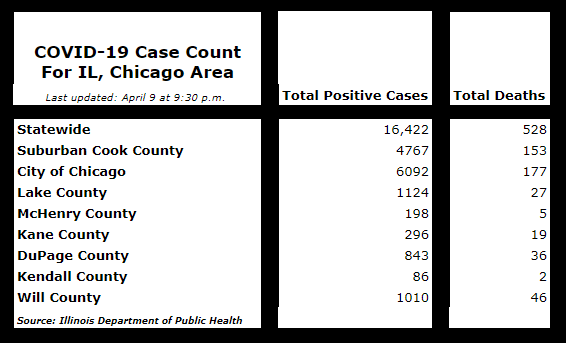
As of Thursday, the city of Chicago is among the most densely-populated areas that's been the hardest hit with 6,648 cases and 198 deaths to date. While suburban Cook County has also seen a high number of cases, with 4,767 testing positive for the virus as of Thursday afternoon and 153 deaths.
Find out what's happening in Palatinefor free with the latest updates from Patch.
The virus has sadly spread fast in some congregate settings, like nursing homes, where an older population is living close quarters. In Lake County, more than half the deaths attributable to coronavirus have occurred in long-term care facilities, county spokesperson reported Thursday.
Thirteen residents of such facilities have died out of the first 23 deaths reported in the county as of Thursday. The Lake County Health Department reported its first death from the coronavirus on March 27.
Find out what's happening in Palatinefor free with the latest updates from Patch.
Here is a look at more notable news regarding coronavirus cases and deaths in the state in the past day:
- A convicted sex offender, who was behind bars when he contracted the virus, became the second detainee from the jail to dies this past week.
- Four residents at nursing homes in the south suburbs are suspected to have died because of coronavirus, according to a Thursday report on Oak Lawn Patch. The residents ranged in ages from 68 to 92.
- A third resident at a retirement home in Evanston has died from the coronvirus.
- At Silver Cross Hospital in New Lenox, there are 78 patients with confirmed or suspected coronavirus.
- In addition, a student at Wheaton College has tested positive for the virus. The student is isolating in a home on campus, college officials said.
Health officials are reminding residents that the number of cases in a community can not paint an accurate picture of how widespread the virus is since there are not enough tests being offered and since some may not even exhibit symptoms of the virus, but could be a carrier for it, health officials say.
Here is a county-by-county look at the number of cases in the Chicago area as of Thursday afternoon:
This past week, the Illinois Department of Public Health released an interactive map that breaks down the number of coronavirus cases by zip code and county information. The map is consistently being updated as new data comes in. Only zip codes that have more than five cases are represented on the map, although it is noted that it should be assumed coronavirus exposure can happen in any zip code in the state.
Cases have continued to climb since the first case was reported in the state on Jan. 24 and Thursday marked the state's highest jump in deaths over a 24-hour period to date. Yes
March 11 marked the first cases reported outside of Chicago and Cook County, according to state health officials. Those patients lived in Kane and McHenry counties.
Don't miss updates about precautions in the Chicago area as they are announced. Sign up for Patch news alerts and newsletters.
Meanwhile, state officials are urging residents to do their part in helping to "flatten the curve." They echoed these sentiments as temps began to rise this past week and more Chicago-area residents emerged from their homes en masse.
Chicago Mayor Lori Lightfoot going so far as breaking up a drinking partyshe spotted and confronts people not obeying social distancing rules in her city, according to a Chicago Tribune report.
All In: State Officials Urge Residents To Follow Rules
Older adults and people who have severe underlying medical conditions, such as heart, lung disease or diabetes, are most at risk for developing serious health complications or dying from COVID-19.
They are urged to stay home and away from people, according to the Center for Disease Control.
Even those who are young and healthy are at risk of contracting COVID-19 and spreading it to others, including those who are vulnerable to serious illness.
In addition, those who are not showing symptoms can still have the virus and pass it on to others, which makes social distancing, the practice of putting at least six feet between you and other people, so important, according to the CDC.
Health officials also encouraging everyone to:
- Washing their hands often for at least 20 seconds
- If soap and water are not readily available, use a hand sanitizer that contains at least 60% alcohol. Cover all surfaces of your hands and rub them together until they feel dry
- Everyone should wear a cloth face cover when they have to go out in public, for example to the grocery store or to pick up other necessities.
- Cloth face coverings should not be placed on young children under age 2, anyone who has trouble breathing, or is unconscious, incapacitated or otherwise unable to remove the mask without assistance.
- Continue to keep about 6 feet between yourself and others. The cloth face cover is not a substitute for social distancing.
- Clean AND disinfect touched surfaces daily. This includes tables, doorknobs, light switches, countertops, handles, desks, phones, keyboards, toilets, faucets, and sinks.
The Center for Disease Control provides more updates on how to stay safe and healthy amid the COVID-19 outbreak. So does the Illinois Department of Public Health website.
MORE ON PATCH
Get more local news delivered straight to your inbox. Sign up for free Patch newsletters and alerts.