Politics & Government
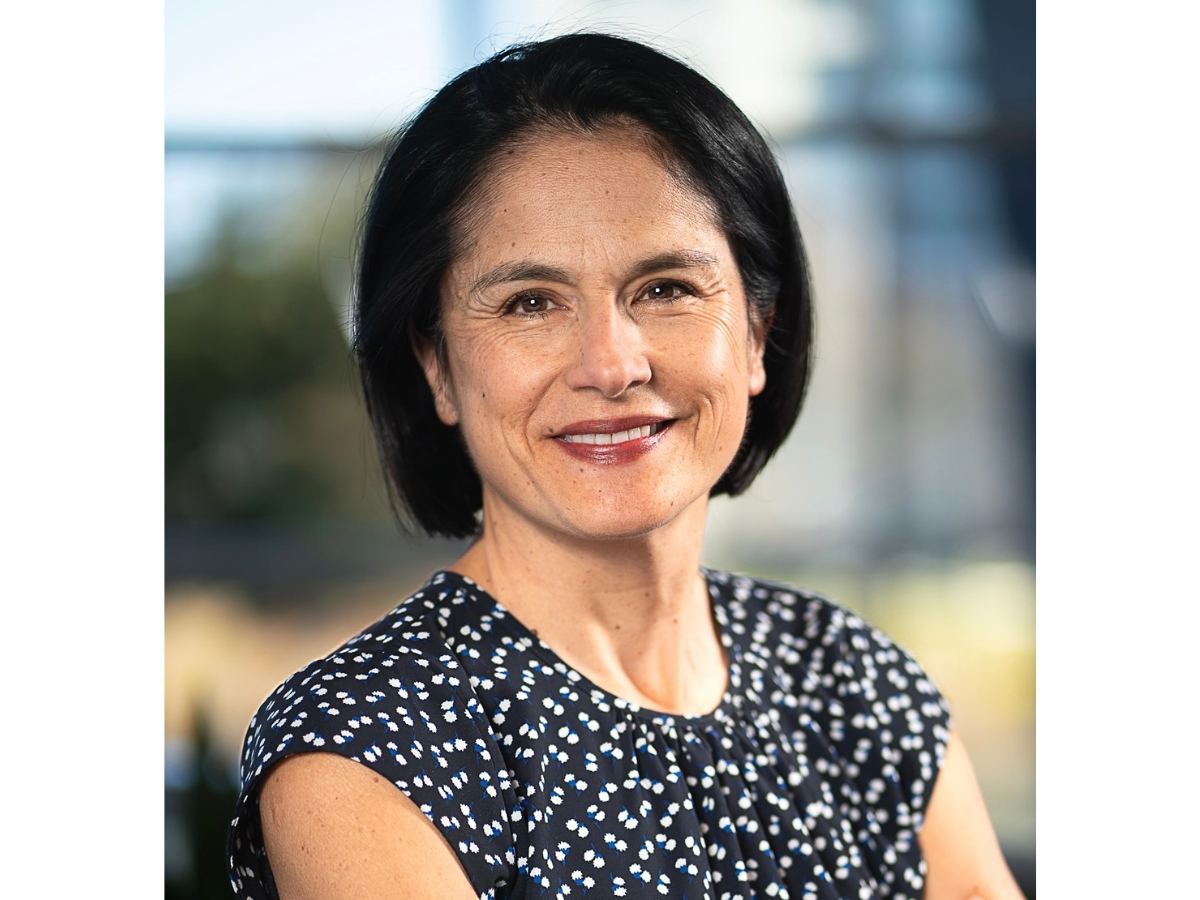
At-Large Candidate Karla Silvestre To Use 'Listen First' Approach On Council
At-Large candidate Karla Silvestre tells Patch she'll be tackling affordability on the Council by focusing on the county's economic growth.


MONTGOMERY COUNTY, MD — Ahead of the primary elections in June, Patch has invited candidates running to represent Montgomery County to complete a questionnaire touching on a variety of key issues.
Candidate responses will be published verbatim in the run-up to the primaries on Tuesday, June 23.
Related:
Find out what's happening in Rockvillefor free with the latest updates from Patch.
Questionnaire responses for Karla Silvestre, who is running to serve in the at-large county position, can be found below:
Name: Karla Silvestre
Find out what's happening in Rockvillefor free with the latest updates from Patch.
Age: 53
Hometown: Silver Spring
Political Affiliation: Democrat
Do you have any previous political experience? If so, please state and explain how that experience will influence your time in office if elected.
Yes. I was first elected countywide to the Montgomery County Board of Education in 2018 and reelected in 2022. I was elected by my colleagues to serve two consecutive years as Board President, and I currently chair the Board’s Fiscal Management Committee. That experience matters because County Council service requires more than having opinions. It requires setting priorities, reading budgets, listening to residents, working through disagreements, and making decisions that affect families across the county.
On the Board of Education, I have worked on issues involving school safety, academic achievement, capital needs, labor contracts, accountability, and fiscal oversight. I know how local government works, and I know how important it is that government earn the public’s trust. If elected, I will bring that same practical, collaborative approach to the Council: listen first, focus on results, and make decisions that help Montgomery County families in their daily lives.
What do you believe is the single-most important issue facing voters in the district you’re looking to represent? How do you intend to address those issues?
The biggest issue is affordability. Families are working hard, but too many are being squeezed by housing costs, childcare costs, transportation costs, and property taxes. Seniors are worried about whether they can afford to stay in their homes. Young families are wondering whether they can build a future here.
I will address affordability by focusing on responsible economic growth, more housing choices near transit and jobs, faster and more predictable permitting, support for small businesses, and strong schools that prepare students for good careers. We also need to be disciplined about the county budget. I do not support making working families and homeowners the first place government turns whenever costs rise. We need to grow our commercial tax base, evaluate programs honestly, protect core services, and make county government work better.
How do you differ from other candidates running against you?
I bring a combination of 18 years of experience working in communities in the county and elected experience where I have had to make difficult decisions for the future of our county.
I came to this country as an immigrant and asylum seeker. I know what it means for families to work hard, sacrifice, and build a life here. I have spent my career in education, community engagement, youth development, and public service. I currently serve as Director of Community Engagement at Montgomery College, where I work every day to connect residents with opportunity.
I have been elected countywide twice. I helped oversee the largest public budget in the county and worked with families in every part of Montgomery County. I know how to bring people together, find common ground, and get things done.
How would your work experience benefit the goals/objectives you’ve outlined in your campaign and/or the office you’re seeking?
My work has always been about connecting people to opportunity. At Montgomery College, I work with students, families, nonprofits, employers, local government, and community leaders. That experience is directly connected to what the County Council needs to do: strengthen our economy, support our schools, expand access to good jobs, and make sure residents can actually navigate county services.
Before that, I worked in education policy, youth development, and community partnerships. I understand that local government works best when it is close to the people it serves. My experience has taught me how to build partnerships, solve problems across institutions, and make sure residents who are too often left out are included in decision-making.
What is your opinion of the work being done by the current officeholder, and how will you improve on it?
The Council has taken on difficult issues in a challenging time, including housing, public safety, education funding, climate, transportation, and economic development. I respect the work that current councilmembers have done, and I know these are not easy jobs. At the same time, residents are telling us clearly that Montgomery County has to become more affordable, more responsive, and more focused on results. I would bring a stronger focus on fiscal discipline, economic growth, public education accountability, and basic government responsiveness. We need to protect our values, but we also have to make sure residents see results in their everyday lives
How do you believe Montgomery County should address data centers?
Montgomery County should approach data centers carefully, with clear standards before projects move forward. Data centers can bring investment and tax revenue, but they also raise serious concerns about energy use, water use, noise, land use, climate impact, and costs to residents.
The county should not rush into approving major facilities without understanding the full impact. We need strong rules, transparent review, community input, and clear requirements that protect residents and the environment.
Do you believe there should be a data center moratorium or a temporary pause? Explain.
I could support a temporary pause if it is used to ensure the Council has the necessary information to allow them to define what kinds of data centers are appropriate, where they may be appropriate, what infrastructure they require, and what standards they must meet.
A pause should not simply be delay for delay’s sake. It should be tied to clear action: environmental standards, energy and water requirements, noise limits, community protections, and a fiscal analysis of whether these projects truly benefit county residents.
Do you believe there should be data center regulations put in place? Explain.
Yes. Data centers should be subject to strong county regulations. At a minimum, those regulations should address energy demand, clean energy requirements, backup power, water use, stormwater, noise, building design, traffic, emergency response, cybersecurity-related security needs, and community notice.
We also need a serious fiscal framework. If a data center creates infrastructure costs or contributes to higher utility costs, those costs should not be shifted onto residents.
What steps would you take to offset data center impacts to residents’ standard of living, such as rising energy prices?
I would also support exploring fees or tax structures that ensure residents benefit financially if the county accepts these projects. The basic principle is simple: residents should not pay the price so a private company can profit.
How would you distinguish between a good vs. bad data center? Or do you believe no data centers should be in the county/district?
I do not believe the county should say yes to every data center, and I also do not believe we should make decisions without looking at facts.
A good data center would be in an appropriate location, meet strict environmental and energy standards, minimize noise and traffic impacts, pay for required infrastructure, provide a real fiscal benefit to the county, and have meaningful community review.
A bad data center would strain the grid, raise costs for residents, consume large amounts of water or energy without safeguards, create noise or land use conflicts, or provide little public benefit. Those projects should not move forward.
Gov. Wes Moore signed bills banning agreements between local police and federal immigration officials in February. What is your opinion of the legislation?
I support Maryland’s decision to prohibit 287(g) agreements that deputize local law enforcement for federal civil immigration enforcement. Local police should be focused on public safety, not doing the job of federal immigration agents.
When immigrant families are afraid to report crimes, serve as witnesses, or seek help, everyone is less safe. Public safety depends on trust between residents and local law enforcement.
What steps would you take to support or readjust that initiative?
I would support the law by making sure Montgomery County’s policies are clear, lawful, and understood by county agencies. We should train county employees appropriately, protect sensitive personal information, and make sure residents know that they can report crimes and access county services regardless of immigration status.
At the same time, nothing about this prevents local law enforcement from addressing violent crime or working with state and federal partners on serious criminal investigations. We can protect immigrant families and keep our communities safe.
What is your stance on the establishment of Immigration and Customs Enforcement (ICE) detention centers in the county and/or your district?
I oppose establishing ICE detention centers in Montgomery County. Our county should not be in the business of helping the Trump administration separate families, intimidate immigrant communities, or use local resources for civil immigration detention.
Montgomery County should focus on public safety, due process, legal services, language access, and making sure all residents can live without fear.
What actionable plans would you undertake to address illegal immigration?
Immigration law is a federal responsibility, and Congress has failed for too long to pass humane, workable immigration reform. At the county level, my focus would be on what we can actually do: keep communities safe, protect due process, support legal services, ensure language access, and make sure residents can report crimes and access essential services.
We should also continue supporting pathways to education, workforce training, and economic opportunity. When people can work, learn, support their families, and participate in the community, our whole county is stronger.
Education: What is the biggest issue facing Montgomery County Public Schools? How would you address it?
The biggest challenge facing MCPS is ensuring that every student succeeds, regardless of their ZIP code, race, income, language, or disability. While MCPS remains one of the nation's strongest school systems, too many students are not meeting grade-level expectations, and longstanding achievement gaps persist.
To address this, we must focus on what works: strong early childhood education, excellent teachers, high expectations for every student, and consistent implementation of proven strategies across all schools. We also need to support student mental health and strengthen partnerships with families, because students learn best when schools and communities work together.
As a Board of Education member, I know that our plans are often strong—the challenge is ensuring they are implemented effectively and consistently across all schools. My priority is to hold ourselves accountable for results so that every student has the opportunity to thrive and graduate prepared for college, careers, and civic life.
I will work with my County Council colleagues to support our schools and with the Board of Education to ensure we improve student outcomes.
A student brings a gun/weapon to campus without setting off any red flags. What security measures would you advocate for to prevent such an incident?
There is no single measure that will prevent every incident, but we need a layered approach. That includes strong relationships between students and trusted adults, clear threat assessment protocols, safe reporting systems, secure building access, appropriate supervision, coordination with law enforcement when there is a credible threat, and mental health supports.
We also need to make sure schools follow through on warning signs when they do appear. Prevention depends on communication, accountability, and adults acting quickly when concerns are raised.
I support the current pilot where MCPS is currently evaluating a camera-based AI detection system rather than requiring students to pass through weapons screening checkpoints.
Do you believe schools need stricter security measures? Metal detectors? Move away from CEOs and revert to SROs? Explain.
School safety has to be taken seriously, but we should not pretend there is one simple answer. I support the pilot where MCPS is testing an AI-powered safety system that uses existing security cameras to detect visible weapons and alert school staff. Unlike metal detectors, students do not pass through a screening checkpoint; instead, the technology analyzes camera footage in public areas and sends alerts for human review.
I believe in a layered safety model: secure entrances, trained staff, strong emergency protocols, school-based support, trusted reporting systems, and clear coordination with law enforcement. Community Engagement Officers can be part of that model, but we should regularly evaluate whether the current structure is meeting the needs of schools, families, and law enforcement. If changes are needed, they should be based on evidence, safety outcomes, and community input — not slogans.
What will you do to encourage affordable/public housing in the county?
We need more housing choices that working families, seniors, young people, and county employees can afford. That includes building more housing near transit, jobs, and services; preserving existing affordable housing; and expanding mixed-income housing.
I also support making it easier for homeowners to add accessory dwelling units, such as basement apartments, in-law suites, or small backyard homes, where appropriate. These can help seniors age in place, allow families to live closer together, and create more naturally affordable rental options without changing the character of entire neighborhoods.
We also need to make the development process more predictable so housing projects do not get delayed for years. At the same time, growth has to be responsible. Schools, transportation, parks, and other infrastructure need to keep pace.
The goal is simple: make Montgomery County a place where people at different stages of life and income levels can afford to live and thrive.
How will you address crime in Montgomery County/your district?
Public safety starts with making sure residents feel safe in their neighborhoods, on public transit, in our parks, and in our business districts.
I am proud to have earned the endorsement of Montgomery County's police officers because they know I will be a partner in keeping our communities safe. I support a well-trained, accountable police department, investments in violence prevention, and strong partnerships between law enforcement and the communities they serve.
We need to focus on the crimes residents are experiencing every day, including car thefts, robberies, retail theft, hate crimes, domestic violence, and gun violence. We should use data to target resources where they are most needed, while also investing in youth programs, mental health services, and community-based prevention efforts.
Public safety and strong communities go hand in hand. Montgomery County should be a place where families feel safe and where everyone has the opportunity to succeed.
What is your stance on the "Save Wootton" initiative by community members?
I understand why this is difficult for families. Wootton is a beloved school with a proud history, and even temporarily closing or relocating a school community is disruptive and emotional. At the same time, the building has serious facility needs, and we have to make responsible decisions about safety, capacity, and long-term planning.
I voted for this plan because I believe it is the fiscally responsible approach to addressing long-term capacity and growth in this part of the county.
Right now, the priority is to complete Crown, which is the project that needs funding now and has broad support. We need to follow through on that commitment and deliver it on time and on budget.
More broadly, school construction decisions should be driven by enrollment data, long-term planning, fiscal responsibility, and what best serves students and families. I am open to rebuilding Wootton if future enrollment necessitates it and the funding is included in the Capital Improvements Program.
As a councilmember, I would also push for transparency and accountability throughout the process. That means meaningful and improved community engagement, clear timelines, accurate cost projections, and regular public updates so residents understand how projects are progressing.
My focus is simple: deliver the Crown project responsibly now, and make sure every future school construction decision is guided by data, transparency, and what best serves our county, students and families.
A 6% property tax increase was proposed for the fiscal 2027 budget to raise funds for schools. Homeowners are reluctant to pay more.
What is your position?
The 6% property tax increase was proposed, but it was not included in the final approved budget.
I strongly support investing in our public schools. As a member of the Board of Education, I know how important it is that our schools have the resources they need to serve students well. But I would not have supported that proposed 6% increase as presented.
Homeowners, seniors, and working families are already under real financial pressure, and Montgomery County is already an expensive place to live. I will push the county to set clear priorities, evaluate spending, grow the tax base, and make sure taxpayer dollars are being used effectively before asking residents to pay more.
We need excellent schools, and we also need to keep Montgomery County affordable for the families who live here.
What other options would you consider to raise money that does not include raising taxes?
The best long-term answer is to grow our economy and strengthen our commercial tax base. That means supporting small businesses, filling vacant commercial space, attracting and retaining employers, speeding up responsible permitting, and building more housing near transit and job centers.
I would also look closely at how county dollars are being spent. That means reviewing programs for effectiveness, reducing duplication, improving procurement, and making sure more education dollars are reaching classrooms, educators, and students.
We should pursue more state and federal funding, use county assets more strategically, and make sure new development pays its fair share for the infrastructure it requires. We should also consider public-private partnerships where appropriate and targeted revenue tools tied to specific impacts, such as making large commercial projects pay for the infrastructure demands they create.
The goal should be to fund our schools and essential services without making homeowners the first place we turn whenever costs rise.
Get more local news delivered straight to your inbox. Sign up for free Patch newsletters and alerts.