Politics & Government
At-Large Candidate Lelia True To Check Council With Military, Private Sector Background
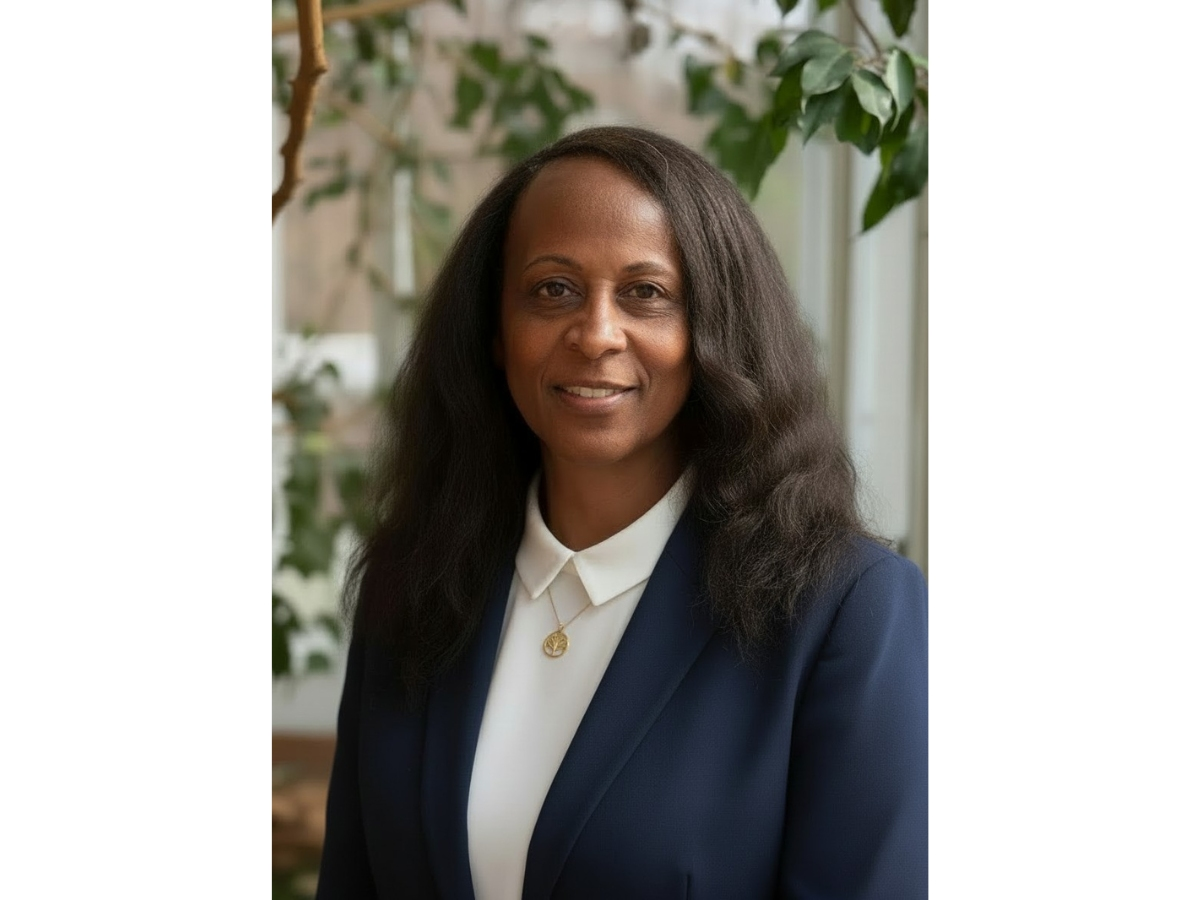
At-Large County candidate Lelia True tells Patch that she'll be using her military and private sector experience to strengthen the Council.


MONTGOMERY COUNTY, MD — Ahead of the primary elections in June, Patch has invited candidates running to represent Montgomery County to complete a questionnaire touching on a variety of key issues.
Candidate responses will be published verbatim in the run-up to the primaries on Tuesday, June 23.
Related:
Find out what's happening in Rockvillefor free with the latest updates from Patch.
Questionnaire responses for Lelia True, who is running to serve as an at-large county councilmember, can be found below:
Name: Lelia True
Find out what's happening in Rockvillefor free with the latest updates from Patch.
Age: Answer not provided.
Hometown: Answer not provided.
Political Affiliation: Democrat
Do you have any previous political experience? If so, please state and explain how that experience will influence your time in office if elected.
I have not held elected office, and that is part of why I am running. Montgomery County is at an inflection point, and the people who got us into the position we are in are not going to be the ones who get us out. What I do bring is 30 years of experience leading large, complex organizations through hard decisions.
As a Gulf War company commander, I led 160 soldiers in combat and brought every one of them home. As a Vice President at Comcast, I managed 475 employees and a $190 million budget, and I cut $12 million in waste while delivering 10 to 34 percent efficiency gains.
As Head of School at Washington Waldorf, I led the school through COVID and delivered a $7 million capital project on time and under budget. I have also done significant community service in this county, including coaching hundreds of young people, serving as president of the Montgomery County Dive Club, and serving on a school ethics board.
That experience will shape how I serve. I know how to read a budget, run an operating review, manage a team through a crisis, and tell the public the truth about tradeoffs. I am not going to need a learning curve to figure out how the job works. And because I am not coming up through the political system, I have no patron to please and no career ladder to climb to. I am running because the work matters.
What do you believe is the single-most important issue facing voters in the district you’re looking to represent? How do you intend to address those issues?
Affordability. A household needs roughly $270,000 in combined income to afford a median priced home in this county, while the median couple earns around $131,000. That gap shows up in every conversation I have, with teachers, with firefighters, with federal workers facing layoffs, with seniors worried about property taxes, with young people who grew up here and cannot afford to come back. Every other goal we have — schools, transit, public safety — depends on solving this.
My approach has three pieces.
First, build more housing of the kinds people actually need: accelerate the More Housing N.O.W. framework, cut permitting delays, increase density in transit-adjacent areas, and spearhead an Essential Worker Housing Initiative as a public-private partnership with major county employers like hospitals, school systems, and tech firms.
Second, grow the tax base by growing the economy: create a Business Express permitting portal with a 30-day turnaround, offer competitive employer incentives tied to real job creation, and invest seriously in the I-270 life sciences corridor so we stop losing employers to Northern Virginia.
Third, run county government like we mean it: cut waste before cutting services, apply the same operating discipline I used in the private sector, and protect direct services to residents before administrative overhead.
How do you differ from other candidates running against you?
I have actually run things. Not metaphorically, not as a board member, not as a committee chair. I have managed multi hundred million dollar budgets with hundreds of employees, I have hired and fired, I have negotiated complex partnerships, I have delivered capital projects on time and under budget, and I have led people through a war and through a pandemic. Most of the candidates in this race are running to get into politics. I am running because Montgomery County needs people who already know how to operate at this scale.
I am also a Democrat who is willing to be candid about where the county has gotten things wrong. We have a housing crisis we have been talking about for years without producing housing at scale. We have a school system that has not closed long standing achievement and discipline gaps. We have lost biotech employers to Virginia. Pretending those things are not problems, or that the people in office now have a real plan to fix them, is not honest. I will be.
How would your work experience benefit the goals/objectives you’ve outlined in your campaign and/or the office you’re seeking?
Every objective I have laid out maps directly to work I have already done. Streamlining permitting? I have rebuilt operating processes across multiple companies. Workforce housing public-private partnerships? I have negotiated complex commercial deals at Comcast and McKinsey. Running a $7 billion county budget responsibly? I have run a $190 million P&L for an organization with 475 employees and cut $12 million in waste. Managing through a fiscal shock from federal workforce cuts? I led a school through COVID, including securing additional funding, redesigning operations, and protecting people through real uncertainty. Setting AI guardrails for schools? I have a Master's in MIS/Operations and 17 years inside a major tech company. I know how vendors sell these systems and how the costs get hidden.
The Council is essentially a board of directors for a multibillion-dollar enterprise that serves a million residents. I have spent my career working at exactly that level.
What is your opinion of the work being done by the current officeholder, and how will you improve on it?
There are four at-large seats, so this is not a one-on-one race. I have respect for the public service of the people who currently hold those seats, and there are individual issues where I think they have moved the county in the right direction, including expanded mental health resources and protections for immigrant residents.
But the pattern across the current Council is that big problems have not gotten meaningfully smaller during their tenure. Housing is more expensive, not less. The MCPS achievement gap and discipline disparities have not closed. We are losing employers to Virginia. The county is staring down a serious fiscal squeeze with no real plan beyond raising property taxes. The Antiracist Audit and Action Plan was a promise to Black students and families, and MCPS has faced no consequence from the Council for missing its own benchmarks. That is a Council oversight failure, not just an MCPS failure.
I will improve on it by bringing operational discipline to oversight: clear, public benchmarks; quarterly reviews; and budget consequences when agencies miss. I will also be more transparent with residents about tradeoffs up front, instead of springing budget choices on families after the fact.
How do you believe Montgomery County should address data centers?
Data centers are not inherently good or bad. They are large industrial facilities that consume enormous amounts of electricity and water, generate noise, and demand specific siting. The question is whether the county is going to make decisions about them with eyes open or whether we are going to wake up in a few years to find that we have outsourced our energy grid, our water supply, and our zoning to a handful of hyperscale tech firms.
My approach is to treat data centers like any other major industrial use: we want the right ones, in the right places, on terms that protect residents. That means clear performance standards, real cost recovery, and meaningful community input before approval. Saying "yes" to everything is irresponsible. Saying "no" to everything ignores that this is one of the few growth sectors that could help our tax base.
We need a framework, not a slogan.
Do you believe there should be a data center moratorium or a temporary pause? Explain.
Yes, I support a temporary pause on new data center approvals while the county develops a real regulatory framework. We are currently making case by case decisions on facilities that will use enormous amounts of electricity and water for decades, without a coordinated policy on energy demand, ratepayer impact, water use, noise, or siting. That is not how you make billion-dollar industrial decisions.
A short, time-bound pause, paired with a clear deadline and deliverable for the framework, is a responsible way to make sure the county does not lock in commitments we will regret. I would not support an open-ended moratorium with no end date. That is a policy in name only.
Do you believe there should be data center regulations put in place? Explain.
Yes. At minimum, the county needs: (1) clear zoning rules that limit data center siting to appropriate industrial areas and away from residential neighborhoods, schools, and sensitive ecosystems; (2) energy and water use disclosure requirements with enforceable caps where the local grid or watershed cannot support more demand; (3) a cost recovery mechanism so that grid upgrades driven by data center demand are paid for by the data centers, not by residential ratepayers; (4) noise and air quality standards specific to the diesel backup generators these facilities run; (5) tax and incentive policies that capture real value for the county, including binding commitments on jobs, training, and local hiring; (6) a public review process for any project above a defined size threshold, with adequate notice to surrounding communities.
What steps would you take to offset data center impacts to residents’ standard of living, such as rising energy prices?
First, push for a cost allocation rule at the Public Service Commission level so that grid expansion costs driven by hyperscale data demand are paid by the hyperscalers, not socialized across residential bills. The county does not control PSC rate cases directly, but the Council should be on the record advocating for residential ratepayer protection in Annapolis.
Second, condition county approval on direct ratepayer protections where we have the leverage: power purchase agreements that bring new clean generation online to match demand, energy efficiency investments in surrounding neighborhoods, and host community benefit agreements that fund things like home energy assistance and weatherization.
Third, treat water the same way. Any large facility should be required to fund the upstream and treatment investments its consumption requires, not pass them through to county water customers.
Fourth, transparency. Residents should be able to see, in plain language, the projected energy, water, and rate impacts of any proposed facility before it is approved.
How would you distinguish between a good vs. bad data center? Or do you believe no data centers should be in the county/district?
A good data center is one that: is sited in an appropriate industrial location with adequate buffers; is paired with new clean energy generation rather than just drawing from the existing grid; pays for the grid and water infrastructure its demand requires; meets strict noise, emissions, and water standards; brings real jobs at real wages with binding commitments to local hiring and training; pays its fair share in property and impact taxes; and operates transparently, with public reporting on energy, water, and emissions.
A bad data center is one that gets sited next to homes or schools, draws from the grid without adding capacity, externalizes its rate and infrastructure costs onto residents, runs noisy diesel backup without controls, claims tax abatements without real job commitments, and resists public reporting. We should not approve those. We can approve the first kind on the right terms.
Gov. Wes Moore signed bills banning agreements between local police and federal immigration officials in February. What is your opinion of the legislation?
I support the legislation. Banning 287(g) agreements is the right call. When local police become an arm of federal immigration enforcement, immigrant residents stop reporting crimes, stop cooperating with investigations, and stop calling for help when they are in danger. That makes everyone in the community less safe, citizens and non-citizens alike.
The Governor's framing was right: this is about constitutional policing and about local police doing local police work, not federal civil enforcement that the local force is not trained or accountable for.
What steps would you take to support or readjust that initiative?
At the county level I will push to: (1) reaffirm and strengthen Montgomery County's existing non-cooperation policies in line with the new state law, with clear written guidance to MCPD, the Sheriff, and the Department of Correction and Rehabilitation; (2) prohibit county facilities, including schools, libraries, courthouses, and health clinics, from being used for ICE enforcement actions absent a judicial warrant, with training so frontline staff know how to handle ICE requests; (3) fund legal defense services for residents facing immigration proceedings, with explicit inclusion of African and Caribbean immigrant communities, who are too often left out of immigrant defense programs; (4) require regular public reporting on any contacts between county agencies and ICE so residents can see whether the policy is being followed in practice; (5) work with state delegates to close any remaining loopholes, including informal cooperation channels that the state law does not yet reach.
What is your stance on the establishment of Immigration and Customs Enforcement (ICE) detention centers in the county and/or your district?
I oppose the establishment of ICE detention centers in Montgomery County. Beyond the moral and civil liberties concerns, the operational record of private and federal immigration detention is poor: documented cases of medical neglect, sexual abuse, and deaths in custody. We do not need that infrastructure here, and we should use every zoning, contracting, and permitting tool the county has to make sure it is not built here.
What actionable plans would you undertake to address illegal immigration?
Immigration policy is a federal responsibility, and the Council does not get to set federal policy. What the Council can do is keep our community safe, keep our economy functioning, and treat people with dignity, regardless of status.
Concretely: (1) ensure MCPD focuses on local public safety, not federal civil immigration enforcement; (2) fund services that meet real local needs (schools, health care, language access) rather than trying to gatekeep them by status, which has been shown repeatedly to drive worse public health and safety outcomes; (3) support employers in following the law, including E-Verify compliance assistance for small businesses and clear guidance on workplace inspection rights; (4) advocate to our federal delegation for comprehensive immigration reform, including a workable, enforceable legal pathway, because the only durable answer to undocumented immigration is a functional legal immigration system, and right now we do not have one.
Education: What is the biggest issue facing Montgomery County Public Schools? How would you address it?
The biggest issue is that MCPS has lost public trust. Families do not trust that their kids are getting the academic preparation, the safety, or the equitable treatment the system promises. That distrust is showing up in declining enrollment, in the Wootton fight, in the persistent achievement and discipline gaps for Black and Brown students, and in the willingness of families with means to leave for private schools or other counties.
Trust is rebuilt through results, not press releases. As councilmember I will: (1) refuse to approve an MCPS budget that does not include specific, measurable, time-bound benchmarks for closing academic and discipline gaps, with public quarterly reporting; (2) prioritize MCPS budget allocations for school counselors, special education staff, and student wellness, where demand is currently outpacing services; (3) pass a Student Data Protection Ordinance and stand up an AI in Education Standards Board to set binding rules before any AI tool enters a classroom; (4) develop teacher retention incentives, including county backed workforce housing priority access, because we cannot keep bleeding experienced teachers to other districts; (5) push for a transparent, community-engaged process for major MCPS decisions like boundary changes, instead of the rushed, top down process we just watched on Wootton.
A student brings a gun/weapon to campus without setting off any red flags. What security measures would you advocate for to prevent such an incident?
Reactive security measures alone do not stop a kid who has decided to bring a weapon. The most effective interventions happen before that, and they require a layered approach.
First, threat assessment teams in every secondary school: trained multidisciplinary teams (administrator, counselor, social worker, SRO or community engagement officer, mental health clinician) that meet regularly to review concerns flagged by staff, students, or families, with a structured protocol and the time and training to do it well. Many incidents in other districts have been prevented because someone said something and an adult took it seriously.
Second, real mental health staffing in schools, including clinicians of color and clinicians trained in adolescent crisis intervention, so that the kids most at risk have a trusted adult to talk to before things escalate. We are massively understaffed for what students are dealing with right now.
Third, an anonymous tip line that students actually trust and that is monitored 24/7 with rapid response.
Fourth, secure entry points and emergency communication infrastructure (rapid lockdown systems, panic buttons in classrooms, working radios, drilled response protocols) so that if something does happen, response time is measured in seconds.
Fifth, parent and community engagement, including responsible firearm storage education for households where guns are present, because most school weapons come from a home.
This is what I would expect from any organization I ran. It is what we should expect from MCPS.
Do you believe schools need stricter security measures? Metal detectors? Move away from CEOs and revert to SROs? Explain.
Yes, schools need a stronger security posture, but the answer is not the same in every building, and the goal is not to make schools feel like airports.
On metal detectors: I would support targeted use, not blanket use. A school with a documented, recurring weapons problem is a different situation than a school without one. Where data justifies them, metal detectors and weapons detection systems make sense, paired with clear protocols so they do not slow morning entry to the point of becoming a safety problem in their own right.
On SROs versus CEOs (Community Engagement Officers): I think the right answer is more nuanced than the binary the question implies. Pulling armed officers out of schools entirely was not, in retrospect, a clean win for safety, but the previous SRO model also had real problems with disproportionate discipline of Black and Brown students. A modernized approach should include: trained, accountable officers with a clearly defined school role and explicit limits (no involvement in routine discipline, no pretextual contact with students, public data on every interaction); strong relationships with school administration and counselors; and transparent reporting that the public can actually see. Whatever we call the role, it needs to be staffed by the right people, trained for this specific environment, and held accountable.
And no security measure substitutes for adequate staffing of counselors, special education, and mental health clinicians. A building with a metal detector and no school psychologist is not a safe building.
What will you do to encourage affordable/public housing in the county?
Affordable housing is foundational infrastructure. As councilmember I will: (1) accelerate the More Housing N.O.W. framework and cut permitting delays that strangle production; (2) expand inclusionary zoning so that as market rate development increases, affordable units are built alongside it; (3) increase height and density allowances in transit adjacent areas where we have already made the public infrastructure investment; (4) spearhead the Essential Worker Housing Initiative, a coordinated public-private partnership with major employers (hospitals, school systems, tech firms) to fund and build workforce housing at scale; (5) protect and expand funding for the Housing Opportunities Commission and DHCA programs, including down payment and closing cost assistance with priority for first-generation homebuyers; (6) build all of this with strong anti-displacement protections, including right of first refusal for tenants, right to return for residents in redevelopment, and targeted tax relief for longtime homeowners in rapidly appreciating neighborhoods.
How will you address crime in Montgomery County/your district?
Public safety in Montgomery County requires both effective policing and a serious investment in the upstream conditions that drive crime. Both, not one.
On policing: support adequate staffing and competitive pay for MCPD; insist on transparent accountability through strong civilian oversight with real authority; focus officers on the work only they can do (response, investigation, public safety) rather than mental health calls and minor administrative matters that they should not be sent to in the first place.
On mental health and crisis response: fully fund 24/7 Mobile Crisis Outreach and Crisis Intervention Teams so they, not police, are the default response to the roughly 65 percent of calls that are mental health related. Hire crisis responders who reflect the communities they serve and train them in cultural competency that actually matters in this county.
On root causes: invest in youth, including mentorship, athletics, recreation, summer jobs, and school-based mental health. I have coached hundreds of young people in this county, and I know what it does for a kid to have a consistent positive adult in their life. That is crime prevention.
On victims: Black residents in Montgomery County are 40 percent of simple assault victims and 42 percent of aggravated assault victims based on recent MCPD data. Public safety policy in this county has to take that seriously, including better support for victims and witnesses, safer neighborhoods, and trust building so that crimes are reported and prosecuted.
What is your stance on the "Save Wootton" initiative by community members?
I support the Save Wootton families' fundamental concern: that a decision of this magnitude was made on a rushed timeline, with thin data, and without meaningful community engagement. The substantive complaints are serious. The proposal was introduced late in the boundary process with a five-week comment window over the holidays. Enrollment projections were challenged by reputable analysts. The plan was framed as a relocation but functions as a closure of a school that is one of the strongest in the state. The community process was not adequate to a decision of this scale.
On the merits, I think there were better options on the table, including the Rockville City Council's Modified Recommendation that would have kept Wootton open while still addressing the facility and capacity issues that the superintendent legitimately needs to solve. Even if reasonable people disagree about the final answer, the process here is the deeper problem, and it is part of why MCPS has lost public trust.
As councilmember, I will: (1) push for a transparent, sufficiently lengthy community engagement process for any future MCPS boundary or closure decision, with independent verification of enrollment data and capacity projections; (2) use the Council's budget oversight role to ensure the capital plan is honest about facility conditions and timelines; (3) be a check on rushed top down decisions, regardless of which community is on the receiving end.
A 6% property tax increase was proposed for the fiscal 2027 budget to raise funds for schools. Homeowners are reluctant to pay more.
What is your position?
My position is that a 6 percent property tax increase should not be the first lever pulled, and that residents are right to be skeptical that they will get good value for it. I am not against ever raising revenue, but the case has to be made honestly: what specifically does the money fund, what are the measurable outcomes, what has already been done to find the money inside the existing budget, and why is property tax the right source rather than other tools.
Right now, residents are also absorbing higher housing costs, higher insurance, federal workforce shocks, and inflation. Adding a 6 percent property tax increase on top of that, without first proving we have done the operational work to make every existing dollar count, is the wrong sequence. I would not support a 6 percent increase as currently framed. I would support a smaller, more targeted approach paired with a real efficiency review and a clear set of outcomes the public can hold us to.
What other options would you consider to raise money that does not include raising taxes?
First, grow the tax base by growing the economy. The fastest, most sustainable way to fund schools is to stop losing employers to Northern Virginia and Howard County. A Business Express permitting portal, competitive employer incentives tied to real job creation, public private investment in the I-270 life sciences corridor, and faster housing approvals all expand the tax base without raising rates. More good jobs and more housing means more property tax and income tax revenue, with the same rates.
Second, cut waste before raising taxes. Every department should be subject to the same kind of operating review I ran in the private sector: redundant systems, contractor relationships that cost more than they should, vendor agreements that have not been renegotiated in years, software and licensing the county is paying for and not using. At Comcast, I cut $12 million in waste while delivering 10 to 34 percent efficiency gains. That work has not been done consistently across county government, and it should be.
Third, unlock state and federal dollars more aggressively. The county has historically left grant and reimbursement money on the table because the application and matching infrastructure is not where it needs to be. Investing in better grant writing, state and federal liaison capacity, and matching funds typically returns multiples on the investment.
Fourth, look at non-property tax revenue tools, including impact fees on data centers and other large industrial development that imposes real infrastructure costs, and cost recovery on permitting and inspection where the county is currently subsidizing private development.
Get more local news delivered straight to your inbox. Sign up for free Patch newsletters and alerts.