Politics & Government
Cloned Ferret Gives Birth In VA: 'Major Milestone' For Conservation
The birth marks the first time a cloned U.S. endangered species has produced offspring, according to federal wildlife officials.


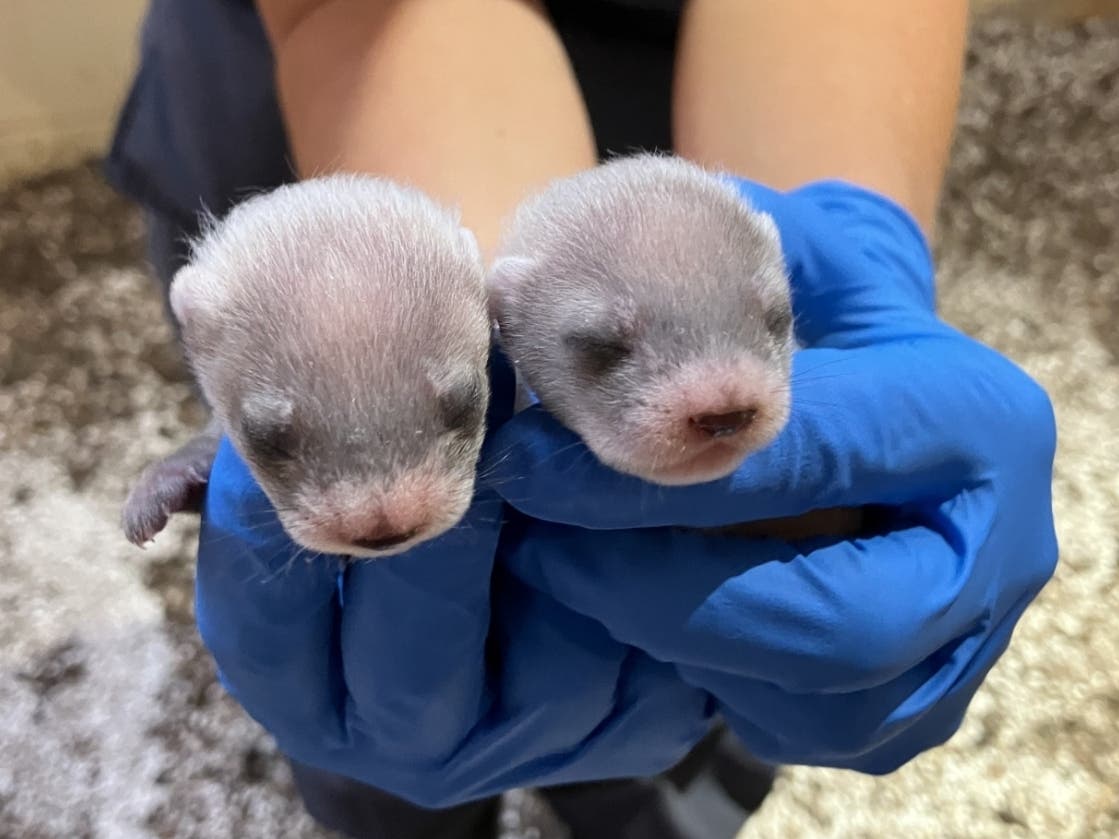
FRONT ROYAL, VA — A ferret created by cloning recently gave birth to two offspring at the Smithsonian National Zoo, an event federal wildlife officials are calling a "groundbreaking" achievement in endangered species research and conservation.
Antonia, a cloned black-footed ferret, successfully gave birth to two healthy kits after mating with Urchin, a 3-year-old male black-footed ferret at the National Zoo. The birth marks the first time a cloned U.S. endangered species has produced offspring, according to the U.S. Fish and Wildlife Service.
"The successful breeding and subsequent birth of Antonia's kits marks a major milestone in endangered species conservation," Paul Marinari, senior curator at the National Zoo, said in a statement. "The many partners in the Black-footed Ferret Recovery Program continue their innovative and inspirational efforts to save this species and be a model for other conservation programs across the globe."
Find out what's happening in Across Virginiafor free with the latest updates from Patch.
Black-footed ferrets are the only ferret native to North America and one of the most endangered mammals in the world, according to Revive & Restore, one of the many programs involved in the ferret cloning project.
The species was twice assumed extinct before it was rediscovered in 1981 in Wyoming. The discovery of the last remaining ferret population prompted the U.S. Fish and Wildlife Service to launch a captive breeding program to safeguard the species from extinction.
Find out what's happening in Across Virginiafor free with the latest updates from Patch.
According to federal wildlife officials, researchers cloned Antonia using tissue samples collected in 1988 from a black-footed ferret named Willa, whose genetic material was preserved in the Frozen Zoo at the San Diego Zoo Wildlife Alliance following her death.
Antonia was one of three clones produced using Willa's DNA. Noreen and Elizabeth Ann both reside at the National Black-footed Ferret Conservation Center in Colorado.
Wildlife officials said the samples contain three times more unique genetic variations than are typically found in the current population. This means that clones from Willa’s historic cell lines can enrich the current gene pool of the species, officials said.
Antonia's kits, Sibert and Red Cloud, were born in June. Sibert is a female and Red Cloud is a male. Antonia also gave birth to a third kit that died shortly after it was born.
The kits are doing well, Revive & Restore said.
"While all other living ferrets are descended from just seven founders, Sibert & Red Cloud are descended from eight founders," Revive & Restore said in a statement. "Together, the clones and their offspring are the most genetically diverse black-footed ferrets alive today."
Get more local news delivered straight to your inbox. Sign up for free Patch newsletters and alerts.