Politics & Government
Va. Senators Grill UVA Leaders Over DOJ Deal, Leadership Search, Diversity Programs
Senators urged UVA to demonstrate a genuine commitment to fostering a diverse and equitable campus culture.
January 13, 2026
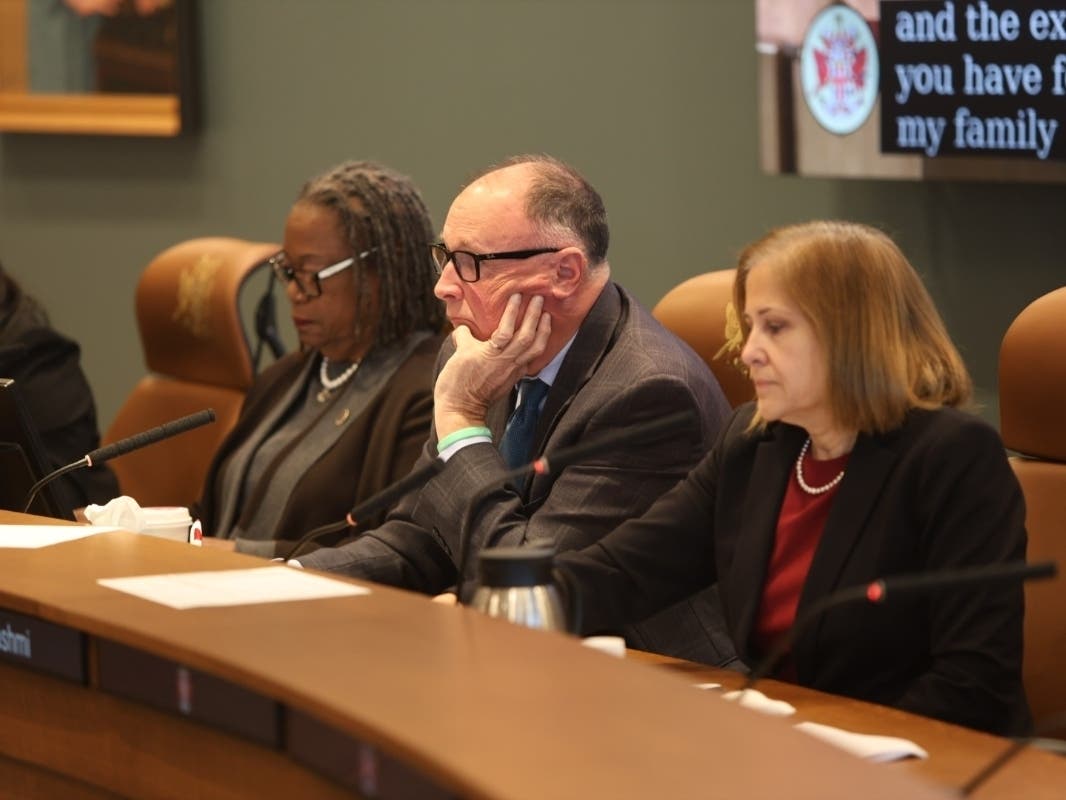
As state lawmakers trek to Richmond for the 2026 General Assembly session that begins Wednesday, some state senators sought more answers from the University of Virginia at a hearing on Monday.
Find out what's happening in Across Virginiafor free with the latest updates from Patch.
The hearing, hosted by the Senate Finance and Appropriations Committee’s Education Subcommittee, built on a December meeting with the institution’s leadership about the governing board’s search for a new president and its decision to sign a controversial agreement with the U.S. Department of Justice.
The DOJ agreement and the naming of Scott Beardsley as the institution’s new president last month capped a tumultuous year for UVA, which, along with other colleges, faced public scrutiny over their leadership boards after Senate leaders rejected several of outgoing Gov. Glenn Youngkin’s appointees. Gov.-elect Abigail Spanberger had urged UVA to hold off selecting a president until she took office and all board vacancies could be filled.
Find out what's happening in Across Virginiafor free with the latest updates from Patch.
Monday’s discussions were held ahead of the General Assembly Session so the subcommittee could better understand the UVA board’s decision-making process and address concerns raised by state leaders.
Rector Rachel Sheridan told lawmakers Monday that waiting for the full complement of the board to be filled before selecting a new president would have taken too much time, as the board was also balancing calls for the institution to have stability and leadership.
“Our view is that the board needs to act in the best interest of the university, and every decision that we have made, the board has tried to act in the best interest of the university,” said Sheridan. “Whether that was under Rector Hardy’s leadership or under mine. I truly believe that the board and every individual have operated in the best interest of the university.”
Sheridan said with that reasoning in mind, the board ultimately decided to hire Beardsley as the institution’s 10th president. who also attended the subcommittee hearing. Beardsley, who also attended the subcommittee hearing, is the former dean of the UVA Darden School of Business and his tenure there was defined by record academic rankings, expanding student access, and strengthening faculty excellence, the university stated.
In November, Spanberger also said the board members “severely undermined” public confidence in their abilities amid the DOJ agreement. Lawmakers, UVA faculty, and community organizations echoed her sentiments.
In April, the DOJ claimed UVA’s admissions, hiring, diversity, equity and inclusion programs violated federal civil rights laws and that its campus culture was inhospitable to Jewish students. The federal government’s investigations, seven in total at UVA, were part of a broader effort by President Donald Trump’s administration to align colleges and universities with its views and to crack down on DEI policies on campuses nationwide. UVA leaders refuted the claims but in October signed an agreement with the federal agency to suspend the probes.
The subcommittee questioned Sheridan on the institution’s decision to enter into the agreement amid concerns by some lawmakers, mostly Democrats, that alumni and faculty opposed it and said it opened the school up to legal liability, conflicted with existing law, and infringed on state sovereignty. Two of the seven civil rights investigations were closed as of Dec. 1, 2025.
Sheridan pointed to a December testimony by then-interim president Paul Mahoney, who said the agreement suspended costly and disruptive investigations and preserved institutional autonomy and academic freedom. Mahoney called the DOJ agreement the “best option available to us.”
UVA interim president to senators: Agreement with DOJ to pause probes was ‘best option available’
“I do think that the agreement with the DOJ was very fully explained to the committee,” Sheridan said. “If it’s necessary to discuss it again, the interim president would be the best person to do that. He negotiated that agreement. The board does not approve settlement agreements or litigation settlement agreements, but we were aware and supportive of the decision to enter into the agreement.”
The DOJ investigations also prompted the departure of the university’s former president Jim Ryan, who resigned in June..
Ryan wrote in November that Sheridan and Vice Rector Porter Wilkinson worked with the DOJ and Youngkin’s office to pressure him to resign.
Senators asked Sheridan if she agreed with Ryan, noting possible differences. Sheridan neither disputed nor endorsed Ryan’s account, focusing instead on her own memory of the proceedings and a forward-looking approach.
“I’m only going to comment on my recollection of events,” Sheridan said. “I have not now, nor will I ever say anything about Jim Ryan’s recollection of events. Those are his recollections of events. They’re not mine, and … I think that the tone of this conversation … is about how UVA needs to move forward. And at this juncture, I’m not going to have a ‘he said, she said,’ over what Jim Ryan put in the letter.”
On Monday, Democratic senators expressed concern that the governing board and the institution must demonstrate a genuine commitment to fostering a diverse and equitable campus culture amid legal and political pressures. Additionally, they urged the board and institution to rebuild trust with the UVA community after recent events.
“We will continue to aspire to be the best public university in the country, and to be all about excellence and to deliver the best we can,” Beardsley responded to the subcommittee.
Presidents Gregory Washington from George Mason University and Michael Rao from the Virginia Commonwealth Institute were also in attendance to address the subcommittee on similar challenges and priorities at their respective universities, including funding, student diversity and sustaining institutional success.
Over the next few months, lawmakers will discuss higher education funding in Virginia to address costs for students and institutions.
The General Assembly is also expected to consider changing how governors appoint members to public college and university boards in Virginia, a matter that reached the Supreme Court, and Spanberger is expected to fill several board vacancies after taking office on Saturday.
GET THE MORNING HEADLINES.
SUBSCRIBE
This story was originally published by the Virginia Mercury. For more stories from the Virginia Mercury, visit Virginia Mercury.com.