Community Corner
Beacon Field Airport: Where Mount Vernon Flight Began
Once upon a time, Airway Beacon 55 towered over land that contained our very own neighborhood airport.

In 1927, 4,000 miles were completed of what would become the 18,000 mile transcontinental Lighted Airway, including the route between New York City and Atlanta. The sequential lights system enabled U.S. Mail airplanes to use the thus visible airway at night, bypassing the then common use of railroads for mail transport and cutting the East-coast-to-West-coast mail delivery time by two full days.
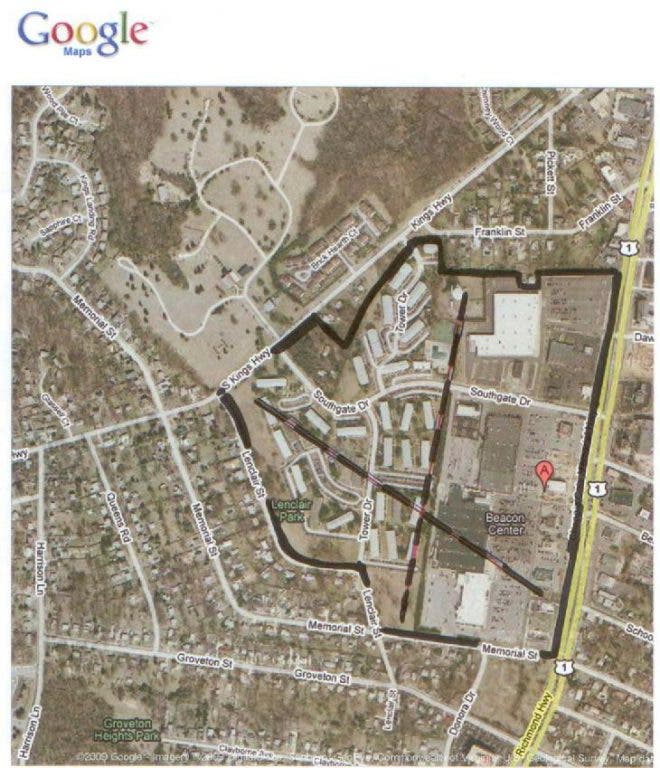
Along the 763 miles of the NYC-to-Atlanta airway route there were 78 beacons and the 55th of those was located on the nation’s main north-south highway, the Mount Vernon Highway (U.S. Route #1). In 1932, that 55th beacon would preside over Beacon Field Airport. [See the field overlay picture to determine where the field was located in relation to our community today.] The airport was built both at a time when emergency fields were being built along the lighted airway to support the mail planes and in a period during which flight was romantically in vogue.
The field catered to private flying and its hangars housed several types of planes. The airport was a stop off for U.S. Mail airplanes and offered classes in flying, parachuting, and gliding. It was also host to contests ranging from Air Treasure Hunts (where aviators had a set amount of time to find a hidden marker) to Air Derbies wherein planes raced each other over a given distance, sometimes reaching great lengths during National Air Race days. For example, the all-women 1929 Powder Puff Derby spanned from California to Ohio.
Find out what's happening in Greater Alexandriafor free with the latest updates from Patch.
In the late 1930s Beacon Field became part of the national Civilian Pilot Training Program that prepared Navy and Air Force cadets to fly in anticipation of World War II duty. Ironically, once we entered the war, and despite being a Civil Air Patrol station, the field soon became dormant because private flying on the East Coast was curtailed to facilitate enemy plane sightings.
After the war, the field had a renaissance fueled by the GI Bill’s funding of flight training (many a commercial pilot passed through Beacon’s flight schools) and by the government’s decision in 1946 to house the Civil Aeronautics Administration’s Region One Aviation Safety District Headquarters there.
Find out what's happening in Greater Alexandriafor free with the latest updates from Patch.
But by the 1950s the private flying-centered field was not doing well economically and the land owners wanted to turn their large tract into a new commercial venture. They succeeded, and construction on the Beacon Mall Center began not long after the 27-year-old airport closed in 1959.
Today www.beaconfieldairport.com, run by the Friends of Beacon Field Airport, is the repository of a treasure trove of information about the history of the field including updated activities that take place in the areas where the field once reigned. A labor of love, the website is very user friendly and the “contact us” link puts you in touch with Anna Marie Hicks and Harry P. Lehman who graciously provided permission for the use of the two photos presented herein.
Robert J. Ricco is a freelance writer and Northern Virginia resident. He writes occasional articles about local history.