Community Corner
Dyke Marsh’s Mystery and History – Scene of the Legal and Illegal over the Years
Part I: Hell Hole, diking and occupation
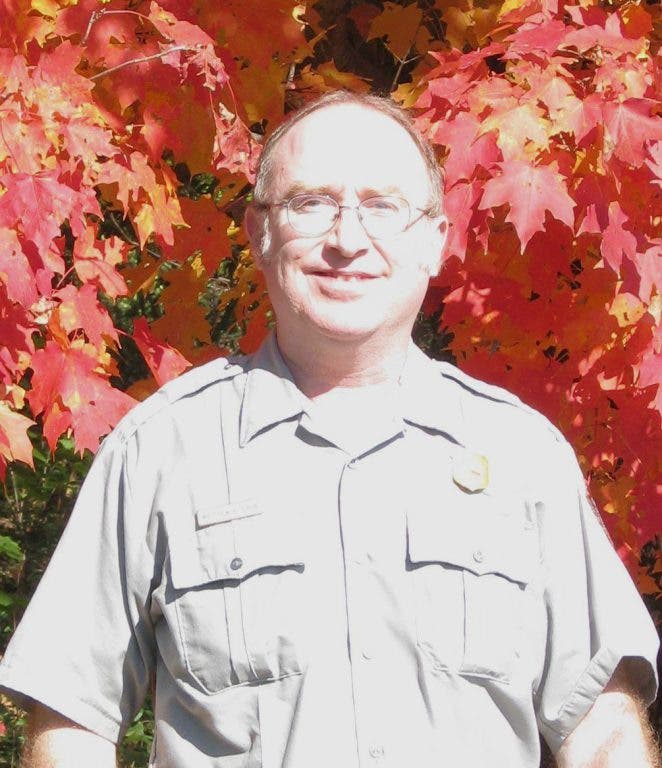
This is the first of two articles on Dyke Marsh’s human history, based on a presentation by Matthew Virta to the 90 people who attended the Nov. 14 meeting of the Friends of Dyke Marsh. Virta is the Cultural Resources Program Manager for the George Washington Memorial Parkway, U.S. National Park Service. The second article will be posted on Wednesday.
---
From diking to daunting escapades, from bootlegging to railroading,
the Dyke Marsh Wildlife Preserve has had a fascinating human history.
Find out what's happening in Greater Alexandriafor free with the latest updates from Patch.
Dyke Marsh is a wooded, watery, green nature preserve along the parkway at the Potomac River’s edge to most people, a treasured freshwater tidal wetland, alive with beavers, birds, muskrats, snakes, dragonflies and more. In addition to its rich natural history, Dyke Marsh has had an intriguing — and a bit nefarious — human history.
From Native Americans to the Civil War
Find out what's happening in Greater Alexandriafor free with the latest updates from Patch.
Cultural resource experts have documented Native Americans’ presence, hunting and fishing in mid-Atlantic wetland environments during the Archaic Period, 9,500 to 1,000 B.C. The Dyke Marsh area was used for subsistence hunting and gathering, archaeologists have concluded, based on Native American artifacts found in the area.
English explorer Captain John Smith encountered many Native American villages on his 1608 voyage up the Potomac River and noted them on his map of Virginia. These villages were home to Algonquian-speaking Indians, including some Algonquian-speaking Nacotchtank and Tauxenent living just north and south of the present-day Dyke Marsh.
In 1653, the British issued the first land patent in the Dyke Marsh area to Giles Brent for two tracts, including a "parcel of sunken land near Hunting Creek." This “sunken land” may have been the first recorded reference to what is now known as Dyke Marsh. In 1669, John Matthews got a patent for 1,600 acres along Great Hunting Creek, probably including parts of Dyke Marsh. Surveys labeled the wetlands as “Swamp and Pocoson.”
In the 17th and 18th centuries, many land transactions occurred through inheritances, repatents, leases and sales. Farming was widespread and the area was planted, mostly in tobacco. By the 1740s, Hugh West owned an expanse that extended from the Potomac River marshes and along the south shoreline of Great Hunting Creek. West built a home and managed a plantation called West’s Grove, a name that has survived to today in northern Mount Vernon.
In the early 1800s, Colonel Augustine Smith bought portions of West’s Grove and began an ambitious attempt at “reclaiming” wetlands by building earthen dikes. After his death, ads in the Alexandria Gazette newspaper boasted the West Grove property as “embracing one of the most extensive and valuable river bottoms and pocosins in this country. . . 350 acres were redeemed from the river by a dike constructed of earth and gravel drawn from the hills. A third has been cleared and cultivated.”
Virta explained that Smith’s intent may have been to create conditions allowing sea-going vessels to unload closer to the shoreline of his property. The dikes ultimately failed.
The West Grove plantation was sold and resold and by 1854, Charles Johnston was growing several crops and raising livestock on a portion of Dyke Marsh. By the mid-1800s, the marsh had earned the name, “Hell Hole.” The Alexandria Gazette in an August 10, 1858 article extolled, “Hell Hole is a grand, wild place, and, save for the miasm and mosquitos which reign there pre-eminent, would be a magnificent abode for those fond of following the pursuits of Nimrod and Walton.” (Nimrod was a mighty hunter in the Bible and Walton was Izaak Walton, the 17th century author of the Complete Angler.)
During the Civil War, Union troops occupied the city of Alexandria and controlled the Dyke Marsh area. The Union troops built forts to protect the capital city, including Fort Willard, then the southernmost fort, and in what is now the Belle Haven community. The troops most likely did not attempt to penetrate the mucky, impassable “Hell Hole.”