Community Corner
Woman Who Fought Poll Tax Gets Historical Marker In Richmond Highway Corridor
A historic marker in the Richmond Highway corridor will be unveiled for the woman who successfully challenged Virginia's tax on voting.


HYBLA VALLEY, VA — The woman who fought Virginia's tax on voters, leading the Supreme Court to find the poll tax unconstitutional under the 14th Amendment in 1966, will be honored Saturday with a historical marker.
The historical site in the Gum Springs area of Fairfax County honors Annie E. Harper, the woman who fought Virginia's poll tax. While the 24th Amendment banned poll taxes in federal elections, the Supreme Court's decision determined poll taxes in state elections were also not allowed.
Harper, a retired resident of 7735 Fordson Road in the Gum Springs neighborhood, and three other African American residents were part of the groundbreaking case, according to a Historic Fairfax City newsletter. Harper was not able to pay Virginia's $1.50 poll tax required to vote and argued the tax disenfranchised residents who could have been eligible to vote.
Find out what's happening in Greater Alexandriafor free with the latest updates from Patch.
At the time, Virginia was only one of five states to still have a poll tax. A 1901-02 Virginia Constitutional Convention re-established an annual poll tax in the aftermath of the 15th Amendment allowing African American men to vote, according to the Virginia Museum of History and Culture. The poll tax led to less voting by poor white voters, Black men and Republicans, first seen with reduced numbers in the 1905 election for Virginia governor.
U.S. Solicitor General Thurgood Marshall, who later became the U.S. Supreme Court's first African American judge, opposed the poll tax in a brief filed in the case. Lawyers representing the Black residents said the poll tax disproportionately impacted poor and minority voters who had a constitutional right to vote.
Find out what's happening in Greater Alexandriafor free with the latest updates from Patch.
The Supreme Court ruled 6-3 in favor of Harper to declare the poll tax unconstitutional. Now, the Virginia Constitution states that a poll tax cannot be implemented.
Harper died in 1983 and is buried at Snowden & Bethlehem Memorial Gardens in Fort Hunt, according to Historic Fairfax City.
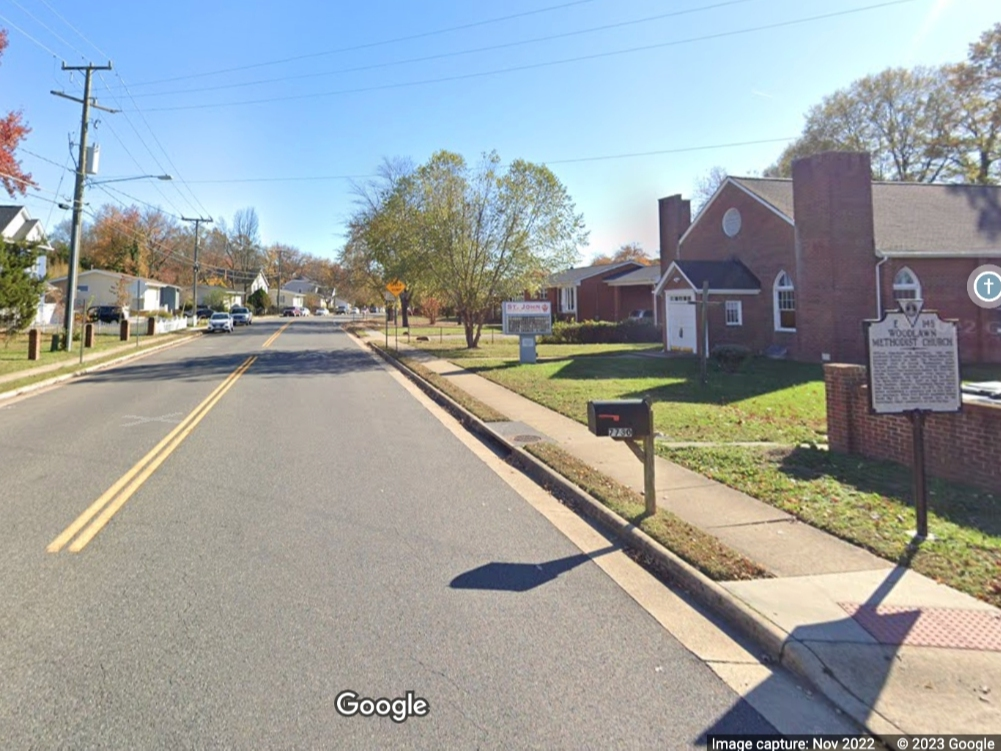
A historical marker honoring Harper and the Harper vs. Virginia Board of Elections decision was suggested by fourth-grade students at Island Creek Elementary School as part of Fairfax County's Black/African American Historical Marker Project. The historical marker is located at 7735 Fordson Road, Alexandria, close to where Harper lived.
Residents can attend the historical marker unveiling at 10 a.m. Saturday, July 22, at 7735 Fordson Road in Alexandria (across from St. John's Baptist Church). A reception will follow at Bethlehem Baptist Church, 7836 Fordson Road in Alexandria.
The event is hosted by the New Gum Springs Civic Association and Bethlehem Baptist Church.
Another recent historical marker in Gum Springs was unveiled in June for West Ford, a freed slave of George Washington's family who founded Gum Springs. Gum Springs celebrated its 190th anniversary this year and is Fairfax County's oldest African American community.
Get more local news delivered straight to your inbox. Sign up for free Patch newsletters and alerts.