Politics & Government
Northam Outlines Steps For Virginia After George Floyd Death
Virginia's governor addressed protests and steps for healing and tackling inequities after George Floyd's killing in police custody.


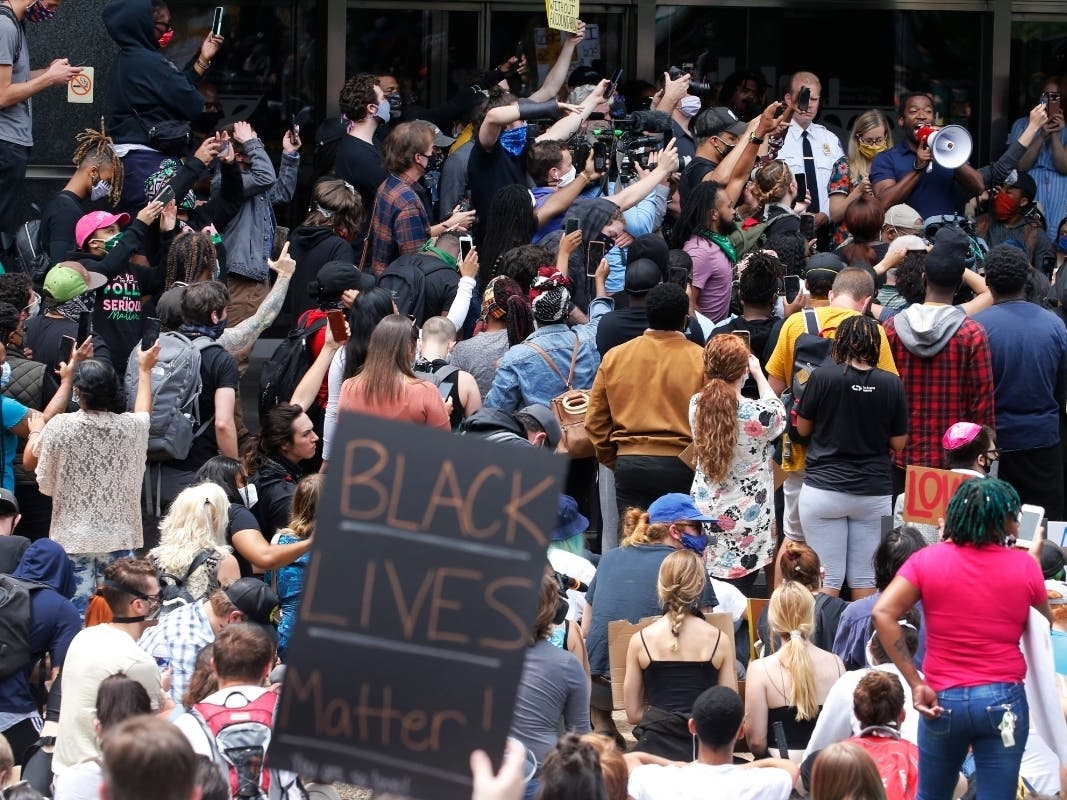
VIRGINIA — As protests both violent and peaceful continue in reaction to the police killing of African American man George Floyd in Minneapolis, Gov. Ralph Northam expressed his intentions to listen to the black community and tackle systemic racism in Virginia on Tuesday.
"I cannot know how it feels to be an African American person right now or what you are going through," said Northam. "I cannot know the depth of your pain. But what I can do is stand with you and support you, and together we are going to turn this pain into action."
The governor acknowledged the disparities that the black community has faced, some of which relate to educational attainment, criminal justice and prisons, maternal and neonatal mortality, and business practices. He also said health inequities make people of color more vulnerable to COVID-19, the illness caused by the coronavirus.
Find out what's happening in Greater Alexandriafor free with the latest updates from Patch.
"The protests we have been seeing are because of them and because of a system that continues to allow this to happen," said Northam. "We often fail to draw connections between our past and our present. But what we're seeing today didn't spring out of thin air. Racism and discrimination aren't locked in our past. They weren't solved with the Civil Rights Act. They didn't appear; they evolved."
He outlined four steps his administration will take in the coming days: listening to the community and holding virtual town halls about criminal justice reform and public safety; meeting with the Virginia Association of Chiefs of Police; working on a statewide day of prayer, healing and action; and requesting his African American advisory board and commission to examine racial inequities in Virginia laws with a focus on criminal justice and public safety.
Find out what's happening in Greater Alexandriafor free with the latest updates from Patch.
He believes other steps are already chipping away at the equities, such as expanding Medicaid, increasing the threshold for felony larceny, ending driver's license suspensions for unpaid court fees, decriminalizing marijuana and eliminating the photo ID requirement to vote. The latter two items will take effect on July 1.
On civil unrest in Richmond and around Virginia, Northam said he is listening but asks protesters to remember the pandemic by practicing social distancing and wearing face masks.
"My message to protesters here in Richmond and around Virginia is that I hear you," said Northam. "I am here to work with you so that together we can help build a place where no one fears for their life because of the color of their skin."
Northam also addressed President Donald Trump's photo with a Bible at St. John's Episcopal Church across from the White House. He said the Virginia National Guard was not used because they weren't requested by DC Mayor Muriel Bowser. He added that he would not send the Virginia National Guard for what he called a "photo op." According to the Washington Post, law enforcement used rubber bullets and tear gas to push protesters back before the president's visit.
Get the latest updates on the new coronavirus in Virginia as they happen. Sign up for free news alerts and a newsletter in your Patch town.
Numerous black leaders joined Northam's news conference to address how the pain people are feeling after Floyd's death can be turned into change.
Del. Delores McQuinn, who represents parts of Chesterfield, Henrico and Richmond, believes the discussion on addressing systemic racism is here to stay.
"The expectation is to protest peacefully, said Del. Delores McQuinn. "After we protest peacefully let's sit at the table where our voices can be heard and where people can dissect and process what we have to say."
Shirley Ginwright, a member of African American advisory board and chair of Fairfax County's Communities of Trust committee, marched with Martin Luther King Jr. and drew comparisons between then and now. She believes the fights for inclusion and against racism are what civil rights activists fought for then and what they're fighting for now.
"We didn't have the riots, but Dr. King did say that the riots are the voice of the unheard," said Ginwright. "We talk about listening; we don't listen. We don't listen to the black voices. But we definitely need to listen to the young people who are on the street fighting for justice."
Jim Bibbs, chairman of the Urban League of Hampton Roads, called the civil unrest in the aftermath of Floyd's death the "voices of the unheard."
"I think if we're all honest this hurts us all, even to those who have no clue what's going on ... but they're hurting because they see the nation in unrest," he said.
Bibbs believes Virginia is "putting together a roadmap for the nation to follow" for reform. He pointed to the creation of the African American advisory council and hiring of Janice Underwood, Virginia's first-ever director of diversity, equity, and inclusion. However, he'd like to see police reform, including requiring dashcams and body cams on police at all times. He also wants to see revisions of laws that may unfairly target African Americans and for people to challenge statements about race that some deem as socially acceptable but are preventing progress on improving the lives of African Americans.
Naquel Perry Jr., a rising senior at Albemarle High School in Charlottesville, encouraged people of all backgrounds to work together. "To all the kids that are watching, we are the future," he said. "Our voice needs to be heard, and we need to come together now more than ever. We need everyone, any race, we need everyone to make this thing bigger and to help us."
Patch has posted a separate story on the Virginia governor's plan for phase two reopening.
SEE ALSO:
Get more local news delivered straight to your inbox. Sign up for free Patch newsletters and alerts.