Community Corner
Hope After Heroin: A Recovering Addict Says Baby 'Saved My Life'
"I was shooting up and crying at the same time." A Long Island mom, in recovery after harrowing addiction, speaks on life-changing relapse.


Life is bright for 30-year-old Shanna Lintz as the holiday season brings her little girl's 4th birthday in December and gatherings with family and friends. The memories yet to be made mean everything to Lintz, who spent years battling a deadly heroin addiction.
Lintz, who lives in Hicksville, has a story that echoes across Long Island and the United States: She was, she said, raised in a good family with parents who loved her and her three younger sisters. And yet she always struggled with ADHD and anxiety.
"I didn't do well in school," Lintz said. "When I first started drinking in excess, at 14 or 15, I was always just trying to get out of myself. When I used alcohol or marijuana, I seemed to feel more normal."
Find out what's happening in Herndonfor free with the latest updates from Patch.
As she began dating, Lintz said she always focused her attention on others.
"I was always trying to take care of someone else," including those she dated, she said. She was attracted to relationships where she felt she could "save" someone, "to try and help them. That was my passion, to try and help people."
Find out what's happening in Herndonfor free with the latest updates from Patch.
One man she dated was addicted to painkillers. Lintz said she tried for years to get him to rehab, but he ultimately began using heroin. At first, she said, she didn't try the painkillers. But when she saw she "couldn't change him," she decided to try them and see "what the hell was so good about them. From that first painkiller, Percocet, I was addicted. That was it."
Her journey and descent began with the use of painkillers, Lintz said.
"When that wasn't enough, it led to my using the stronger stuff."
She began using alone, although Lintz said she was always doing drugs while in a relationship with someone who was struggling. After rehab, she fell off the proverbial wagon, Lintz said. While she'd stayed clean for a while, she attributes her relapse to the fact that she wasn't doing anything to replace the role of drugs in her life.
"I'd get out of rehab and be in worse shape because I wasn't doing anything for my recovery — I wasn't doing anything in place of taking drugs," she said. "The 'medicine" wasn't there and I had nothing to help me cope with life, I was left to my own devices. I wasn't taking the suggestions from meetings or looking for spirituality."
Also See: Why Are Opioids So Addictive?
Lintz said she later met another man with whom she used drugs.
"At one point, we were out of money. We had no place to live. We were living in a car," she said.
With no resources, life took an even darker turn. Lintz said her boyfriend decided he was "going to take someone's pocketbook." She stayed in the car while he proceeded to steal the purse. He came back with $120, she said. "That was nothing, compared to the trouble we were in."
In 2010, the pair was arrested. Lintz claimed her bail was set at $120,000. While she was behind bars, she said, her boyfriend committed suicide in jail.
Lintz said her devastated parents and grandfather worked to find the funds to pay her bail.
"My family is a huge part of my story, my recovery."
Out of jail, on top of trying to stay clean with no outlets and no meetings, Lintz said she "begged the court" to send her to rehab as a condition of her sentence. But because her charge was robbery- and not drug-related, that option was not considered.
"It made me so upset," she said. "I was a heroin addict. I really just needed help, someone to say they would send me to rehab."
That moment, she said, was what ultimately led her to begin speaking on addiction in order to shed light on the realities that are faced by addicts who are trying to find a way out of the darkness.
Lintz said she was sentenced to five years of probation after her violent felony charge and her driver's license was revoked.
Once again, she said, her family rallied to her side, paying for rehab because her insurance didn't cover in-patient treatment. Since she was not using drugs at the time, she was told she needed outpatient treatment, Lintz said.
She went upstate New York for a 30-day stint.
"I heard a lot of things there that I took with me," she said, adding that she was still grappling with mental health issues.
Still, that time in rehab "planted a seed in me."
After her release, she used drugs again, using for about a week before she went to her parents, crying, telling them she needed help desperately.
That led to 9-month stay at rehab, followed by time spent in a sober house. Next, Lintz went back to college, where she worked toward a degree for a career counseling those struggling with drugs and alcohol.
In years past, she'd worked as a hairdresser, she said. Having that license to work in a salon as she strived toward recovery "helped tremendously," she said. "I was able to work, make money, get back on my feet."
Earning a 4.0 average and clean for almost three years, Lintz said she still wasn't fully "working the program. The whole spirituality aspect wasn't kicking in."
A new, short relapse led her back to church, where she found solace and healing at the Living Faith Christian Church in Farmingdale. "I felt as though the pastor was talking to me, that there was a reason for my being there," she said.
Dating a man with whom she said she'd never had a "good, healthy relationship" because both were trying to get clean and stay sober, the couple was having problems and decided to go their separate ways, Lintz said.
She soon learned that she was pregnant. Lintz went to meet her father, to tell him the news. When he heard, Lintz said, he said, "Thank God," relieved that his daughter was having a baby, not relapsing, she said.
Her baby, Litnz said, changed everything.
While she was pregnant, her grandmother passed away; losing her grandmother was the thing she'd always feared would send her spiraling back into addiction. But while she was pregnant, she stayed clean, for her baby, and did not use drugs.
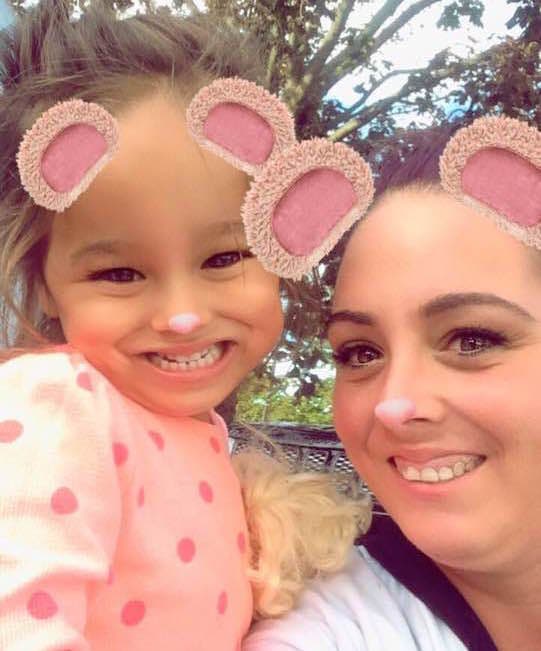
"I really felt as though Briella was a gift from God," she said.
She stayed clean for the entire time she breastfed her daughter, Lintz said.
Six months after her daughter Briella was born, however, Lintz said she suffered from postpartum depression and had a weeklong relapse.
"I was shooting up and crying at the same time," she said. "I didn't want to be using but I didn't know how to cope." The drugs, she said, were there, and "I did it."
Her baby, just 6 months old, was home while she was using heroin, Lintz said.
Ultimately, Lintz found help at a methadone clinic. "Going away for rehab wasn't an option. I had a little baby," she said.
She attributes her deep faith with guiding her toward recovery.
"Now, I go to church regularly. It's brought me to a place where I'm so happy, mentally and spiritually. I haven't done drugs in three years now and I'm working hard. I've just got to take it slow and be patient."
Lintz added, "My faith, that church, has helped me tremendously."
At church, Lintz is involved with Bible study and will be baptized soon.
"I don't even think about going back to using. It's not an option for me," Lintz said. "I feel like I went through everything I did, for a reason."
And now, she's committed to helping others, speaking at places such as a local college.
What she has found, Lintz said, is that not everyone is able to reach recovery via the same path. While some find tools at meetings, she found her inner strength at church and through spirituality.
"That's the problem with the stigma," she said. "Even in the field, everyone says you have to go to meetings. But unfortunately, that doesn't work for everyone. You have to find what works for you and what helps you."
Today, Lintz said she decided not to pursue her career in drug and alcohol counseling. "I was taking care of everyone else, not thinking about myself. I had to put myself first."
Once again, working in a hair salon, Lintz said she's found peace.
Not alone
Lintz's story is one of the many that have emerged as the raging opioid epidemic sweeps the nation, leaving a sea of victims struggling with the insidious tentacles of addiction — and it's a scourge that's showing no signs of slowing down.
In 2015, New York's number of opioid overdose deaths was the fifth highest in the country, according to national data that depicts an ongoing battle that claims victims across all socioeconomic and demographic lines.
National numbers released by the Centers for Disease Control give a picture of how New York State compares to other states struggling against the same deadly epidemic.
The new numbers look at 2015, the most recent year for which full data is available.
According to the CDC, opioids — both prescription and illegal — were involved in 33,091 deaths in 2015, and opioid overdoses have quadrupled since 1999.
In New York, the number of drug overdose deaths in 2015 was 2,754, according to the CDC.
The CDC also reported that the statistically significant drug overdose death rate increase in New York indicated a 20.4 percent increase in 2015, compared to 2014.
Still, it was not the highest.
In 2015, the five states with the highest rates of death due to drug overdose were West Virginia (41.5 per 100,000), New Hampshire (34.3 per 100,000), Kentucky (29.9 per 100,000), Ohio (29.9 per 100,000) and Rhode Island (28.2 per 100,000).
In New York, in 2015, that rate was 13.6 per 100,000 people, according to the CDC.
New York was among the states with the most significant increases from 2014 to 2015. Those states were largely in the Northeast and South, according to the CDC.
Other states with statistically significant increases in drug overdose death rates from 2014 to 2015 included Connecticut, Florida, Illinois, Kentucky, Louisiana, Maine, Maryland, Massachusetts, Michigan, New Hampshire, New Jersey, North Carolina, Ohio, Pennsylvania, Rhode Island, Tennessee, Washington and West Virginia.
Communities in New York including Long Island have struggled with the raging crisis.
In June, 2016, a report found that overdoses related to heroin and opioids rose faster in New York State than in other areas in 2014.
Most recently, statistics indicated that fentanyl has outpaced heroin as the deadliest drug on Long Island. And in 2015, Suffolk County made headlines as the leader in New York in heroin overdose deaths.
To that end, Gov. Andrew Cuomo has embraced new weapons in the ongoing war against addiction, even creating a new statewide heroin task force in May, 2016.
On the East End of Long Island, after news anchor Drew Scott lost his beloved granddaughter Hallie to an overdose, the community has come together to raise awareness with a new task force in Southampton and a recent forum.
A new future
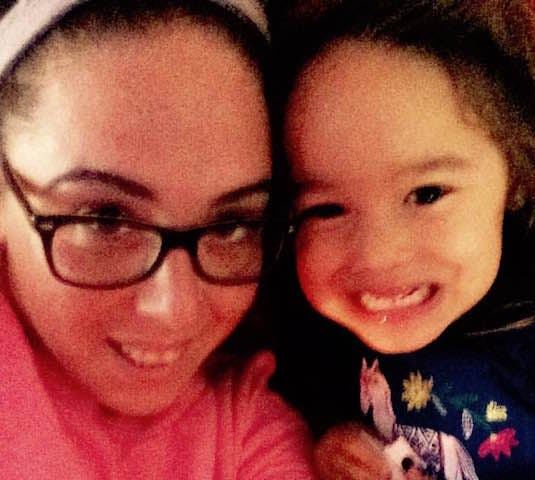
Lintz said she has found her new beginning in her daughter's eyes.
"She is a gift from God," Lintz said. "I looked up what her name, Briella means, and it's, 'God is my strength.'"
She added that while she did relapse for that one week after her daughter was born, being pregnant when her grandmother died kept her from a perhaps final spiral downward into the depths of addiction.
Of her daughter, Lintz said simply, "She absolutely saved my life."
For others struggling, who may not have the incredible family support Lintz received, she said: "Keep faith and hope. Don't give up. Life's too short and too precious."
With her daughter turning 4 in December, the holidays and family have deep meaning, Lintz said. "It's a great time of the year."
Of her new beginning, Lintz said: "I never dreamt I'd feel this way. Now I'm happy, I'm living life. Life is beautiful and simple, and easy — but sometimes we make it so hard."
RELATED:
- News Anchor Drew Scott Vows To Shatter Stigma Of Heroin, Opioid Addiction
- One Woman's Recovery From The Hell Of Heroin: 'My Worst Day Sober Is Better Than My Best Day Using'
- After Son's Heroin Overdose, 'Guardian Angel' Mom Finds Hope, Saves Others
- Suffolk Leads State in Heroin Overdose Deaths: Heartbroken Mom Shares Pain at Losing Son to Epidemic
- Face of Fentanyl: One Woman's Story Of Deadly Drug That's Surpassing Heroin In Long Island Deaths
- Lethal New Drug Laced Into Heroin So Strong It's Used as Elephant Sedative
Patch photos courtesy Shanna Lintz.
Get more local news delivered straight to your inbox. Sign up for free Patch newsletters and alerts.