Kids & Family
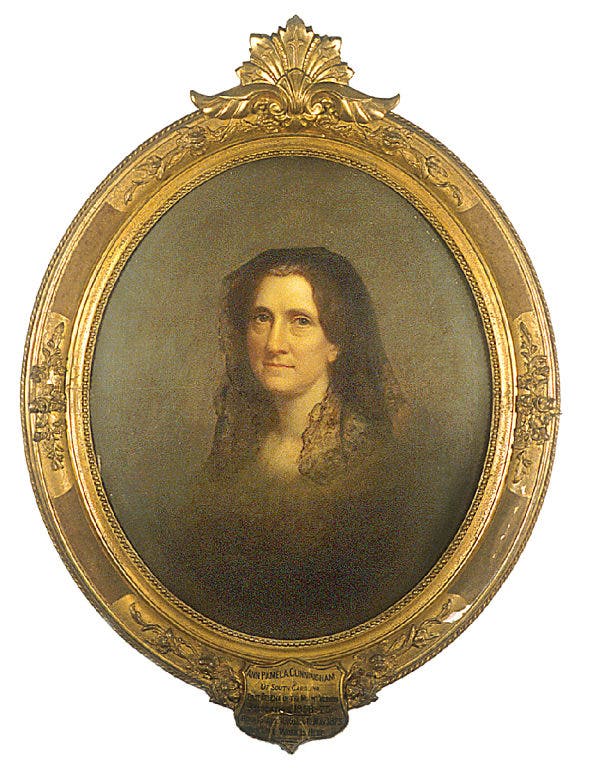
Ann Pamela Cunningham: Historic Preservation Pioneer
The founder of the Mount Vernon Ladies' Association fulfilled her mission of preserving Historic Mount Vernon.



This is the first part in a three-part series about the Mount Vernon Ladies' Association in honor of Women's History Month. Check back next Friday to learn how one headstrong woman protected Mount Vernon during the Civil War in part two of this series.
Long before the crusade for women’s rights, the women who established the Mount Vernon Ladies’ Association were leaders in their own right. Founder Ann Pamela Cunningham was a Southern belle who made it her life’s goal to restore and preserve the home of our country’s founding father.
More than 150 years later, the nation's oldest historic preservation organization continues to uphold Ann Pamela Cunningham’s original mission: to preserve Washington’s home while educating Americans about the way the first family lived.
Find out what's happening in Mount Vernonfor free with the latest updates from Patch.
Mount Vernon Falls into Ruin
After Washington’s death in 1799, ownership of his estate changed hands among his family members five times. George Washington’s great-grand nephew John Augustine Washington III owned the mansion beginning in 1829. However, Washington experienced difficulty in maintaining the mansion due to lack of funds. The wear and tear of hundreds of visitors began to take its toll, and the mansion began to fall into a state of disrepair. Several columns on the piazza rotted away completely; the roof was propped up with the masts of old ships.
Find out what's happening in Mount Vernonfor free with the latest updates from Patch.
Washington was approached by speculators who wanted to develop the property into a commercial enterprise. Washington made it clear his best offer for the property was $300,000, but he could not consent to sell Mount Vernon without an absolute assurance that it would be preserved for future generations.
“Why was it the women of his country did not try to keep it in repair, if the men could not do it?”
Ann Pamela Cunningham was born into privilege and was groomed to conformed standards held at the time for proper young ladies. But after she suffered a spinal injury as the result of a fall from a horse at age 17, her life changed. She suffered from chronic pain for the rest of her life and would travel to Pennsylvania for medical treatments.
After one particular trip to Pennsylvania, Cunningham’s mother wrote her daughter a letter; little did she know that letter would change the course of history.
Mrs. Louisa Cunningham wrote to her daughter of her return trip:
“It was a lovely moonlit night that we went down the Potomac. I went on deck as the bell tolled and we passed Mount Vernon. I was painfully distressed at the ruin and desolation of the home of Washington, and the thought passed through my mind: Why was it the women of his country did not try to keep it in repair, if the men could not do it?”
Ann Pamela Cunningham was devastated to hear that the home of our country’s founding father was in a state of disrepair. She took her mother’s words to heart and decided to take action.
Cunningham sent a letter to the Charleston Mercury, which was published on Dec. 2, 1853, rallying the ladies of the South to join forces and save Mount Vernon. Her appeal led to the formation of small societies and donations throughout the South. Cunningham increased her outreach to include the Northern states.
“One of the things that Miss Cunningham had in mind…is that ‘if we can get people to rally around the cause of saving Washington’s home, maybe…the union breakup wouldn’t happen,’” said Mount Vernon Chief Historian Mary Thompson. “The whole name of the organization is the Mount Vernon Ladies’ Association of the Union. It speaks volumes about what Ann Pamela Cunningham was hoping to accomplish.”
The Mount Vernon Ladies’ Association Is Formed
The first meeting of the Mount Vernon Ladies’ Association of the Union convened in 1854. The original plan called for the women of the nation to donate money through their governors, who would then send it to the governor of Virginia for the state to purchase Mount Vernon. However, tensions between the North and South intensified and the Virginia government decided it could not take on that mission.
Cunningham was undeterred by the Virginia government’s decision. By the spring of 1858, the Mount Vernon Ladies’ Association raised thousands of dollars through grassroots fundraising efforts across the country in order to purchase the estate themselves. Cunningham was so confident that the association would reach its financial goal, that she arranged to meet with George Washington’s great-grand nephew John Augustine Washington III, in order to bring closure to purchasing the estate. According to Gerald W. Johnson in his book "Mount Vernon: Story of a Shrine," Cunningham found Mount Vernon’s owner in “the worst of tempers.” Washington was cordial but firm in his refusal of Cunningham’s offer, and after listening to “all the arguments she could bring to bear . . . with cold civility, he left her and she went to bed in a state of collapse.”
Cunningham didn’t give up on her efforts to secure the purchase of the estate. The following day, she called upon the advice of Washington’s wife. Cunningham’s persistence paid off: Several hours later, on April 6, 1858, Washington signed a contract of sale with the Mount Vernon Ladies’ Association of the Union for $200,000.
After the Mount Vernon Ladies’ Association acquired the estate, Cunningham decided to preserve everything associated with Mount Vernon despite not having a preservation standard to guide her. Some people thought the outbuildings should be torn down because they housed only “menials;” others believed the house should be converted into an old soldiers’ home or memorial park.
“I think they were very caught up in this cause and were doing something that nobody else thought of or was interested in at the time, and they got people interested,” Thompson commented. “The thing is, nobody was doing much by the way of historic preservation and Ann Pamela Cunningham, who founded the organization, was very forward-thinking, I think."
Get more local news delivered straight to your inbox. Sign up for free Patch newsletters and alerts.