Health & Fitness
Approaching Your Yoga Practice, Safely
Play it safe with these tips for a healthy yoga practice.
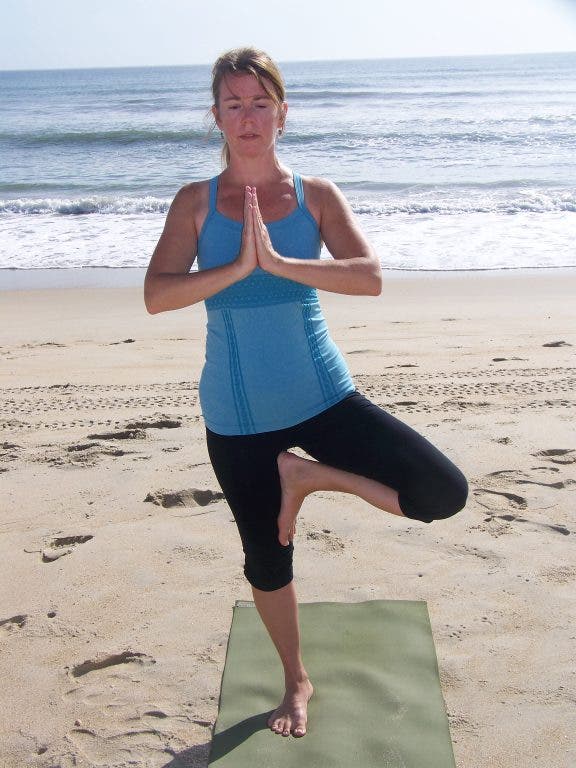
The recent article in the New York Times, "How Yoga Can Wreck Your Body", has prompted an outpouring of posts, email forwards, and general conversation among yoga students. While I think the title is fairly frightening, the article does give some helpful points, providing insight into poses that may cause injury over time. I do, however, view yoga as a path to healing, and if done correctly, not injurious to the body.
The purpose of yoga is not to put ourselves in pretzel-like positions, the goal is to quiet the mind. The Yoga Sutras, ancient Sanskrit texts, tell us that yoga works to cease the fluctuations of the mind, thereby calming the nervous system. There are many more benefits we derive from yoga such as increased flexibility and strength, improved sleep, digestion, and circulation, and developing greater patience and sensitivity, to name a few. We move into yoga postures to open areas of the body, sending our healing breath to these areas, encouraging the internal energy to move and circulate. Yoga will take us on a path towards enlightenment, but we can’t get there if we feel negative about ourselves, our yoga practice, and possibly worried about injury. Here are my tips on how to make your yoga practice healthy and safe.
1) Don’t let your ego get in the way. Be content with where you are, in body and mind, as this will change from day to day. Use props and modifications to bring yourself into your expression of the pose, and then allow your breath to bring you deeper. It’s easy to judge yourself against the strengths and weaknesses of others, but that will only hurt your practice in the long run. Close your eyes when you find yourself comparing to others, and allow the movement to come from deeply within.
Find out what's happening in Mount Vernonfor free with the latest updates from Patch.
2) Think positive thoughts. I recently saw a fantastic bumper sticker – “Don’t Believe Everything You Think”. Our thoughts do become things, permanent views about ourselves and others, which can cause disease in the body and mind. Master Yoga Teacher, Cora Wen, once said “rather than saying I’m really inflexible…turn the statement around to something more positive…I’d like to be more open in the hips”. I repeat this statement almost daily to students as we are all too hard on ourselves thinking our bodies should be different.
3) Know your limits. Pushing past the limits of our bodies can cause permanent damage. If you come into a pose and your breath shortens, that is your body signaling to you that you’ve gone too far. Ease up a bit and find your deeper breath. Listen to your body and own your practice.
Find out what's happening in Mount Vernonfor free with the latest updates from Patch.
4) Be cautious with injuries. Yoga teachers are not medically trained and while we may know a lot about how the body functions, we are not a replacement for your doctor’s medical advice. It’s important for your teacher to know about your injury so that he/she can give you modifications, however, it’s important for you to know what to avoid. Remember that if it hurts, you probably shouldn’t do it. Yoga works to help find comfort with some discomfort, but not pain.
5) Choose the practice that’s right for you. In a class full of people coming from all different types of situations and lifestyles, yoga teachers strive to find a happy medium for all students. You may opt to choose a gentle class on a day where you’ve experienced a tense confrontation or have been sitting for most of the day. Where you are coming from, and your frame of mind affects your practice and your safety.
6) Vary your practice. As with most exercise, you want to avoid performing the same routine every day. Alternate your postures so as not to overwork one muscle group while under working another.
7) ‘Listen’ to your teacher. Many teachers give modifications of poses while showing a more challenging posture. It’s important to listen to the options so you can make an informed decision as to what’s best for you. Sometimes we find ourselves on autopilot during class, following visually and not on an auditory level.
I hope these tips are helpful, and that you will continue to embrace yoga for its healing properties. I’d love to hear other safety guidelines, so if you have something to share, please comment below.
Above all, enjoy your practice, your breath, and your time on the mat.
Copyright © 2012 Johanna Seltzer.
Johanna Seltzer, RYT 200, has been teaching since 1991, beginning in dance, and currently in the yogic tradition. She holds a B.A. in dance from the University of Maryland, and a graduate certificate in arts management from American University where she will serve as an adjunct faculty member starting January of 2012. Johanna is a consultant for the Dance Heritage Coalition, River’s Edge Yoga, Smith Center for Healing and the Arts, and Virginia Yoga Week. She is a yoga and wellness blogger for the Mount Vernon Patch, and teaches locally at St. Aidan’s Church, Mount Vernon Recreation Center, Mount Vernon Athletic Club, and Pure Prana Yoga Studio. In addition to group classes, Johanna teaches private sessions and classes for corporate wellness programs. For more information, visit www.innerlightyogi.com.