Health & Fitness
If a BRAC Falls in the Forest...
The BRAC-related expansion of Fort Belvoir is now completed. What does this mean for the Richmond Highway Corridor?
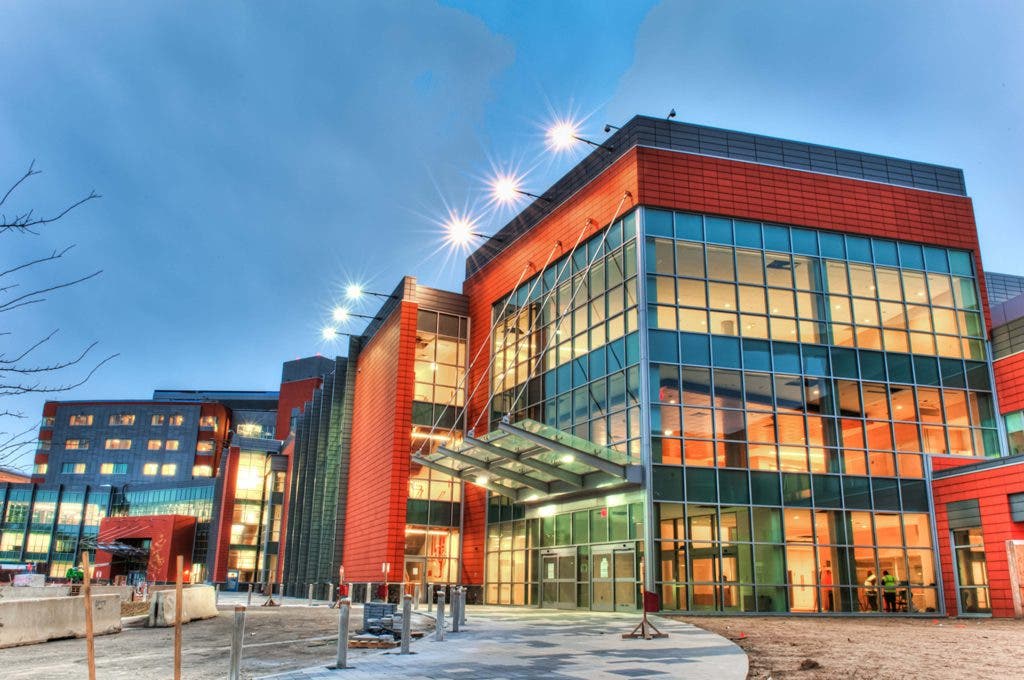
One of the top five things that I hear each day is some variation of: “Things are really gonna change with all the growth at Fort Belvoir.” The next sentence says a lot about the perspective of the person making the observation. Some suggest that we’re going to see a wave of office development to provide space for all of the government contractors who will need space here. Some recoil in horror in discussing how horrible the traffic is going to become. Some lament that all of the new employees will push out low-income families from apartments. Some talk hopefully of the shops and restaurants that will follow demand from Belvoir.
All of these sentiments are perfectly valid and understandable. However, they are all overlooking one rather pertinent fact: there is no further growth happening at Fort Belvoir. According to Don Carr, Director of Public Affairs at Fort Belvoir, the Base Realignment and Closure (BRAC) legislation of 2005 mandated that all relocations be completed by September 15, 2011, and that Fort Belvoir met its targets. In other words, the BRAC-ing of Belvoir is now complete. The last item in the pipeline is the National Museum of the U.S. Army, which is still attempting to raise funds and will not open any sooner than 2015.
Now that BRAC has happened, I think it is a good idea to take a look at exactly what has changed at Fort Belvoir over the past six years. First of all, much of what was technically realigned to fall under Fort Belvoir’s command has not actually occurred on the Main Post. Of the 19,300 jobs added to Fort Belvoir, 8,500 are housed at the National Geospatial Agency at Fort Belvoir’s North Area in Springfield, 6,400 are at Mark Center in Alexandria City, and 1,000 are actually at Rivanna Station outside of Charlottesville.
Find out what's happening in Mount Vernonfor free with the latest updates from Patch.
Doing the math, the net gain at Fort Belvoir’s Main Post, which begins to the east of Telegraph Road, was actually just 3,400 jobs. Of these, about 2,000 are associated with the new Fort Belvoir Community Hospital, which has partially replaced functions that were at Walter Reed Hospital in the District. The rest of the “new” jobs at Belvoir are mainly from the relocation of various Army offices from leased office spaces elsewhere in metro DC. While there may not be that many new jobs at the Main Post, they tend to be high paying medical and professional jobs.
Given all of the above information I believe that there are four critically important conclusions to be drawn:
Find out what's happening in Mount Vernonfor free with the latest updates from Patch.
- The growth from the 2005 BRAC round at Fort Belvoir is done, and there will not be any more jobs added there in the immediate future.
- The 3,400 jobs added at the Main Post have certainly added to the area’s traffic problems, but they alone did not cause the problems, especially since many of the jobs at the hospital are second and third-shift positions.
- While these jobs are new to Fort Belvoir, they are not new to the metro area, so few of the employees have actually picked up and moved their households as of yet.
- Government contractors have not beaten down the door to locate offices on Richmond Highway since all functions moved to Main Post already existed somewhere else in the DC area, and even those that are moving are more drawn to areas like Springfield that are directly along I-95.
If I haven’t beaten my point to death enough, let me try this: the tree (BRAC) has already fallen in the forest (Richmond Highway), but the community doesn’t seem to have heard it.
So now that the tree has fallen, what will its repercussions be for the Richmond Highway corridor? I see the following effects continuing to ripple through the community in the next few years:
- A slight easing of traffic when Mulligan Road opens in 2013 followed by significant improvements when the widening of Route 1 from Woodlawn to Telegraph Road is completed in 2015.
- Continued demand for hotel rooms from the families of active and retired soldiers being treated at the hospital, visiting Army personnel, students at the on-post training centers, and, eventually, from the Army Museum.
- A slow but steady increase in demand for better quality housing in the local area as current employees retire or shift jobs and are replaced by new employees with good salaries who want to live closer to work.
- Some demand for better shopping and dining options in the Woodlawn area driven by the influx of hotel guests and more affluent households, but not a massive groundswell.
- A modest amount of demand for office space on Richmond Highway from small contractors looking to take advantage of one of the area’s key economic development advantages: it is the home of the only two Historically Underutilized Business (HUB) Zones in Northern Virginia, in which small businesses can get preferred treatment for certain contracts.
I will conclude by issuing a mea culpa on behalf of SFDC, albeit for things said long before I arrived. Until we updated it this afternoon, our own website continued to hint that the BRAC round at Fort Belvoir could drive demand for as much as 7 million square feet of office development in the area. That figure was actually based on the entirety of the Fort Belvoir expansion, including Mark Center, the North Area, and Rivanna Station.
I think it is fair to say that BRAC did not have the effects on the Richmond Highway corridor that many people expected or hoped to see. Still, it has already had significant impacts on the economic prospects of the area and should continue to do so as Belvoir employees continue to move to the area, the Army Museum opens, and the long-awaited widening of Richmond Highway is completed.