Politics & Government
ANALYSIS: Understanding Northport's Vision For The Future
Here's our in-depth, analytical look at Northport's proposed comprehensive plan ahead of a public meeting later this month.


NORTHPORT, AL — Later this month, the Northport Planning & Zoning Commission will host a rescheduled public hearing ahead of the city adopting and implementing a new comprehensive plan to set the city's priorities for the next two decades.
Click here to subscribe to our free daily newsletter and breaking news alerts.
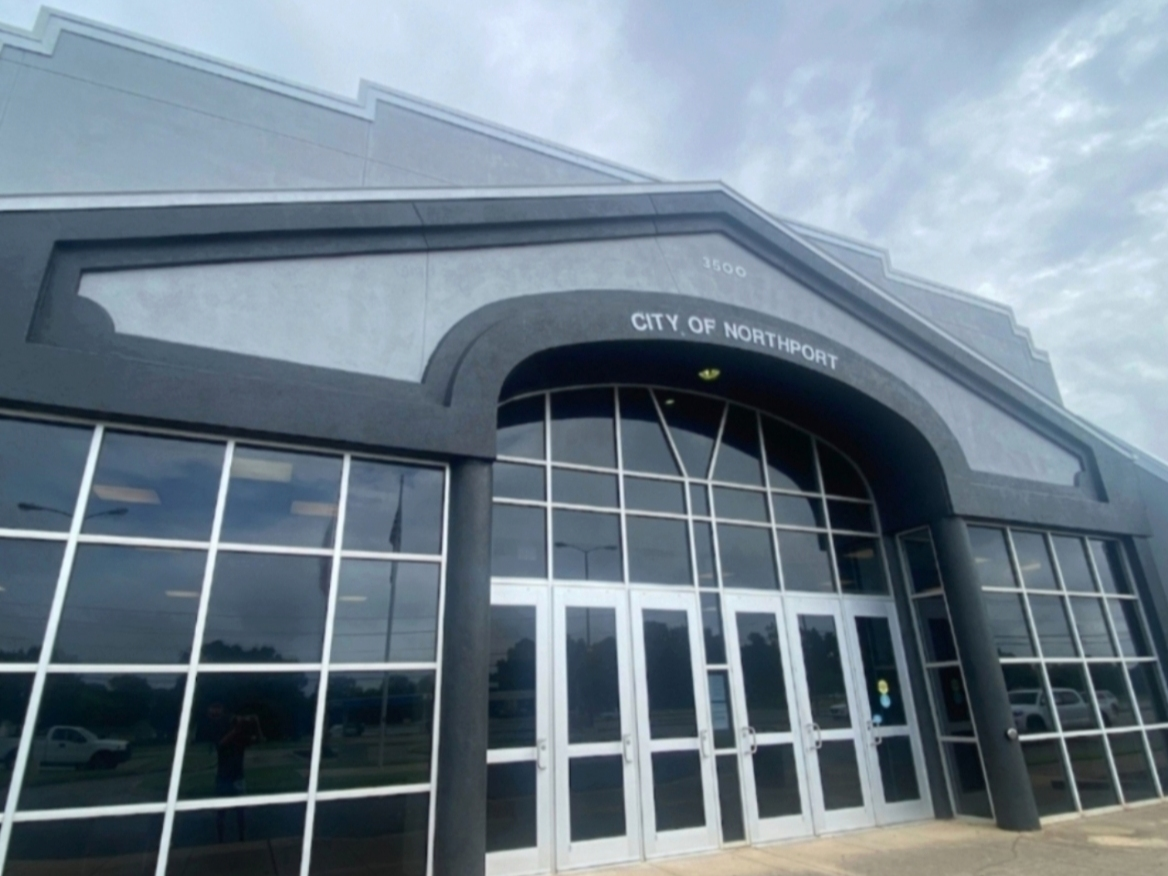
As Patch previously reported, a new public hearing is set for Nov. 27 at 6 p.m. at Northport City Hall, which follows a series of community meetings over the last year to provide residents the opportunity to learn more and provide feedback.
Find out what's happening in Tuscaloosafor free with the latest updates from Patch.
"Taking a proactive approach with the comprehensive plan is just another way your elected officials see the overall need for sustainable positive growth," Council President Jeff Hogg told Patch on Tuesday. "Through workshops, public input, and our dedicated professional staff, we are setting ourselves up to be the preferred city for families in Tuscaloosa County."
Still, the ongoing work regarding the comprehensive plan — a vastly updated version of the city's 2008 comprehensive plan — generated headlines last week after some residents complained that the city didn't provide proper advanced notice for a previously scheduled public hearing last Thursday.
Find out what's happening in Tuscaloosafor free with the latest updates from Patch.
While the schedule of meetings has been on the city's website since January, District 1 Councilwoman and Pro Tem Christy Bobo told Patch that the lack of promotion for the hearing was nothing more than an innocent oversight — one that was immediately addressed and corrected by the city's planning department.
As a result, a new public hearing before the Northport Planning & Zoning Commission was scheduled, while due apologies were offered up by city leaders.
"While I cannot speak for any council member other than myself, I have been anxiously and hopefully waiting for the results of citizen input for the latest draft of the comprehensive plan and to receive more opinions from the constituents of District 1," she said. "City staff has committed to a greater effort in communicating upcoming meetings and events. They have really stepped up to help everyone stay better informed. ... I look forward to hearing the input that follows the meeting so that we can all make informed decisions about the future of our beautiful city."
With the official public hearing coming up, Tuscaloosa Patch took a deep dive into the 124-page proposed comprehensive plan to provide the best possible understanding of the city's vision for its future.
Click here to read the full draft of the Comprehensive Plan.
So, let's start with what, exactly, the Comprehensive Plan will do once implemented. In their own words, here's how the city describes it:
- Illustrate the ways in which the city intends to develop over time.
- Coordinate planning for land use and development with planning for transportation and infrastructure.
- Identify important natural and historic features and methods to conserve them in balance with community development.
- Provide a pattern for land use and development that limits incompatibility and protects property values, while also supporting economic development and a diversified tax base.
- Model future conditions and provide guidance on municipal investments toward infrastructure, facilities and services intended to meet future demands in a fiscally responsible manner.
- Provide a guide for administering and improving zoning, subdivision and other regulations.
By The Numbers
Before we take a deep dive into the context of the multifaceted comprehensive plan, here's a look at some of the black-and-white data provided in the draft of the plan. These will be important to consider later in this analysis.
- When asked what conditions may have limited or reduced their quality of life, 62% of respondents to the city's visioning survey cited traffic issues as the biggest concern, while 38% mentioned cost of living and another 29% listed parks and recreation amenities.
- When asked to describe a change or improvement residents felt would have the most positive, sustained impact on Northport, 36% of respondents mentioned public schools, followed by business development (32%), public safety (31%) and parks and recreation amenities (30%).
- The city anticipates that approximately 54% of the projected demand for housing over the next several years will be for households with annual incomes of $100,000 and below, which underscores the need for an emphasis on affordable housing and residential developments moving forward.
- In terms of parks and recreation, the city says its four ongoing park projects will see the city's parkland increase from 48 acres to 346 acres. What's more, another 237 acres of parkland, which is owned by Tuscaloosa County Park & Recreation Authority (PARA) and the Friends of Historic Northport, is positioned within or adjacent to the city, amounting to 580 total acres of parkland.
- According to 2022 usage rates, Northport reports that 71% of its water system’s storage capacity is used on a daily basis, before saying that daily usage rates are likely to exceed the city's capacity over the next 30 years.
- The city expects that by 2030, its water system will be serving 44,531 customers per day.
- Northport's sanitary sewage treatment plant at present is running at approximately 63.5% of its permitted capacity but saw peak flows at 155% of its rated capacity in 2021 and peak flows of 122% last year.
Initial Desires & Concerns
As Patch previously reported, the comprehensive plan is being developed by KPS Consulting, as conversations first began in January with a visioning session to solicit feedback from members of the community.
District 4 Councilwoman Jamie Dykes presided over the very first Northport Compass Vision Meeting in January and told Patch that the current draft of the comprehensive plan would not have been possible without the wealth of input offered up by city residents.
“Our Planning and Zoning Commission, under the guidance of our Planning Director Julie Ramm, has done a stellar job with the organization of the Comprehensive Plan," she said. "With the exception of one recent snafu, the public involvement sessions have been incredibly successful and vital in making this process thorough and authentic. This team has worked diligently since the get-go to make this plan effective and doable. It is a 20-year plan, but this Planning & Zoning Commission has set the bar for the coming years."
The initial meeting, though, ultimately provided city leaders with insight into the short-term, immediate desires and concerns of attendees, ranging from respondents pointing out the city's limited dining and retail options, while also expressing the belief that the community has not taken advantage of its riverfront.
Above all, though, all of the suggestions relate to growth, which is a central focus for city leaders and consultants working on the comprehensive plan. Chief among these different components is a Future Land Use Plan, which would be used to concentrate growth in and around commercial nodes.
With residents wanting new dining options and the city wanting to invest in employment hubs that drive additional economic development, perhaps the most relevant example can be found after a public hearing in October that then saw the city approve an economic development incentive package to secure Diamond Jim's Steakhouse as the city's newest eatery.
Coming at a more-than-manageable cost for the city, the news was widely embraced after the owner of the beloved steakhouse confirmed the deal.
Indeed, attracting new restaurants has been a high priority for this Council, which also recently celebrated the openings of several new restaurants along the Highway 82 corridor, most notably at the North Square shopping center — now the home to Great American Cookie Co., Teriyaki Madness, Guthrie's and Buffalo Wild Wings Go.
The new Buffalo Wild Wings concept had its grand opening Tuesday.
In weighing the pros and cons of this approach as it relates to offering financial incentives, it is undeniable that this City Council over the last term has made it a top priority to improve the city's culinary offerings in any way possible, which aligns with the desires expressed by citizens during visioning meetings over the last year.
Conversely, concerns are equally valid when discussing the use of taxpayer dollars in the form of economic development incentives to provide a more attractive place for a business to land when compared to incentives offered by, for example, the City of Tuscaloosa.
But that's the reality of the situation that city leaders are sure to point out: If Northport doesn't offer incentives, somebody else will.
When looking at the city's underutilized riverfront, though, Patch reported last week that the City Council approved branding for its new youth sports complex adjacent to Kentuck Park, which will now be called River Run Park, with the special district being referred to as Northport Shore.
This, city officials insist, is the first major step to improve a large swath of the city stretching from Kentuck Park and the new youth sports tournament facility currently under construction, to out along the riverfront.
Another proposal in the sports complex master plan, which is included in the proposed comprehensive plan, is the creation of a natural park area on the west side of the Black Warrior River train trestle near downtown and extending along the Levee Trail to 30th Avenue.
The city says the 37-acre site would feature walking trails and a pavilion along the river.
Still, other concerns mentioned by residents focused on the potential negative aspects of future growth, particularly relating to adequate and affordable residential development, along with addressing traffic congestion and other issues that undermine the city's "small town environment."
"Some parts of the community, including high-visibility commercial areas, do not project the clean, attractive, small town image residents expect for Northport," the draft of the comprehensive plans notes when mentioning feedback from the community.
For example, Northport officials insist that traffic issues in the city could be drastically improved with the construction of the long-stalled Tuscaloosa Eastern Bypass project.
In the hopes of easing congestion to promote a slower pace of life as a "small town," city leaders say two proposed road projects would help to form a loop around Northport as part of a four-lane regional bypass. Accessible only at interchanges, this would connect to the interstate from Rose Boulevard across Northport and then along the eastern side of Tuscaloosa to Skyland Boulevard/U.S. Highway 11.
Separately, respondents also pointed to the need to prioritize stormwater management to better protect the community, which comes after a historic flood event in the summer of 2021 that exposed the city's strained and aged infrastructure, while leaving millions of dollars worth of damage in its wake.
Reacting in the aftermath of the flooding event, the Northport City Council last year approved a contract to conduct a drainage study on Twomile Creek after the major flooding event and crews have been visibly at work in the area in the subsequent weeks and months.
While the creek often gets high and even breaches its banks from time to time during periods of heavy rain, uncommon rainfall amounts from a tropical storm during this event overwhelmed the city's stormwater infrastructure and left the city with no choice other than to approve $500,000 in immediate repairs.
When the high water finally receded, a total of 96 homes were impacted in some way, with cost estimates for damage in Northport coming in at nearly $3 million.
Many of those who lost their homes in the flood lacked proper flood insurance, which raises questions for the future as the city looks at new residential requirements in the hopes of avoiding a similar situation in the event of another historic downpour.
The future of the city's stormwater infrastructure is mentioned at length in the proposed comprehensive plan, which explains that 100-year flood zones — areas with an annual 1% chance of flooding — straddle the floodway and are available for development, while also being subject to some restrictions such as raising buildings above flood elevation and flood insurance requirements.
Conversely, 500-year flood zones, which are areas with an annual 0.2% chance of flooding, tend to be relatively small, according to city officials, and are available for development with little or no restrictions.
These aspects of the master plan give the city options and can also be viewed as aligning with the desires of respondents to see Northport's sewer and stormwater capacity improved, especially considering the city's current lack of a comprehensive water and sewer master plan.
Moving on, though, one of the most relevant and pressing issues discussed by those who provided feedback was the lack of a public library branch in Northport. Funding for the Tuscaloosa Public Library has dominated headlines in recent weeks, with the library system's Board of Trustees announcing that it had no choice but to cut certain programs and reduce hours in order to address its present budget shortfall.
While Northport leaders are sure to insist that the city lacks the funding to build its own self-funded library branch, Patch reported in August when Northport City Hall debuted its new library book vending machine, which is stocked and maintained by the Tuscaloosa Public Library.
ALSO READ: Understanding The Tuscaloosa Public Library's Budget Crisis
What's more, while Northport in the past has been criticized for not paying its fair share for library funding along with Tuscaloosa County and the City of Tuscaloosa, city leaders have been quick to point out that the City Council has increased its funding for the library every year during the current council term, committing $554,000 to the library for the current fiscal year.
The City of Northport also kicked in $378,000 toward a new roof and a new HVAC system for the library's main branch.
As part of the proposed comprehensive plan, Northport officials expressed a desire to partner with the Tuscaloosa Public Library system to improve physical access to the county library's collection in Northport but did not float the possibility of building any brick-and-mortar facility.
When looking at priorities, the current City Council has focused more of its resources on new parks and recreational offerings.
To the tune of more than $45 million borrowed from the city's bond agency, Northport has already broken ground on its new sportsplex adjacent to Kentuck Park, along with planning a new adventure sports park on Rose Boulevard and a planned aquatic center and water park off of McFarland Boulevard.
With most of the city's capital funding already earmarked for the aforementioned projects, coupled with the evolving nature of library services, it will likely be years, if ever, before the city is in a financial position to build its own library branch
Regardless of the changes to library services, though, it remains a key concern for Northport residents.
Looking Ahead
While plenty of short-term concerns and wishes were expressed over the last year during community meetings for the comprehensive plan, citizens also provided additional priorities they would like to see made a point of focus in the future.
Among these wish-list items is improved infrastructure for pedestrians and bicycling, along with more accommodations for electronic vehicles.
As Patch reported in late 2022, the City Council approved bike and pedestrian master plans for both the northern and southern parts of the city, with the goal of improving walkability and connectivity. This comes amid a larger, ongoing push by the city for safety and infrastructure improvements to its busiest transportation corridors.
TTL, Inc. — the Tuscaloosa-based engineering firm handling the project — speculated last year that the total cost for just the Northern Bicycle & Pedestrian Master Plan to come out to a little more than $14 million, with the paths themselves coming in at $4 million. Still, support has been substantial for the concept and the Southern Bicycle & Pedestrian Master Plan.
Following the City Council's approval of the two master plans, they were then considered by the city's Metropolitan Planning Organization (MPO). The MPO ultimately adopted the plans, which will allow the city to seek grant money for the approved projects.
Northport City Administrator Glenda Webb told Patch that the Council has not yet created a funding plan to use local dollars on the project, but mentioned that City Engineer Tera Tubbs has been actively researching potential funding phases to then present to the Council for consideration.
With most of the city's funding earmarked for new parks and recreation projects, it's unlikely the city will be able to make any meaningful progress on the pedestrian and bike projects in the near future without additional borrowing or taking money from other prior commitments, such as potentially breaking the covenant for the city's Northport First Funds — the revenue generated from the city's 1-cent sales tax increase that is set aside for certain city needs.
Schools & Education
Next on the list of future concerns are public schools, with the proposed master plan saying that the quality of Northport's schools is critical to the city's future, along with pointing out that the city will benefit from strong partnerships with county and regional organizations.
Why is this important? Simply put, Northport has no other choice but to depend on the county and other organizations to improve the schools within its city limits, especially considering the failed push earlier this year for Northport to break away from the Tuscaloosa County School System and form its own city school district.
Despite gathering momentum before the abrupt resignation of Mayor Bobby Herndon last November, the results of a school system feasibility study — namely the cost estimates to start its own district — ultimately dashed any immediate hope of the city being able to do so without voters approving substantial hikes to their property taxes.
It should be pointed out that Northport, following the approval and implementation of a 1-cent sales tax increase, has been generous to schools with its additional revenue. However, these contributions and the city's revenue capabilities fall well short of what would be needed to address the larger concerns of aging buildings like Collins-Riverside Intermediate School or the lack of an auditorium at Tuscaloosa County High School.
With this in mind, the city said it would like to see both Matthews Elementary and Collins-Riverside Intermediate Schools replaced with new facilities, but conceded that doing so would be the responsibility of the county school system.
To make matters worse, registered voters showed out in force in February to vote down a proposed property tax increase that would have seen TCSS provided with roughly $17 million a year in additional revenue to then be used on large-scale capital improvements in places like Northport.
Put simply, substantial funding, along with reorganized community priorities are the only options for Northport to do more for its schools than what its present financial capabilities will allow.
Downtown & Historic Areas
Few issues have generated as many headlines during the last year as the battle over the future of the Northport Community Center and its adjoining park, the end result of which will impact the immediate vicinity for years to come.
While the city's proposed comprehensive plan notes that Northport’s downtown and historic areas should be preserved due to reflecting characteristics that the community would like to see modeled in other areas of the city, the vision for how to do this varies depending on who you ask.
Indeed, as Patch previously reported, those on one side of the issue — namely certain members of the City Council — have expressed a desire to see the Northport Community Center property transformed into the city's newest retail development.
At the same time, a vocal grassroots group opposed to the sale and plans for the property has urged city leaders to maintain its current amenities instead of taking away some of the little green space left inside the city limits.
Northport Mayor John Hinton, in July, said he would veto the sale of the property once it made its way to his desk following the end of the ongoing due diligence period to allow for the developer to market the property. However, it must be pointed out that if Hinton does as promised and vetoes the sale, it would still just require a 4-1 vote of the Council to override the decision.
The due diligence period went into effect with the Council's approval on June 1, meaning it will conclude no later than Nov. 28. The first council meeting following the close of the 180-day period is set for Monday, Dec. 4.
While preservation has been a noticeable talking point for this City Council as it relates to the aforementioned areas, it is difficult to see how such an approach would align with the actions of city leaders over the last year to redevelop the Northport Community Center and park.
What's more, no real momentum has been seen as it relates to commercial growth in downtown Northport, which has historically lacked a diverse range of businesses to promote walkability and positive economic development.
This is noted in the proposed comprehensive plan, which points out a lack of the following amenities in downtown Northport: A coffee shop, a wider variety of restaurants, bike racks, water fountains, public art, electric vehicle charging stations, green space, mixed-use buildings with retail business on the ground floor, a parking deck and more.
With a stagnate downtown tax base, preservation may be the only option in the foreseeable future as groups like the Merchants of Historic Downtown Northport are sure to push back against any major changes to the present business dynamics of downtown — setting up a potential showdown on the horizon between what many refer to as "Old Northport" and "New Northport."
The struggles for downtown Northport are underscored by interpretations of data from weekday lunch and Saturday dinner peak periods, with occupancy rates for both on-street and off-street parking reported to be well below the optimal utilization threshold of 85%.
While city officials insist this implies that sufficient parking is available in the downtown area for peak times, it is also a glass-half-full interpretation that possibly ignores the reasons why downtown parking is underutilized. The proposed comprehensive plan also contradicts its own assertions about downtown parking by turning around and lamenting limited parking options.
With respect to downtown Northport, the City Council has made efforts to improve the aesthetic by funding streetscape improvements along Main Avenue from its historic core, north to McFarland Boulevard, and along First Street from the highway overpass to Bridge Avenue.
My conclusion: City leaders seem determined to redevelop the Northport Community Center property in the hopes of not just providing new quality-of-life offerings to residents, but also creating another new tax base to generate much-needed revenue for the city, while also making good on the promise of prioritizing the recruitment of new businesses to Northport.
What's Next?
There are still numerous discussions to be had before the official implementation of the comprehensive plan following the public hearing this month.
As Patch previously reported, additional meetings will be held in 2024 to provide a zoning update and discuss subdivision regulations.
Final takeaways: Given City Hall's emphasis on and commitment to large-scale capital projects and sweeping improvements to infrastructure, few will argue that this City Council is the most ambitious Northport has seen in years. But the jury is still out on whether this is a blessing or a curse.
This will likely have one of two possible outcomes, the first being that the city makes good on its short-term goals while providing the community with proof of steady progress on larger projects.
This could pay political dividends, after all, with municipal elections coming up in 2025 — a notion that is no doubt on the minds of the city's elected officials.
The other is more uncertain as it relates to present economic instability and rampant inflation.
Indeed, if mismanaged with respect to the tens of millions of earmarked dollars and in putting the city's improved bond rating on the line, the City Council's eyes could prove too big for their stomach and ultimately undo the positive gains made in recent years by a city that was on the verge of bankruptcy not all that long ago.
Time will certainly tell.
Still, it must also be said that the proposed comprehensive plan remains in its draft phase, which underscores the time left for citizens to have their voices heard.
Have a news tip or suggestion on how I can improve Tuscaloosa Patch? Maybe you're interested in having your business become one of the latest sponsors for Tuscaloosa Patch? Email all inquiries to me at ryan.phillips@patch.com
Get more local news delivered straight to your inbox. Sign up for free Patch newsletters and alerts.