Schools
Whiz Kids with Whistles at Tufts Pool
These Whiz Kids keep you safe at Tufts Pool. Meet lifeguards Christine Feeley, Casey Haggerty, Jon Gowa, Tori Barry, and Bath House Attendant Jim Barry.

They range in age from 17 to 22, but these Whiz Kids are First Responders and your best bet for a safe summer at Tufts Pool.
Christine Feeley, a 17 year-old senior at Medford High School, has two years of lifeguarding experience at Tufts Pool. Casey Haggerty, who just graduated Matignon and will be attending Connecticut College in the fall, has three years’ experience, with two of them at Tufts. Jon Gowa, with five years of lifeguarding behind his belt, just graduated from Tufts University as a Mechanical Engineer. Tori Barry, who works at the pool with her brother Jim, has been guarding lives there for four years.
Their pool season began back in June, when the City of Medford recertified them all in CPR and First Aid. Lifeguards are considered First Responders, and as a result receive training beyond lifeguarding. This training enables them to help with car accidents, for example, until someone with greater certification arrives on the scene.
Find out what's happening in Medfordfor free with the latest updates from Patch.
This year, the recertification also served to introduce them to their new supervisor, Curtis Tuden. This is Tuden's first year as supervisor at Tufts, and his crew has really helped him get comfortable in his role.
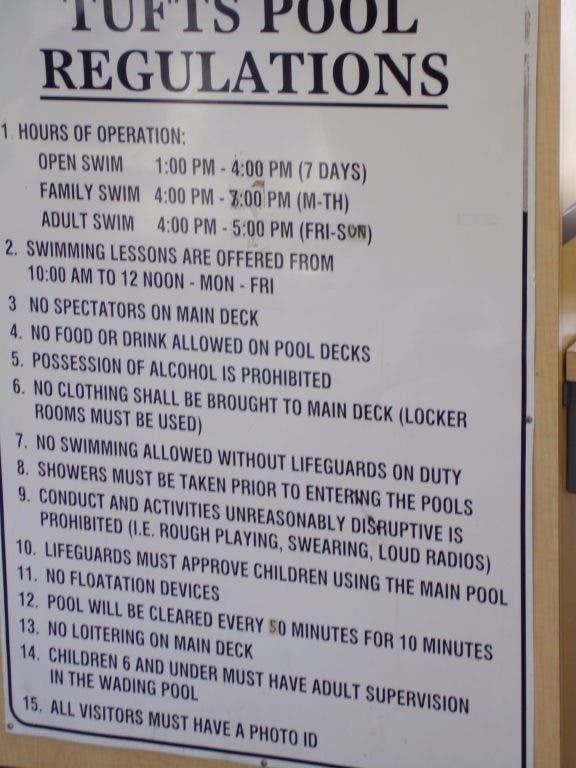
As they explain their responsibilities at the pool, it’s clear that they have a lock on safety. The most common situation they have to deal with is kids running on the pool deck. While this sounds minor, it has some greater implications. For one, it means that they perform more first aid for those injuries than anything else. It also is a danger if someone gets hurt badly enough that they bleed into the water. Simply put, blood closes the pool as a necessary safety precaution.
Find out what's happening in Medfordfor free with the latest updates from Patch.
Tufts Pool lifeguards take a “proactive, not reactive approach,” says Casey Haggerty. In order to prevent emergencies, they can ask a swimmer to take a swim test before they go into the deeper pool. They are trained to spot distress swimming and intervene before the swimmer can panic further and hurt him- or herself. There are safety checks every hour when the pool is cleared and monitored. And of course, they keep on top of running and horseplay.
Place yourself in their hands, Medford. They’ve got your back.