Weather
Flooding Along East, Gulf Coasts Will Increase In Frequency Over 30 Years: Study
The changes are most noteworthy across the mid-Atlantic region.


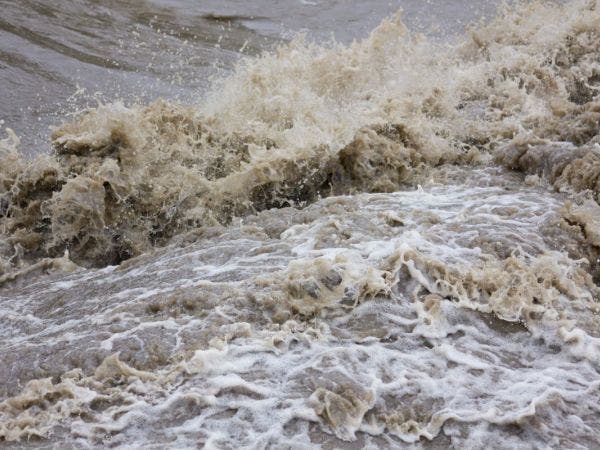
Tidal flooding along the east and gulf coasts of the U.S. is expected to significantly increase over the next 30 years, owing to rising sea levels, according to a study published earlier this month.
The study, published in PLOS ONE , used 52 tide gauges with a defined flooding threshold for minor coastal flooding that are maintained by NOAA. Researchers evaluated tidal flooding frequency at two future sea levels — in 2030 and 2045 — using localized versions of three global projections developed for the most recent U.S. National Climate Assessment.
The largest increase in flooding is expected to be along the mid-Atlantic coast. According to the study, by 2030, several New Jersey locations can expect to average 70 to 100 tidal floods in a year, and places like Annapolis, Maryland, and Washington, D.C., can expect to average 120-150 tidal floods each year.
Find out what's happening in Across Americafor free with the latest updates from Patch.
The study notes that tides that cause minor flooding today are expected to cause moderate flooding in some locations. For example, in Lewisetta, Virginia, about 15 cm currently separates a tide that causes minor flooding from one that caused moderate flooding. So if the sea level rises by just 15 cm, as is expected within 15 years, tides alone could cause moderate flooding.
Historic tourist destinations like Cambridge, Maryland; Charleston, South Carolina and Savannah, Georgia, are also expected to face moderate flooding from tides alone by 2030 because of rising sea levels. Charleston could see substantial flooding up to two dozen times per year on average by 2030.
Find out what's happening in Across Americafor free with the latest updates from Patch.
By 2045, the study says many coastal communities can expect about a 30 cm increase in sea levels, and with that rise, communities can also expect highly regular tidal flooding. These changes are most noteworthy for the Mid-Atlantic region, but all regions experience an increase in flooding frequency, according to the study. Coastal areas of Delaware, Maryland and Long Island will face moderate flooding from tides alone by 2045.
More than half of the 52 communities analyzed in the study could experience, on average, a tenfold or greater increase in the frequency of tidal floods. And nearly one-third of the 52 communities could average more than 180 tidal floods per year.
According to the study, while vulnerable coastal areas may not be permanently inundated until the late century or beyond, at least eight of the 52 locations mentioned in the study face an average of 200 or more tidal floods a year, which means some areas in those locations could be effectively inundated in just the next few decades. This includes locations like Washington, D.C.; Annapolis, Maryland and Cape May, New Jersey.
Even locations that currently experience very low or no frequency of minor flooding can see a steep increase in flood frequency, according to the study.
The study goes so far as to say that even communities not covered in the analysis can expect to see changes on a similar scale. However, it notes that there are inherent assumptions in the analysis, such as that land use and coastal morphology will not change appreciably and that tidal ranges will continue to be predictable in each location for the short-term future. The study also says it is important to note that all projections of future climate change are uncertain.
In conclusion, the study projects a nearly ubiquitous increase in the frequency and extent of tidal flooding along the east and gulf coasts based on localized sea level projections for 2030 and 2045.
"Coastal communities and states, and the nation as a whole, need to prepare for near-term changes in tidal flooding, while working hard to minimize longer-term losses through efforts to both adapt to these changes and limit their extent," the study says. "This preparation should include federal efforts to sustain and expand the nation’s tide gauge network to ensure that local decision makers have access to the best possible data."
Image via Shutterstock
Get more local news delivered straight to your inbox. Sign up for free Patch newsletters and alerts.