Community Corner
Supermoon Trifecta Starts Now, Geminid Meteor Shower Peak
A trio of supermoons, starting this weekend and ending with a January blue moon, meteor showers and a total lunar eclipse are coming up.


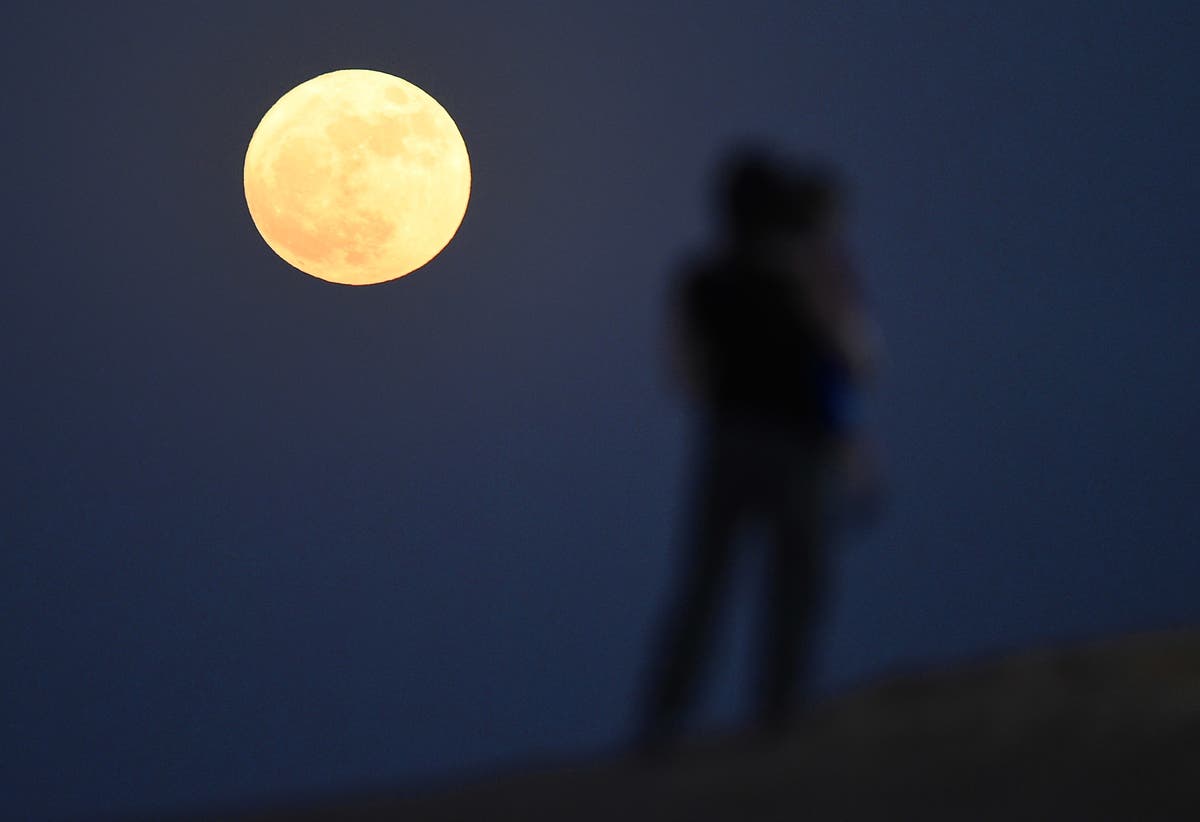
December and January will be delicious months for skywatchers, with three consecutive supermoons starting this weekend and including a blue moon supermoon at the end of January; a total lunar eclipse; and a trio of meteor showers, starting with the Geminids, an especially bright celestial event that peaks Dec. 13-14.
The first full moon in the supermoon trifecta will be at its closest point to Earth at 4 a.m. Eastern on the morning of Monday, Dec. 4, but moon gazers will get their best views at just after sunset Sunday, Dec. 3, as it appears large over the horizon.
That’s the supermoon effect. The moon isn’t actually larger, but it appears particularly so in its closest approach to Earth during its monthly orbit — known as lunar perigee. The December full moon, which is also known as the “cold moon,” is the only supermoon in 2017, and it’s smaller than most.
Find out what's happening in Across Americafor free with the latest updates from Patch.
But in 2018, the supermoon that will be visible Jan. 1-2 will be the largest of the year. A second full moon on Jan. 31, known as a blue moon because it is the second full moon in a calendar month, is also a supermoon — and then get ready. It sets the stage for a total eclipse of the moon, which occurs when the moon passes through the Earth’s dark shadow — or umbra. The moon gradually gets darker, and then takes on a rusty or blood red color during the eclipse.
The total lunar eclipse will be visible in western North America, Asia, Australia and the Pacific, according to earthsky.org.
Find out what's happening in Across Americafor free with the latest updates from Patch.
If supermoons aren’t your thing, the Geminid meteor shower is considered one of the best of the year, sometimes offering as many as 120 meteors an hour. The shower is nearly 200 years old and was first detected on a riverboat on the Mississippi River, Space.com reports.
As Jupiter’s gravity tugs at the stream of particles left behind by the asteroid 3200 Phaethon, the shower has moved stronger and closer to the Earth over the centuries.
The best time to see meteors is around 2 a.m. local time on Dec. 14. They emanate from the constellation Gemini — just look in the northeastern sky near the constellation Orion, easily spotted by the three stars in the hunter’s “belt.” Gemini is just to the right, high in the sky.
The meteors should be visible anywhere in the sky. If you focus too closely on Gemini, you may miss the meteors with longer “tails” as they streak by in the sky, Space.com says.
And as with all meteor showers, getting away from intrusive light is your best bet.
A minor shooting star show, the Ursid meteor shower around the time of the Winter Solstice on Dec. 21 and peaks in the overnight hours of Dec. 22-23. At most, you’ll probably see only a handful of meteors, maybe five an hour, and you’re more likely to see them in the far northerly latitudes in the Northern Hemisphere.
Ursid meteors are slow movers, and if you trace their path backward, “they appear to come from the section of sky marked by the Little Dipper star Kochab,” earthsky.org writes.
The shooting stars of 2018 could be a bust because it will mostly be washed out by the light of the supermoon, but you may be able to see some if you’re patient. The Quadrantids meteor shower peaks Jan. 3-4. It’s an average show, seasky.org says, producing about 40 meteors an hour at its peak.
The shower is thought to be produced by debris left behind by the extinct comet 2003 EH1, and the meteors should be visible from any part of the sky, barring interference from the moon. It radiates from the constellation Bootes.
Watch: Supermoon To Rise This Weekend
Photo by Tom Dulat/Getty Images News/Getty Images
Get more local news delivered straight to your inbox. Sign up for free Patch newsletters and alerts.