Traffic & Transit
Metro General Manager To Leave In 6 Months As 7000 Series Troubles Persist
As the 7000 series investigation continues, Metro's general manager announced his intention to retire in six months.


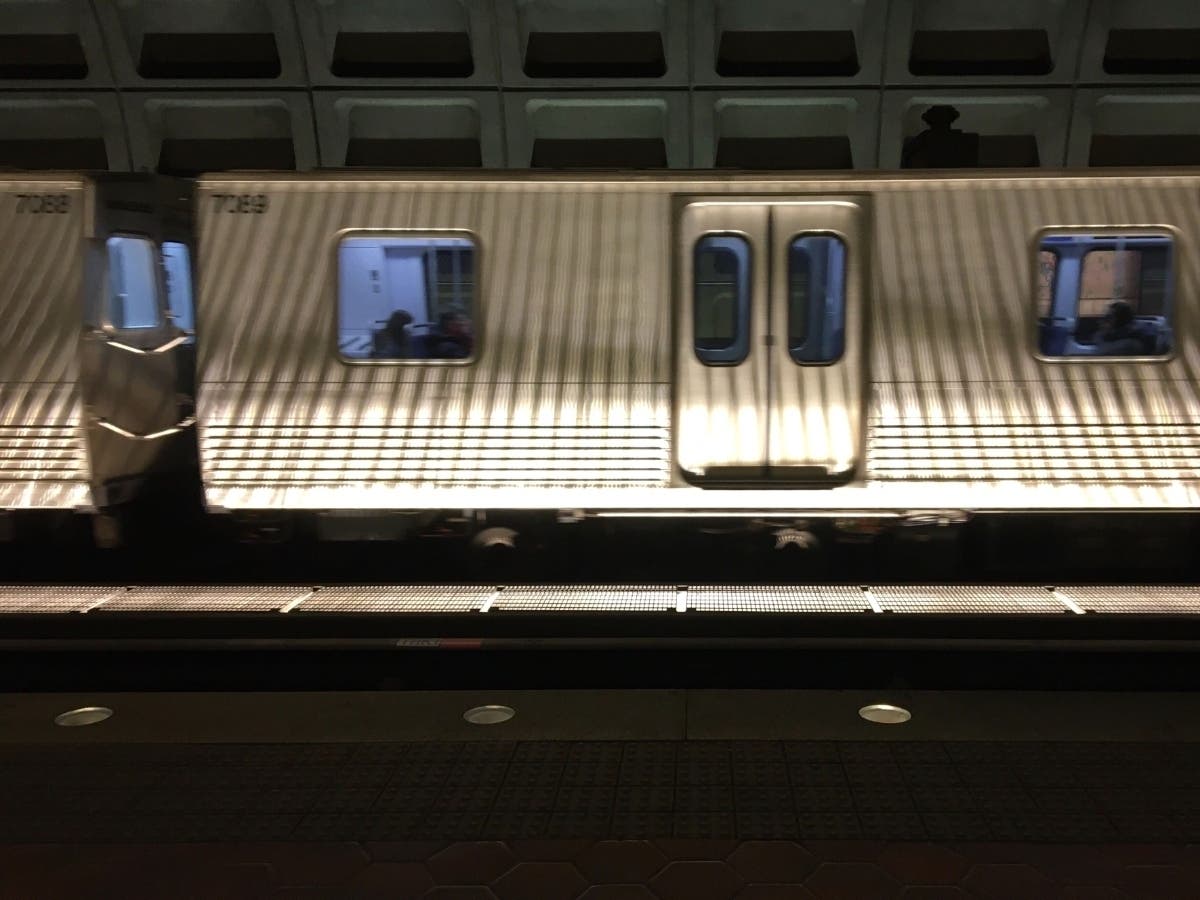
WASHINGTON, DC — Amid the continuing investigation into Metro's troubled 7000 series cars, General Manager Paul Wiedefeld plans to retire after six months, the Washington Metropolitan Area Transit Authority announced Tuesday.
Metro's board will conduct a national search to replace Wiedefeld. The board's Feb. 10 meeting will include discussion on planning for the new general manager.
"There is no doubt that Paul Wiedefeld was the right man at the right time to guide Metro out of very dark days," said Metro Board of Directors Chair Paul Smedberg in a statement. "Paul is an extraordinary executive and the board deeply appreciates his effective leadership and, most recently, his collaboration with us as we worked together to overcome an unprecedented set of challenges during the pandemic."
Find out what's happening in Greater Alexandriafor free with the latest updates from Patch.
Wiedefeld, 66, has been Metro's general manager since November 2015, what the agency called "a particularly difficult time." The transit system faced federal investigations about safety concerns after the January 2015 death of a rider due to smoke filling a Metro train near L'Enfant Plaza, as reported by WAMU.
On top of that, Metro grappled with declining ridership, budget concerns and a backlog of maintenance needs.
Find out what's happening in Greater Alexandriafor free with the latest updates from Patch.
Wiedefeld became known for Metro's SafeTrack projects to address rail safety and reliability and for securing dedicated funding for Metro from Virginia, Maryland and the District of Columbia. Metro has dealt with declining ridership during the COVID-19 pandemic and the safety concern of the 7000 series rail cars. The 7000 series rail cars were taken out of service on Oct. 18 following the Oct. 12 derailment of a Blue Line train between the Rosslyn and Arlington Cemetery stations.
Within days of the October derailment, inspectors from the National Transportation Safety Board identified safety concerns with the wheel axle assembly of the 7000-series rail cars, leading the Washington Metrorail Safety Commission to order all 7000 series cars be removed from service. The board also discovered that the transit authority failed to release information about 52 similar derailments going back to 2017.
Metro has operated with reduced service during the investigation into the derailment. In mid-December, Metro tried to return the 7000-series trains to service with a gradual 90-day rollout and once-a-week inspection schedule. On Dec. 23, Wiedefeld paused the process and introduced a nightly inspection schedule. The Washington Metrorail Safety Commission ordered Metro on Dec. 29 to remove all 7000-series rail cars it had returned to service.
In an update Wednesday, Wiedefeld said the return of 7000 series rail cars would be halted for another 90 days to allow more time for mechanical experts and engineers to conduct a root-cause analysis and obtain technology to measure the wheel sets of the rail cars. In the meantime, Metro will speed up the process to return 6000-series rail cars to service.
Wiedefeld will remain the general manager for the 2023 fiscal year budget cycle. The next general manager will work with the board to set service levels and fares and adopt the 2024 fiscal year budget.
Amalgamated Transit Union Local 689, the union that represents transit workers, said in a statement it disagreed with Wiedefeld's push toward privatization. The union "repeatedly called for his resignation and viewed his early projects as direct attacks on the right of workers to organize and collectively bargain," it said.
But the union said its relationship with Wiedefeld became productive in the last two years. Despite disagreements on some issues, the Metro and union were able to resolve many disputes.
"Working with GM Paul Wiedefeld, we were able to resolve the historic Cinder Bed Road strike and bring that garage back in-house to WMATA," the union said. "We were able to implement policies during the COVID-19 pandemic that saved lives and helped protect WMATA workers and their families. We were able to agree to the framework of a collective bargaining agreement that protected our work from privatization."
Congressional representatives in Virginia also issued statements in response to Wiedefeld's upcoming retirement.
"When Paul came on board in November 2015, WMATA faced a number of serious challenges and he was the right person for the job at the right time," said U.S. Sen. Mark Warner (D-VA). "Under Paul’s leadership, WMATA has not only secured dedicated capital funding from local, state, and federal governments, but has adeptly continued serving the DMV community throughout the COVID-19 pandemic."
"I thank Paul Wiedefeld for his leadership, his willingness to make tough decisions, and the improvements he undertook, including the system-wide Safetrack project and securing dedicated funding for long term capital investments, that are going to help renew our aging transit system," said Rep. Gerry Connolly, a Democrat who represents Virginia's 11th Congressional District, including Fairfax. "Paul Wiedefeld took over WMATA at a time when all lights were blinking red, and the reality remains that our region has a ways to go to restore confidence in Metro."
The union and congressional representatives urged Metro's board to consider several factors in the next general manager.
"Over 8,000 of our WMATA members now look to the WMATA Board of Directors and urge them to find a suitable replacement for the outgoing General Manager," the Amalgamated Transit Union Local 689 said. "The next General Manager should learn from Wiedefeld’s working relationship with ATU Local 689 if they hope to avoid some of the mistakes made in his early days. The next few years ahead will be challenging, but we’re confident in saying that WMATA is a better system when it values and listens to the opinions of those that do the work that keeps this region moving."
"As the WMATA Board of Directors searches for the next General Manager and CEO, it must focus on finding candidates who are equally committed to maintaining transparency, cooperating with state, local, and federal partners, and most importantly, prioritizing safety," Warner said.
"It is imperative that the next General Manger of Metro bring transit expertise and a willingness to tackle the culture of mediocrity that has plagued this system," said Connolly. "Failure to do so will cause a backslide in the progress Wiedefeld made."
Get more local news delivered straight to your inbox. Sign up for free Patch newsletters and alerts.