Community Corner
Richmond Highway’s Two Dennys
Thirty years ago, there were two Denny's Restaurants on Route 1, one at each end of the stretch that encompasses Hybla Valley.
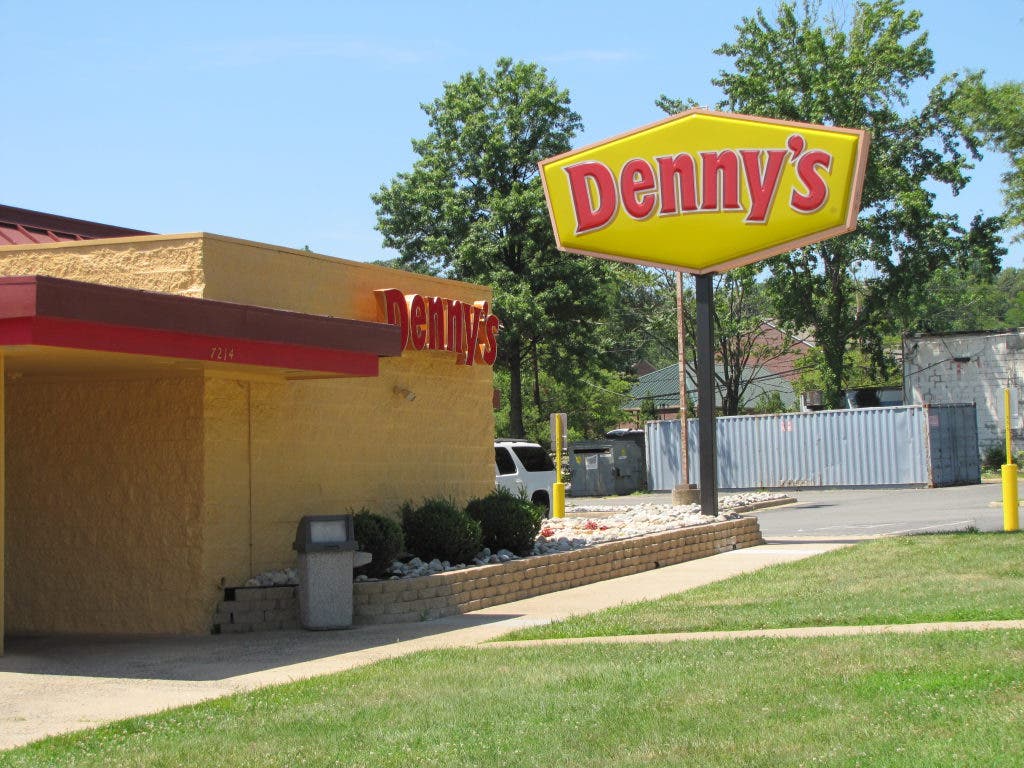

The development, business and residential, off Route 1, or Richmond Highway as we locals know it, between the current Denny’s Restaurant location at 7214 and the now vacant lot that housed the old one at 8625, has been transformative.
During Reconstruction, the Alexandria Gazette referred to the land south of Old Town as “prairie land,” and few could argue that much had changed over the succeeding 120 years. In the mid 1980s, for example, one could drive north from Fort Belvoir to the new Huntington Metro station and count the strip malls, movie theaters, and restaurants, on two hands with fingers left over.
The only plentiful residential options were long, two and three story apartment buildings with one-to-three bedroom apartments that housed many singles and some multimember families. The few eateries were a couple of long-standing dives, a few fast food chains and Chinese carry outs, a couple of rundown family restaurants and some convenience stores. In essence, the farther out you drove from DC on Route 1 the sparser the business and residential enclaves, and the more the frontier feeling.
Find out what's happening in Greater Alexandriafor free with the latest updates from Patch.
The heyday of yesteryear, when the last full flavor of living on the frontier while being in the 20th Century still lingered, was the disco era. In the late 1970s the Denny’s Restaurant at 8625 Richmond Highway did a brisk round the clock business punctuated by a 5PM-3AM graveyard shift that had lines out the door at midweek. On weekends, this outpost could resemble a Wild West set with police cars instead of sheriffs’ posses running interference between groups of muscular Fort Belvoir residents and local biker heavies who would square off at the drop of a hat.
“We were the only game in town. So, we would be sitting there with a quiet family dinner time followed by a rowdy dinner date crowd and end up with fistfights in the parking lot around 1AM. The marines and the bikers really didn’t like each other,” said Otto Washington, the one-time area manager for the national restaurant chain. “They came by the restaurant to sober up after a night out carousing and before returning to their barracks. But the locals didn’t like them on their turf, so if one looked at another sideways a fight would break out. It was like in Pulp Fiction.”
Find out what's happening in Greater Alexandriafor free with the latest updates from Patch.
As the 1970s and 1980s passed, and the last decade of the millennium took hold, Richmond Highway transformed itself into the mix use haven we know today. Single family home enclaves proliferated, strip malls were to be found every few hundred yards, family restaurants sprouted everywhere, and the ubiquitous yet strangely overlooked combo of gas stations, convenience stores, and small mom and pop businesses grew deeper roots. These businesses, subjects of future features, would form the engine that kept the area’s economy slowly whirring through thick and thin.
Emblematic of the new breed, yet clearly part of the old guard, was the Denny’s Restaurant at 7241 Richmond Highway. Opened twice, the second time several years after its sister locale further south, the eatery underwent extensive renovations after a fire closed it down for nearly two years. When it reopened its clientele had changed with the times. Gone were days when the late night truck drivers and early-morning-hour revelers made up most of its business. Now families, many with young kids, and many from the nearby neighborhoods, would stop by for dinner. The steadiest customer traffic became businessmen getting breakfast on their way to DC.
“And in a matter of two, three years, we had a complete turnover of personnel with older servers and cooks taking over from the young guns we had working for us earlier. It was as if the nearby community began to take over. Our inventory changed too, we had to stock more traditional breakfast and dinner items and less lunch and late meal items,” said Washington.