Politics & Government
Route 1 Transit Center Plans Get Chilly Reception
Designs presented Wednesday to New Gum Springs Civic Association
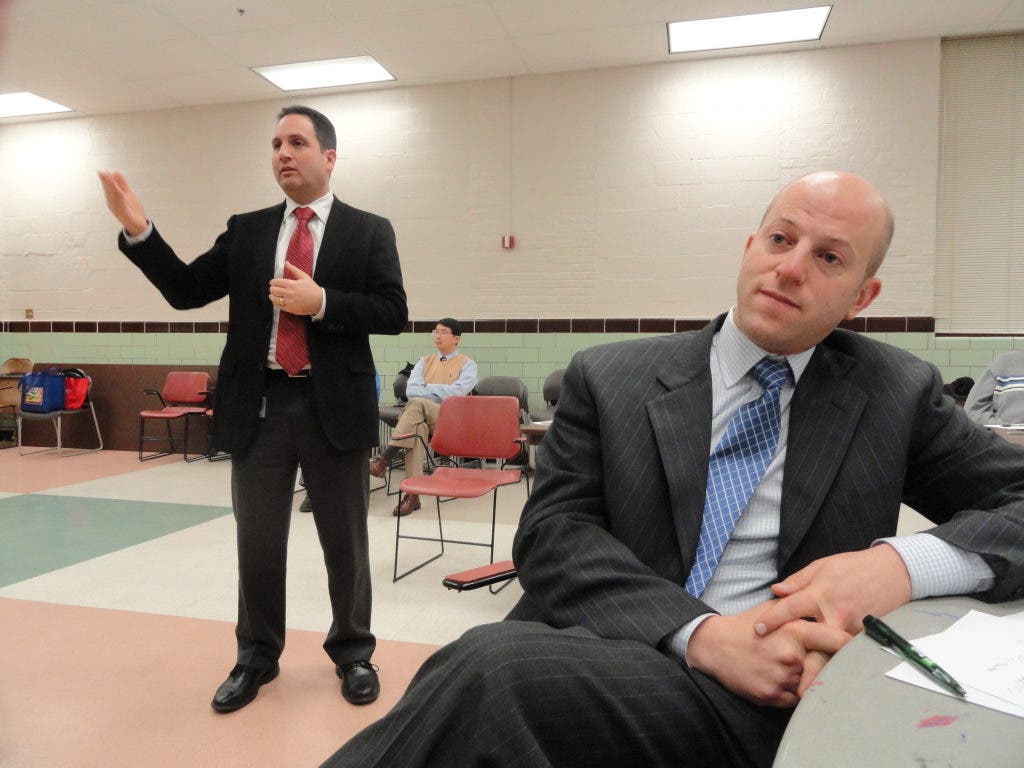


Fairfax County transportation officials faced a skeptical audience Wednesday as they presented plans for a Route 1 transit center at Fordson Road before the New Gum Springs Civic Association.
The county is proposing two options to build the $5.7 million transit center, which was selected out of 16 potential sites along the highway. The county’s preferred design entails closing the section of Fordson Road that currently intersects with Route 1 and re-routing Fordson Road to connect with Boswell Avenue.
A second option would build the center on the same site but preserve the current route of Fordson Road.
Queenie Cox, president of the New Gum Springs Civic Association, questioned what benefits a transit center would bring to the community, how the frequent bus and foot traffic would affect the neighborhood and what security the county would provide.
“I don’t feel that the community wants a transit facility at the entrance of its community,” Cox said. “… (The preferred plan) will have a drastic impact on the Gum Springs community and the residents. They’re not going to be able to access their homes.
“And with that, it appears the county has no consideration for this historical, African-American community that’s been here for more than 175 years.”
Eric Teitelman, chief of the Fairfax County Capital Projects and Operations Division, said the facility would provide shelter for bus riders and also bring bus traffic off the street for stops at the center.
“It is designed to improve the quality of service for people who use transit,” he said.
Caijun Luo, a senior transportation planner with the county, said nine bus routes serve the corridor, with an estimated 15,700 passenger boardings on a typical weekday. A Route 1 transit center is a part of the Fairfax County Comprehensive Plan, which also calls for realigning Fordson Road to intersect with Boswell Avenue.
The transit center would be funded by federal money as part of the Richmond Highway Public Transportation Initiative. It would include multiple bus bays, limited parking, attendants and an indoor waiting area, Luo said.
The site was chosen after comparing locations based on factors including land size, accessibility, traffic engineering issues, population and local employment. Other finalists were located at Lockheed Boulevard and East Lee Avenue.
Philip Schanzer, vice president of construction and development with Marx Realty and Improvement Co. of New York, which owns the property under discussion, presented another option for the site. Schanzer said Marx Realty has plans to build a small-scale retail development on the site and has already filed an application with the county and signed letters of intent with prospective tenants.
Schanzer said the community would benefit more from a shopping center designed to serve local residents than from a transit center, calling the county’s plans “shocking.”
“If that’s the road they want to go down, they have the power to do it; but we don’t want it, and we don’t think the people want it,” he said.
The county could use eminent domain to force the current property owners to sell the land to the county at market value. Teitelman said—generally speaking—that sometimes property owners apply to build on land the county seeks to buy to intentionally increase the purchase price.
The county’s preferred option also would entail demolishing one house located to the rear of the property.
The county will hold at least one official public meeting with the wider community in the coming months before moving forward with the project. Mount Vernon District Supervisor Gerry Hyland would also have to throw his support behind the project, Teitelman said.
None of the civic association members at Wednesday’s meeting said they currently used local transit.