
Oh, the adolescent years. Lots of fun, but these are times that can try your patience. This is the time when in the wild, the offspring would leave the family unit. So as the cats mature, there may be inter-cat aggression. It is important to watch for this and seek professional help if needed.
Your cat may begin to exhibit undesirable behavior during this trying time, much like a teenaged human. The best way to deal with “bad” behavior is to redirect your kitty to something considered acceptable. An example would be: kitty scratching your sofa.
Rather than yell at him, try luring him with a toy to his scratching post and or attracting him with a little cat nip. In general humans see yelling (and other negative reinforcements) as conflict resolution while cats view such behavior as terrifying or life threatening. It works best to be calm and lure kitty in to playing with acceptable toys or scratching acceptable items.
Find out what's happening in Kingstowne-Rose Hillfor free with the latest updates from Patch.
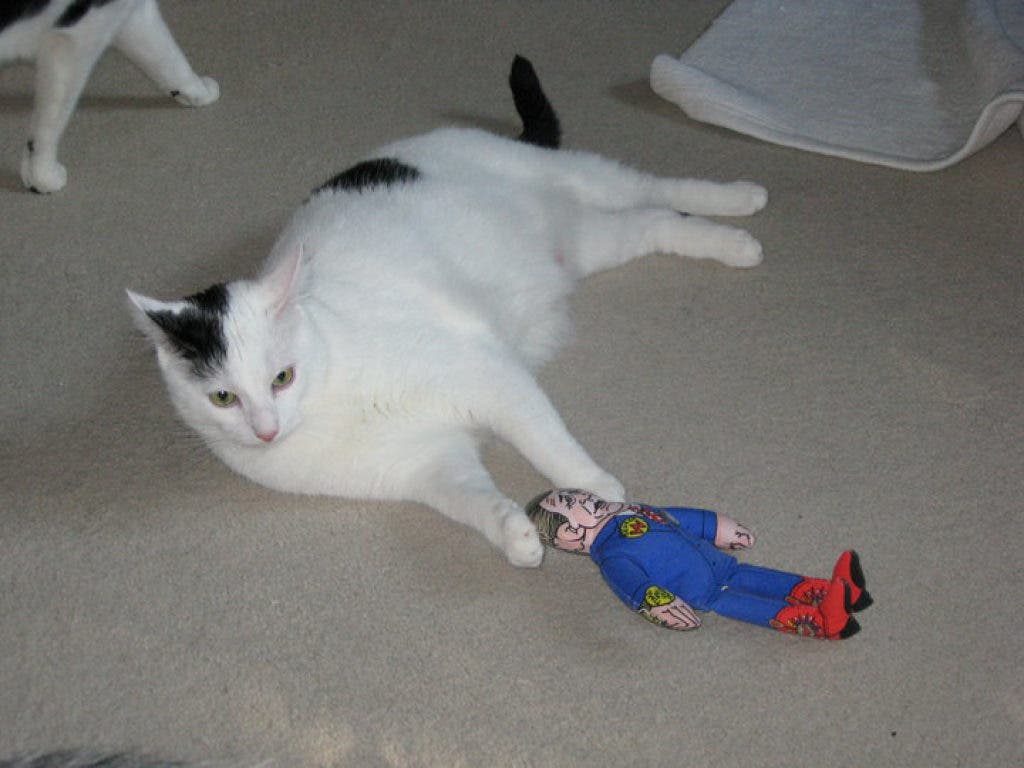
It is important to continue interactive play with your kitty. As your kitty matures you will want to continue to strengthen your bond with him. Playing with him with a variety of toys is one way to strengthen those bonds. Toys for interactive play may be as simple as a ball of crumbled paper or playing “go find it” with a milk carton ring. There are many toys available both in stores and online. In general we recommend putting toys with string away when you are done playing with them so that your cat does not become tangled in the string or accidently eat part of the toy.
Evaluate the litter box size. As the kitten grows into a young adult, he may out grow the box. In general, covered litter boxes may be too confining for the adult cat. While covers are convenient for owners you can avoid setting your cat and yourself up for future problems by choosing open-topped pans in general.
Find out what's happening in Kingstowne-Rose Hillfor free with the latest updates from Patch.
You need to monitor the cat’s weight. Caloric needs decrease after neutering and the cat is no longer growing rapidly. It is much easier to prevent the cat from becoming overweight than trying to get him to lose those extra pounds. We will explore diet and nutrition in the future.
Your veterinarian will discuss your cat’s lifestyle and determine which vaccines are needed and make recommendations for testing for parasites and FeLV and FIV. If the kitty is not already on flea and heartworm preventatives, now is the time to start.