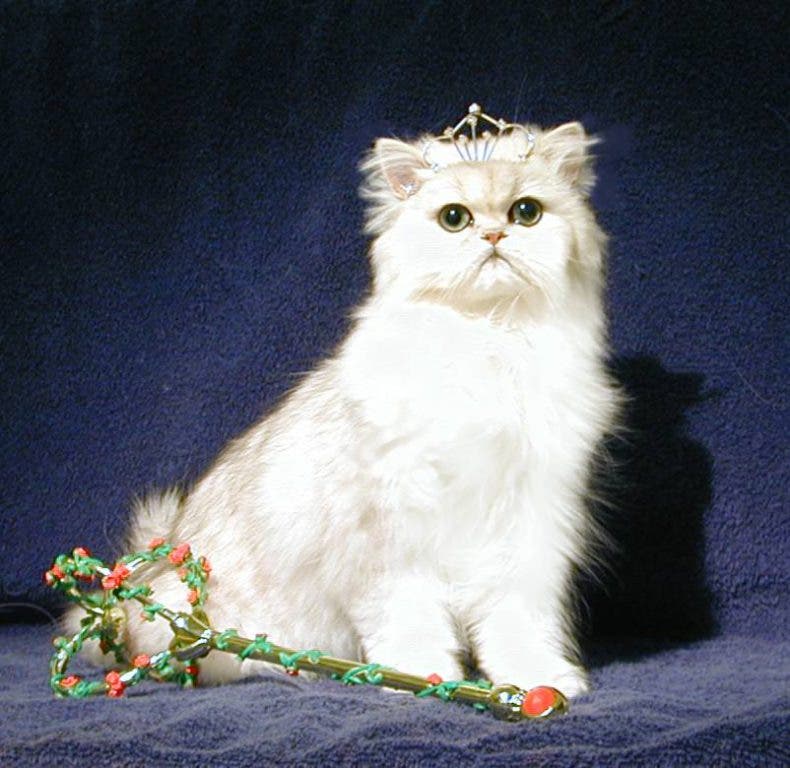
How does that sound: “mature years”? Sounds so dignified, so, well, mature. For the most part, cats in this age group (years 7 to 10) have reached an age where they are beyond “kid stuff.” This is the age from whence the saying “dogs have owners, cats have staff” came. These are the wonderful years that seem stretch on.
Kitty is getting older now, although her beautiful face and coat may not show it. Her care givers need to begin focusing on easy accessibility of food, litter pans, and beds. Often, Kitty doesn’t want to run down two flights of stairs to go to “the bathroom” anymore. In middle age most people don’t want to run down two flights of stairs to get to the bathroom, either. So we ask care givers to take a good look at locations of food, etc, and make household changes as needed to keep Kitty happy and healthy.
Not to “beat a dead horse” but this is the time of life where age related problems such as weight, creaky older joints, and other mobility issues can combine to create litter box problems, or house soiling. Care givers need to review the heights, edges, and depths of litter pans. Pan locations should be easy to reach, not hidden behind multiple obstacles, such as cat doors or furniture. Lids and covers on pans should be avoided as this adds an extra layer of obstacles that may impede the older Kitty from easily entering or exiting her pan.
Find out what's happening in Kingstowne-Rose Hillfor free with the latest updates from Patch.
Cats are very good at masking signs of illness. This is probably a survival strategy but, however it evolved, it can make it hard for care givers to know if Kitty feels poorly or not. Care givers should watch Kitty for subtle signs of approaching illness. Things like increased sleeping or decreased activity could signal a brewing problem. Also, care givers should report to the veterinarian if they notice Kitty avoiding her normal dry crunchy diet, or if there seems to be an increase in clumps of urine in the litter pan. These things can also spell trouble.
Her veterinarian will review Body Condition Scale, weight, and dental health with her care givers. Her vaccines schedule may be altered to suit her current lifestyle and some vaccines may be stopped all together. Her doctor may want to run routine blood work and urinalysis to look for subtle signs of approaching illness such as kidney disease or diabetes, and to serve as a baseline for the future. An annual exam, at the least, should be part of her yearly schedule.
Find out what's happening in Kingstowne-Rose Hillfor free with the latest updates from Patch.
Kitty will still be playful and interactive member of your family. She has her preferences and a set “catt-itude.” She needs the people around her to understand that she is a little older than she was and so needs just a little more help from her people than she did. Other wise she will continue to be “Her Royal Highness,” directing her staff to serve her needs, as always.
(taken in part from the AAFP-AAHA Feline Life Stages Guidelines)