Community Corner
From Cactus Hill to Rose Hill
We were inhabited long before any discoverers were born, let alone reached our shores.
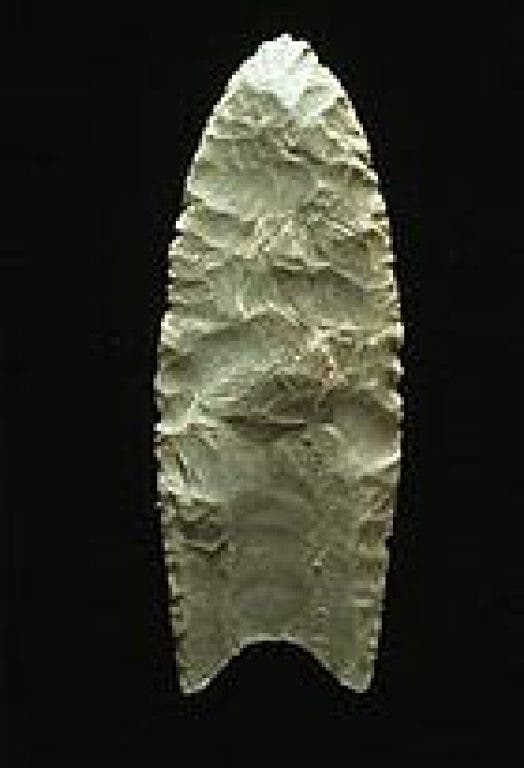


While researching , I was struck by the fact that although our officially predated theirs by about 70 years, their community’s environs were inhabited 1,600 years before ours. I had surmised it was simply a matter of our common African ancestors having reestablished themselves at a closer locale before reaching out across the Atlantic to inhabit our continent.
But we have come to accept that our continent and nation are relatively young in terms of when “civilization” reached our shores. Though Native Americans inhabited our country long before Columbus discovered the Americas, or the Norsemen explored our northeastern regions, or the British colonized our eastern seaboard, our national historic perspective has nevertheless been inherited from, and formed by, Europeans.
Curiously, our enduring self-perspective has evolved from the late-arriving English colonists to such an extent that we often see our nationhood, our population’s development, and our establishment as a society, in terms of our westward progress from colonized territory to continental behemoth. This view flies in the face of the longer established and continuous habitation of Florida (1500s), which is an obvious example of our sustained nationhood.
Find out what's happening in Kingstowne-Rose Hillfor free with the latest updates from Patch.
And then archeologists discovered Cactus Hill, Virginia, southeast of Rose Hill.
It turns out our state is the site of an archeological dig that has yielded evidence of inhabitants in our midst since approximately 15,000-17,000 radiocarbon years BP (before the present), making our environs a relatively well populated area approximately 13, 400 to 15,400 years before our English namesake.
Find out what's happening in Kingstowne-Rose Hillfor free with the latest updates from Patch.
Cactus Hill is an archeological site in Virginia, located on the sand dunes around the Nottoway River a few dozen miles south of Richmond. The site has been excavated at various levels and at the topmost one archeologists have found fluted stone tools similar to those used by the Clovis Culture in New Mexico, dating over 10,000 years BP. Diggings at lower levels have uncovered un-fluted bifacial stone tools that are dated at 15-17,000 years BP. At the lowest levels, White-pine charcoal from what seems to have been some kind of hearth are estimated to be from nearly 19,000 years BP.
It turns out, archeological theoreticians tell us, that when the ice cover began receding from our last major ice age there was a swath of somewhat icy yet traversable land that extended from Asia, via Alaska, along the California coast and then ran southeast all the way to the east coast.
Migration pattern evidence shows that the route taken by incoming people followed that north to south to east route. The migrating humans turned eastward via New Mexico and then eastward again toward us.
As the swath of land reached Pennsylvania the ice was mostly gone. By the time the migrating peoples turned south from there and reached what would become our verdant state, they had found the sought after conditions that allow abundant flora to flourish and thus fauna to thrive. These were the conditions humans needed to survive and settle.
Cactus Hill seems to be telling us, we are an older land, in terms of human habitation, than we thought. Our very first inhabitants were not only Africans, but Asians, and they discovered Virginia and established their civilizations before anyone we would call our descendants were even identifiable as European. As the site is studied further, it will be interesting to learn what became of those first Virginians and how many traversed our hill before finding their own hill and eventual home.
Note: This interesting Japan Times/L.A. Times (2000) news story details the Cactus Hill find () as does this Archeology Channel sitewhich includes a video. Photos courtesy of the Government of the Commonwealth of Virginia, specifically the Virginia Museum of Natural History and the Virginia Department of Historic Resources.