Community Corner
The History of Shoes, Part One
The shoe has evolved into an indispensable modern necessity.
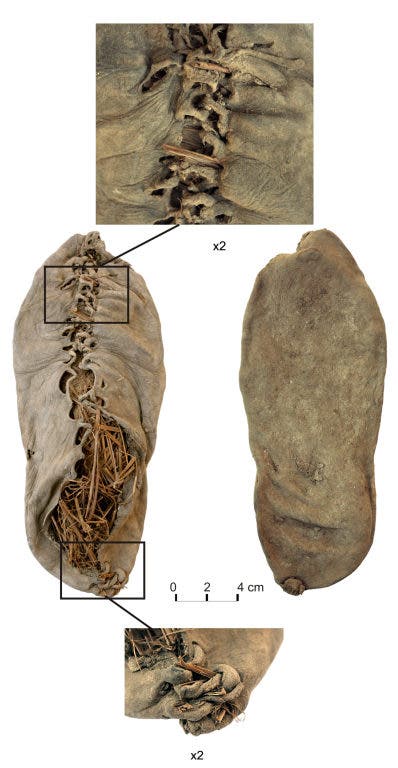

Sandals, the oldest known shoes, were worn around 8,000 B.C. and the oldest known leather shoes, made from a single piece of hide, date to about 3,500 B.C., or about 5,500 years ago. Those shoes were pretty sophisticated for the times, wrapping tightly around the wearer’s foot and fastening with strings made of tree bark.
In our continent, the oldest recorded shoes were the Native American moccasin. Once their European shoes wore out, the earliest Old World settlers were known to wear moccasins until the late 1620s. It was at that time that a Mayflower Pilgrim shoemaker named Thomas Beard, who brought his kit of tools to Massachusetts, became the first recorded shoemaker in the colonies. That essential skill would soon migrate to our shores of the Potomac, where Old Town Alexandria shoemakers and cobblers developed a reputation for quality workmanship.
Ironically, though, the moccasins that turned out to be so much more comfortable in comparison to the early European shoes that the colonists began exporting moccasins to England as early as the 1650s. Within a century European shoemaking and fashion would carry the day. As shoes became more important to women, those who made and bought them invested more time and money to design and construct ever more intricate wares. The new shoes of course sold for more money and thus spurred an industry.
Find out what's happening in Kingstowne-Rose Hillfor free with the latest updates from Patch.
From as early as 1750, a well-dressed lady of means in would be wearing the latest European fashions. Paris and Venice took the lead in making women’s footwear an accessory to be reckoned with, culminating in the still fashionable high-heeled shoe. The diminutive Louis XIV himself is said to have been an early advocate. He encouraged the style, as it allowed him to push for men’s shoes to also add some height.
In the early days of Old Town Alexandria, shoemakers would anxiously await arriving ships from across the pond in hopes of receiving samples and patterns of the latest shoes. At times special orders would be made for the newest shoe-making tools. Some of the most coveted originated in China and were modified in Europe before they reached our shores. Here, cobblers would adapt them further in order to reproduce near-facsimiles they could more readily use.
Find out what's happening in Kingstowne-Rose Hillfor free with the latest updates from Patch.
Our area’s best early shoemakers were able to work themselves up to becoming members of the merchant class. Those master craftsmen who acquired apprentices taught their craft well enough to ensure many of their charges were able to become shoemakers or cobblers and establish their shops literally down the road. Many of the more successful merchants along during the and eras were shoemakers, and as the wars took their toll on boots and shoes cobblers too became indispensable. You can learn more about how colonial era shoes were made here and can find out about shoemaking here.
Shoes played an intriguing role in the development of our nation and our local community. We will discuss their role in subsequent pieces of this series.