Crime & Safety
After 3 Decades, New Evidence Could Solve Missing NH Teen Case
Shirley "Tippy" McBride has been missing from Concord since 1984. Police had a suspect decades ago and are hoping DNA will close the case.


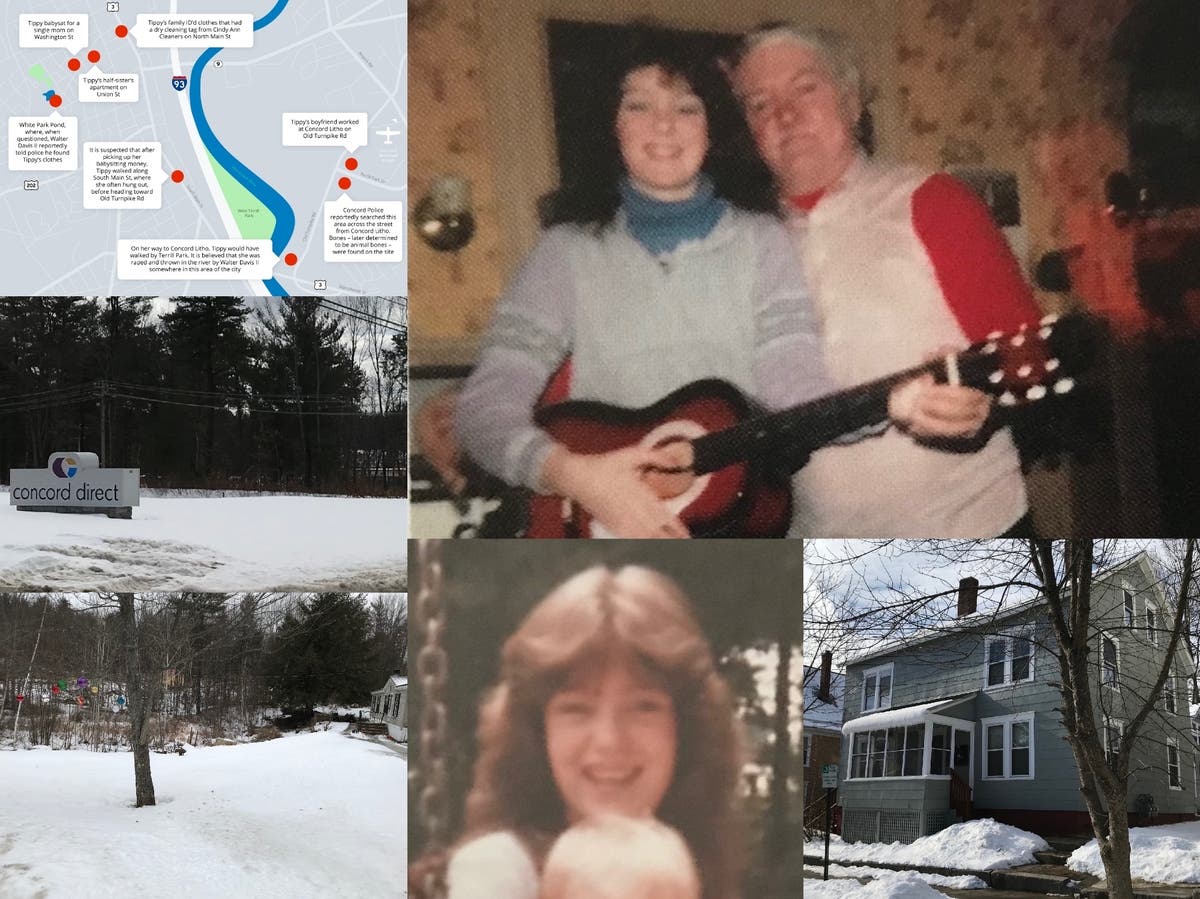


CONCORD, NH — Concord Police detectives working to solve one of the city’s oldest cold cases are attempting to link forensic evidence to a suspect investigators have known for more than three decades. Shirley Ann “Tippy” McBride, 15, of Pittsfield, has been missing since July 13, 1984, when she left her half-sister’s apartment on Union Street in Concord to meet her boyfriend on Old Turnpike Road and was never seen again. During that time, her family has wondered what exactly happened to her.
Police have called it one of the city’s most extensively investigated cases. But there has been limited information released publicly about the case. Investigators followed leads, some family members put themselves in danger trying to find answers, and there were shady characters, hoaxes, and suspects along the way.
However, evidence rediscovered four years ago – including clothing believed to be Tippy’s, witness information, and an admission by a suspect – could be the missing links that both the family and police hope will solve the case.
Find out what's happening in Concordfor free with the latest updates from Patch.
Who Was Tippy?
Tippy McBride was a brown haired, blue-eyed girl, a free spirit, of sorts, who loved her family but didn’t particularly agree with the decisions they made for her.
Update
For most of her life, Tippy – a nickname her father gave to her because one of her feet tipped inward a bit when she walked – lived in the working class neighborhoods of Manchester. When she became a teenager, the family bought land and moved into a manufactured home in Pittsfield to be closer to her mom’s first daughter – Donna Whitcomb Reil. Tippy had difficulty acclimating to life in Pittsfield – a much smaller town than it is today. She didn’t have any friends and played hooky from school.
Find out what's happening in Concordfor free with the latest updates from Patch.
“We were like hillbillies out here that came from the city,” Robin McBride, Tippy’s older sister, joked. “It sucked.”
When Reil and her children moved into an apartment on Union Street in Concord, Tippy began hitchhiking to visit her. Just before the end of the school year, she asked to live with Reil and her parents agreed.

Shirley “Tippy” McBride, 15, of Pittsfield vanished in Concord on the night of July 13, 1984. Her disappearance remains an open investigation. She is pictured with her father, Jack McBride, right.
“We let her stay because she’s just starting to feel her oats,” John “Jack” McBride, her father, who passed away in October 2015, told the Concord Monitor three weeks after she disappeared. “We couldn’t fight her.”
Tippy began babysitting for money, hung out with other teens and young men – including a boyfriend, six years her senior – while also getting to know her newfound half-sister.
Tippy Disappears
July 13, 1984, was a Friday. At around 9:30 p.m., Tippy planned to pick up babysitting money and then meet her boyfriend at his job at Concord Litho. After she left the Union Street apartment, she vanished.
Reil didn’t think twice when Tippy didn’t come home right away because she often stayed out late. But after 48 hours, she reported her missing to police and the search began.
“We made posters,” Robin McBride stated, “we went into restaurants and stores … wherever anyone would let us put them.”
Police – while not commenting on the specifics of the case, due to juvenile case law – suspected she ran away. For the first year of the investigation, that was the angle: She was a teenage girl, who got a bit of freedom like so many other runaways and took off. Her father, however, contested the validity of the claim, despite prior times when she would come home late.
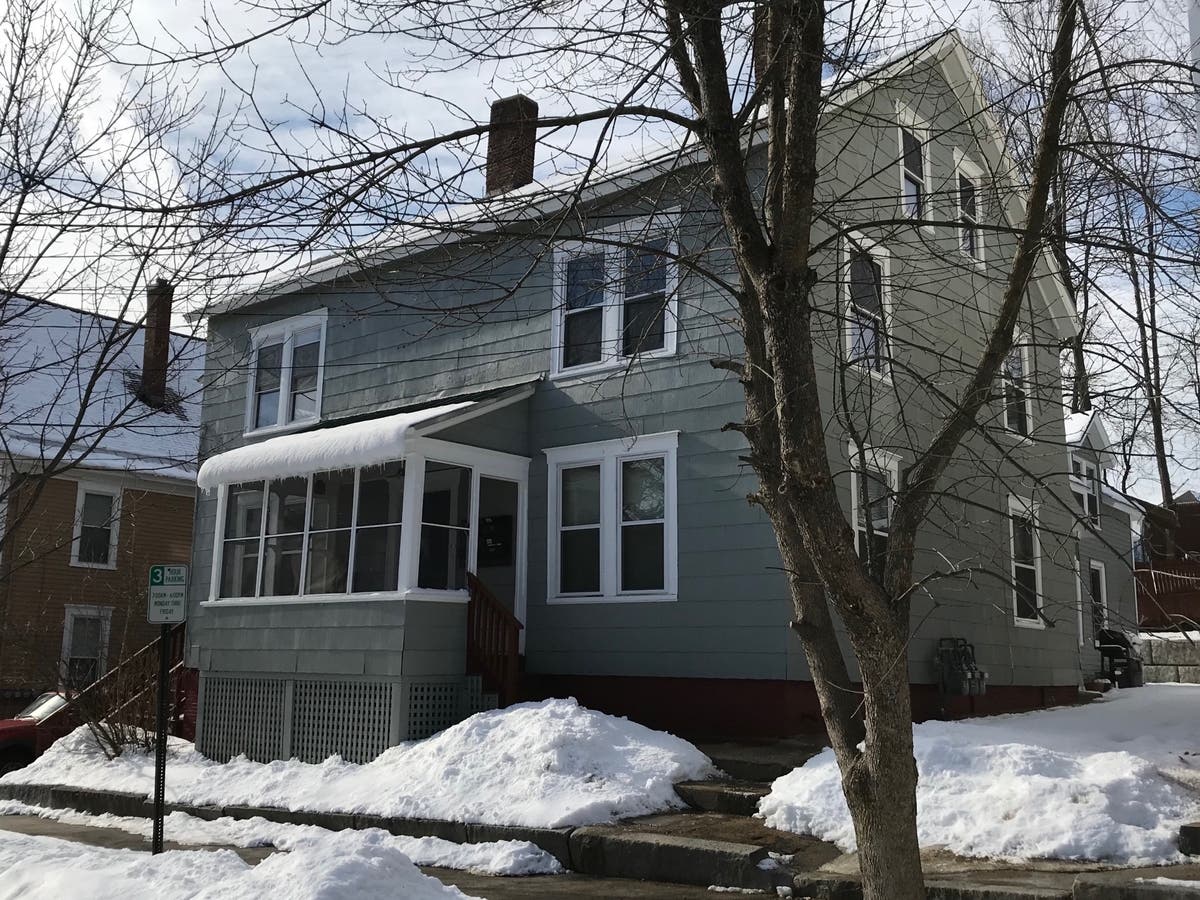
The apartment on Union Street where Shirley “Tippy” McBride was staying for the summer with her half-sister. Credit: Tony Schinella
“We have always known where she was,” he told the Monitor. “She’s always been in touch. I just can’t see her leaving without being in contact with somebody.”
Tippy, police learned, was also experimenting with marijuana – something that a lot of teenagers did in Concord in the early 1980s – including smoking with Reil, which reinforced the runaway suspicion.
“I was a different person then and she was a lot, unfortunately, like me,” Reil sighed.
When Tippy left, she wasn’t angry and did not take any extra money or pack clothes. She left valuables or keepsakes in her apartment, something not normal in runaway cases. Still, investigators hung onto the theory.
“The police kept saying,” Robin McBride said, “‘You watch and see …’ Lt. (Paul) Murphy … his famous last words, for the first year, ‘You watch and see. She’ll come up. She just ran away.’ And we were like, ‘She has no reason to run away.’”
She added that Murphy countered: Everybody thinks that until they do.
Robin McBride said Tippy seemed to be immediately branded as someone not worth searching for because she smoked marijuana. That feeling – and what was perceived by the family as a lack of seriousness on the part of police and the media – still stings to this day.
“I don’t care what anyone thinks of me,” she said. “But when it comes to looking for my sister and (the police) said she said in a note that she (had smoked marijuana) … were they really concentrating on whether she was smoking pot?”
Tips, Psychics, Crazies, And A Rough Crowd
During their search for Tippy, the McBrides began to offer rewards. This brought out all kinds of “nutcases,” including prisoners, who made collect calls to the family’s home. Con artists laid out underwear in White Park, took pictures of them, claiming they were Tippy’s, in an effort to get at the reward money. The family went to the park a few times when they received tips and looked for clues but found nothing.
Tippy’s parents would often hear from Reil about a possible lead and they would go out searching for clues. Police warned the family not to offer a reward because it would bring out “all the whack jobs.” Members of the department, while busy with the investigation themselves, didn’t have the manpower to search every lead that might not be legitimate.
“My parents weren’t going to listen to that,” Robin McBride quipped. “They wanted to find her … and nobody was doing nothing.”
“They were just desperate,” Reil added, “for any lead.”
Then, there were psychics. One stated she had visions of Tippy being in water. Another described having visions of her being inside a cylinder – months before the discovery of four bodies in barrels near Bear Brook Park, the Allenstown Four case. That psychic even took the parents to a location by a church not far from the site where those bodies were found months later. The psychic still haunts Gerald McBride, Tippy’s younger brother.
“Psychics sound crazy to me but they depicted everything that’s been on the news lately,” he said. “The barrels … Allenstown … I don’t believe in that but I was like, ‘Wow, that lady was giving out (accurate) information.’”
Police discovered during their initial investigation that Tippy was running with a rough crowd due, somewhat, to her relationship with Reil and the men around her. After Tippy vanished, Reil was determined to find her and put herself in “really bad, kind of dangerous, no doubt, situations” with men.
“I didn’t listen,” she said. “I told (police) exactly what I was doing … so, if something did happen to me, they would know where to find me.”
No matter what Reil told police, it seemed to fall on deaf ears.
“They just didn’t take me seriously,” she said.
Suspects included a previously convicted rapist and men believed to be involved in homicide cases. Tippy’s boyfriend was also a person of interest even though investigators initially didn’t know if she even made it to Concord Litho to meet with him. Her father often tracked the boyfriend’s movements and was arrested by police for stalking.
Patch attempted to interview him but he did not respond to requests to talk about the case.
Mysteries and angles were everywhere but as the one-year anniversary of her disappearance approached, police developed a suspect who admitted to killing a girl and keeping her clothes – a man from Merrimack who worked in Concord.

Shirley “Tippy” McBride not long before she disappeared.
Denim Overalls And A Cotton Shirt
At the same time Tippy vanished, nearly 30 miles away in the town of Merrimack, a family was grappling with a suspicious situation: Walter Davis II, 26, was attempting to light clothes on fire in a fireplace – in the middle of July. He was caught by his younger half-sister and mother who took the clothes from him. During conversations with him, he admitted to raping a girl and throwing her in a river.
His half-sister called a friend – Stacie Murray Coburn, now a professor from Nashua – over to her house soon after to show her the clothing and tell her what happened.
“(She) had this wooden closet door,” Coburn said. “It had a weird, old latch on it. And she took out a paper bag – an old grocery-style bag – that was rolled up a little bit, closed up, and she proceeded to tell me that her brother had come home with it.”
She showed Coburn some damp clothes – denim bib overalls and a cotton shirt that had stains on it – and told her “that he had raped a girl and thrown her in the river.”
After showing Coburn the clothes, she put them back in the closet. Stunned, Coburn called her mother to pick her up and then, they met with the Merrimack Police. An officer took Coburn’s statement, in the presence of her mother, who worked in a law office.
“The Merrimack Police knew who he was,” Coburn recalled, surmising that it was probably from prior incidents since Davis was “a glue sniffer,” always in possession of a plastic bag.
Within a few days, police retrieved the clothes from Davis’ family’s home and questioned the family.
Because the case is an open investigation and records are not public, there are gaps in information about how these clothes were connected to the Tippy case. But after nearly a year of dead-ends and bizarre leads that didn’t pan out, Concord detectives believed they had a break in the case.
A Suspect Emerges
As the one-year anniversary of her vanishing approached, police in Concord spoke with the family to update them on the case and a possible suspect. Davis, who grew up in Keene and lived in Merrimack, and whose father lived and worked in Concord, had clothing that might be Tippy’s.
Both the McBrides and Reil eyed the clothes separately at Concord Police headquarters and identified them as Tippy’s. Jack McBride went shopping with Tippy to get summer clothes before she moved in with Reil and Reil did her laundry while she was staying on Union Street.
Investigators told the McBrides that the Davis family stopped him from burning the clothes and he was crashing in one of the manufactured home parks not far from Concord Litho while working in the city.
Based on the evidence collected, it is presumed that Tippy was murdered somewhere along the last leg of her walk to Concord Litho near Terrill Park. At the time, Terrill Park was nicknamed “Pickle Perv Park,” due to illicit sexual activity at night, mostly between men. Transients also caroused in the area and camped along the river side, in the woods near the dump, and in areas around Jensen’s manufactured home park. In the 1980s, both local boys and girls were often quietly and privately warned to stay out of the area at night. Tippy, not being from Concord, wouldn’t have known the potential dangers or activity in the area.

Key investigation points in the Shirley “Tippy” McBride missing teen case, including a presumed path she took to meet her boyfriend. Credit: Kristin Borden
“The police had told me that they questioned Walter Davis about (the clothes) and that he told them that supposedly he had found these pants half in, half out, of the water (of White Park Pond),” Reil said. “He said he was at the park, he had just gotten out of work, and he was going to bring these pants home to his sister, because he thought that they would fit his sister.”
Reil said the claim “struck her as funny, even then, just odd,” because no one would take a pair of pants out of a murky pond and give them to a teenage girl. Investigators also told Reil that they had searched his property in Merrimack with dogs, looking for clues, but were unable to find anything.
Police also told the family that while they believed that Davis killed Tippy, without a body, they couldn’t pin it on him.
Publicly though, for decades, police would stick to the premise that Tippy was a runaway despite having a strong suspect in the case, something that bewildered the family patiently waiting for resolution in the case.
An Unending Investigation
Between 1985 and 2008, police continued working the case. Leads, which were frequent, at first, tapered off. There were Tippy sightings all around the state but none of them panned out. Information about the deaths of unknown girls – and later, women – from across the country were reviewed to see if there was a connection to the case.
At some point during the investigation but before 1990, when she moved to Manchester, Reil was asked to take a lie detector test which she said she passed. Davis, she learned, was also asked to take the test but refused. So, she called him up at home in Milford to ask why.
“When I got him on the phone, I was asking him some questions, and I asked him why he didn’t want to take the lie detector test,” she said, “and he said that (it was) because he had been in prison for rape before and that he didn’t have much faith in the lie detector test. He was in fear that somehow, he was going to get framed for it.”
During the conversation, he didn’t claim that he was innocent in the prior rape case, she said.
In 1987, Davis did a short stint – one week – in prison for operating after revocation, according to Merrimack County records. Neither the New Hampshire Department of Corrections nor the county were able to find any other records involving Davis, due to records being limited or lost over time.

The McBride family home in Pittsfield. Robin McBride won't move and hasn't changed her father's home phone number, just in case someone might call with information about the case. Credit: Tony Schinella
In March 1996, the McBrides legally requested to have Tippy declared dead so they could stop paying her life insurance and collect on the policy – something they approached the probate court to do in 1990 and learned that it was a seven-year process. Jack McBride told the Associated Press that a week after she disappeared, he no longer believed she was alive.
''From the start, we never expected her to be living,'' he said at the time. ''There's no way that Tippy would ever leave like that. We were best friends, same way with her mother.''
Tippy’s father requested investigatory materials from the Concord Police at around the same time. Although neither Reil nor Robin McBride can recall, exactly, when he received a copy of the report, when he did, it was heavily redacted. Robin McBride bluntly called the report unreadable with no relevant information.
Years passed, without even a hint of progress in the case.
But in March 2003, Concord Police reported that they had received a lead as Det. Todd Flanagan, a new investigator, took over the case. For about two weeks, police searched “an area” for bones – later, revealed to be in the woods along Terrill Park Drive, across from Concord Litho. The bones, however, were animal bones. Nonetheless, Flanagan was optimistic that Tippy would be found and the case would be solved.
A few months later, Davis would die after a long illness. A month after Davis died, Tippy’s mom, also named Shirley McBride, would pass away.

Concord Litho on Terrill Park Drive in Concord where Shirley “Tippy” McBride's boyfriend worked. Police reportedly searched an area across the street to the south where animal bones were found. Credit: Tony Schinella
By mid-2005, police were hoping that a reward increase to $5,000 might lead to tips about Tippy as well as two other unsolved murders in the city. Investigators said they had amassed substantial evidence in each of the cases and were hoping for some breaks.
Tippy’s disappearance was now considered a homicide investigation and cops were hoping that with the passage of time, witness attitudes would change and information that was withheld before might surface.
A few years later, in 2008, Fox 25 TV in Boston, MA, reached out to put together a feature about Tippy on its new program, “New England's Most Wanted.” Police said they believe Tippy was killed the same night she vanished and that the killer was not the only person who knew what happened. The case was considered one of the most investigated incidents in the department’s history.
"We have developed information that she never left Concord and may in fact have met with foul play that night," Flanagan told the Monitor.
For the first time in a quarter of a century – and five years after the prime suspect’s death – investigators revealed information which challenged the original theory that Tippy was a runaway.
Police also approached the family for DNA samples but they refused.
“I said, ‘You guys f--- up on everything,’” Robin McBride said. “Do you have a body you want to match the DNA to? They said, ‘No.’ I said, ‘Well, so, you can keep my DNA hanging around the police station? The way you guys f--- up, you’ll have me in trouble or something.’ No, you ain’t getting my DNA.”
Wondering About The Clothes
Throughout her adult life, Coburn has thought about the clothing, Davis, and what her friend shared with her in 1984. As she began to search the internet for information, she learned about Tippy. After thinking about her own experience, she realized the timelines connected.
While outside Davis’ family’s home in Merrimack in February, Coburn said Davis had “this creepiness to him … he was a creepy older brother.” Often when she was at her friend’s house, Davis’ sister seemed to be sheltering her and the other girls whenever he would show up. She would often yell at him to “Get the hell out of here,” would act “tomboyish,” even to the point of being mean, something that she thought was odd.
“It’s easy to look back on it and see all the signs,” Coburn said. “Now that I’ve taught psychology and criminal justice … while specializing in child abuse, neglect, and sex assault. All the signs were there … he probably was a perpetrator. When I look at it now, she was trying to keep him away from us.”
Coburn also worried that Tippy’s boyfriend had been a suspect when he may not have been involved in her disappearance at all. The greater community needed to know that there is another plausible explanation. As well, one of her biggest fears in life – and it’s something she has taught in her classes, too – was to be accused of something she didn’t do and going to jail for it.
“I don’t care who he is or what he’s done,” Coburn said, “I don’t want him blamed for something that he might not – and most likely – did not do. I don’t care if he’s been in trouble; I don’t care if he is sitting in jail right now … I would not want anybody – you, me, a stranger – to live with the accusation of harming or killing someone, and you didn’t do it. It changes the course of your life … having people look at you like that.”
But Coburn was also puzzled by aspects of the case, including why Davis would bring the clothes from Concord to Merrimack, why there were never any news stories about him being charged, and no resolution to the case.
Coburn attempted to file information with investigators on national missing person sites but no one ever got back to her. Then, in 2014, she called Concord Police directly. A few days later, a detective returned her call and she told him about her tape-recorded interview, which she hoped still existed, and the clothing. A few days later, the detective – who reportedly didn’t know about any of this evidence – obtained it all from the Merrimack Police Department.
“(The detective) told me that the evidence had been in Merrimack, sitting there,” she recalled. “I was like, ‘Are you serious? It’s been sitting with the Merrimack Police all these years?’”
Detectives met with the McBride family again and told them they believed Tippy had run into “a horrible monster” – Davis – and that he raped and killed her. Investigators added that while the clothes appeared to have been dry-cleaned, there were rust-colored stains on them that might match the sediment and color of the Merrimack River. Davis’ family was also cooperating with the investigation.
“Today’s day and age, for DNA, they can still pull fibers from the clothing,” Robin McBride recalled.
When police requested DNA again to try and make a match, Robin McBride and Gerald McBride obliged.
Robin McBride also went back to searching for Tippy, focusing on the river area near Terrill Park. She eyed storm culverts – which had a lot of rust-like stains inside them – and spoke to homeless campers to see if they had seen a body.
“I went everywhere,” she noted, but found nothing.
About nine months later, in 2015, Robin McBride reached out to a Concord detective for an update but was told there was no new information with the DNA testing. The family hasn’t heard from police since that time.
It is unknown if officials have been searching the Merrimack River for Tippy. But New Hampshire State Police and New Hampshire Fish and Game have had some luck using a side-scan sonar device while searching rivers in the state. In September 2017, investigators – including dive teams – were able to recover a Ford pickup truck with the skeletal remains of Tony Imondi of Errol who had been missing since July 1998.
‘No Resolution’ In The Case
Jeffery A. Strelzin, a senior assistant Attorney General and chief of the homicide unit at the NH AG’s Office, wouldn’t comment on the specifics of the Tippy case because it is a cold case. He stated that his department would be responsible for prosecuting someone or releasing information after the Concord Police, with the help of their investigators, solved the case.
“There’s been no resolution, beyond a reasonable doubt, in the McBride case,” he said, adding that there were aspects of the case that were suspicious.
Strelzin said he couldn’t comment – or confirm – what any other investigators may have said or even the veracity of their statements.
Concord Police are also not commenting on the specifics of the case, since it is an open investigation. Lt. Sean Ford, the commander of the criminal investigations division, however, said the department had not given up hope in solving the case.
“The Concord Police Department is fully committed to seeing this case solved and continues to investigate this case vigorously,” he said in an email. “We have two very experienced and dedicated detectives assigned at all times to the matter. They are pursuing all leads and are communicating continuously with our partners at the Office of the Attorney General.”
In a way, for the McBrides and Reil, the investigation had come full circle from what the family already knew in 1985. It just couldn’t be proven because the technology wasn’t available. For years, the clothes, family DNA, and other evidence have been at a laboratory in another state being tested. The case still may never be solved for a myriad of reasons.
But for Coburn, it was a relief knowing she had played a small part in moving the investigation forward. In February, she met Robin McBride for the first time and they both spoke about their experiences.
“I never knew Tippy had a sister,” Coburn told Robin McBride, with a tinge of regret in her voice. “Had I known that, I would have reached out through Facebook or something. I only knew, from years ago, that there was a step-sister.”
Robin McBride thanked her for what she had done.
“You did more than anybody else did,” she said.
A resolution to the case can’t come soon enough though. Robin McBride has terminal cancer and is coming to the end of the multi-year period doctors gave her to live. Her baby sister would have turned 49 on April 5, 2018.
To this day, even though Tippy has been gone for decades, she won’t move from the family home or change her father’s phone number. She holds out hope that some information might appear to resolve the case.
“In our heads, we know Tippy’s dead,” she said, “no matter whose story is real or not real. All this time, we knew she is dead. Nobody is thinking that she really is not dead, that she’s living a life somewhere else. That’s reality to us. But, there is a difference. Somebody needs to know. After I go … I’ve got one brother … but there’s nobody else to look for her. If I don’t keep pushing now, there is no one who is going to ask after that. It’s important to me that somebody knows what happened to her.”
Anyone who has information relative to the Tippy McBride case or any criminal incident in the city can leave tips with the Concord Regional Crimeline at 603-226-3100. Information can also be submitted online to the website at concordregionalcrimeline.com.
Get more local news delivered straight to your inbox. Sign up for free Patch newsletters and alerts.