Community Corner
Key from Infamous Bastille Prison Resides at Mount Vernon
The principal key to the Bastille is made of cast iron and weighs one pound, three ounces.

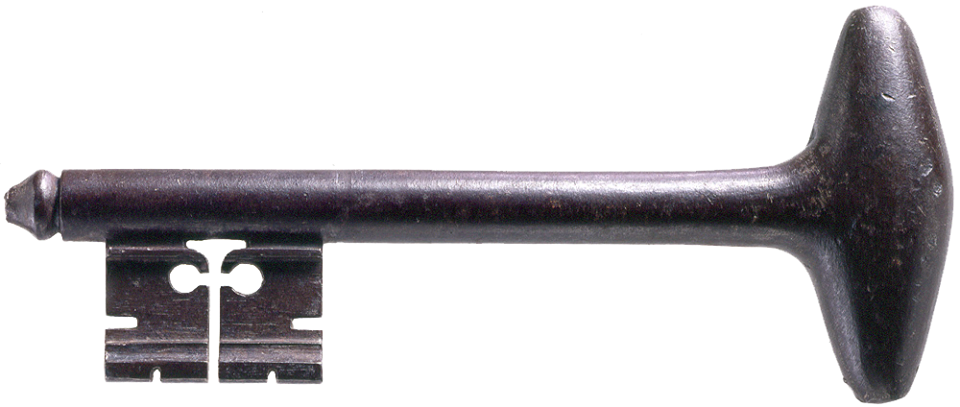
PHOTO: The principal key to the Bastille is made of cast iron and weighs one pound, three ounces. Photo courtesy of Mount Vernon
__________
Happy Bastille Day! On July 14, 1789, the French Revolution began, and the Marquis de Lafayette ordered the storming of the Bastille, a prison that was long a symbol of royal despotism.
Find out what's happening in Greater Alexandriafor free with the latest updates from Patch.
The annual celebration, known to the French as “La Fête Nationale” is a nationwide holiday that commemorates the anniversary of the liberation of France marked by the storming of the Bastille.
The holiday is called “Bastille Day” from the name of a medieval prison called Bastille, where political prisoners were held and had no chance of appeal at the hands of Louis XVI.
Find out what's happening in Greater Alexandriafor free with the latest updates from Patch.
Today, the key to the infamous prison resides at Mount Vernon. Here’s more about how it got there, from the Mount Vernon Web site:
The Bastille main prison key was turned over to Lafayette shortly after the Bastille was stormed on July 14, 1789 by angry citizens rioting in the streets of Paris. Lafayette was optimistic about the fate of the revolution when he prepared to ship the Bastille key to Washington in March of 1790.
Several months passed before the gift finally arrived at its destination. On the first leg of the journey Lafayette entrusted the key to Thomas Paine, well-known for his participation in the American Revolution. The actual presentation to George Washington late in the summer of 1790 was an honor that fell to John Rutledge, Jr., a South Carolinian returning to the United States from London.
The principal key to the Bastille is made of cast iron and weighs one pound, three ounces. Washington’s prominent display of this celebrated souvenir in the presidential household illustrated his appreciation to his French pupil as well as recognition of its symbolic importance in America.
The key was given a place of honor in the first floor passage at Mount Vernon. Washington’s death in 1799 brought little disturbance of the Mansion‘s interior. However, that changed upon Martha Washington‘s death in 1802.
With her passing, only a few original furnishings—those acquired by Bushrod Washington—were left in the mansion. The key remained in place in the mansion’s passage during the next three generations of Washingtons who occupied Mount Vernon.
In 1824 a special reunion took place at Mount Vernon. The Marquis de Lafayette and his son George Washington Lafayette began a year-long tour of the United States. At Mount Vernon they found the principal key of the Bastille. For Lafayette it was a highly charged moment of sentimental reflection on past events of international significance and personal triumph.
In 1858, John A. Washington III, the last of the family to reside at Mount Vernon, sold the property to the Mount Vernon Ladies’ Association.
His gift to the Association of more than a dozen objects once owned by George Washington included the Bastille key that held such a prominent place in the mansion and amongst Washington’s possessions.
Bibliography:
Clary, David A. Adopted Son: Washington, Lafayette, and the Friendship that Saved the Revolution. New York: Bantam Books, 2007.
Gaines, James R. Liberty and Glory: Washington, Lafayette, and Their Revolutions. New York: W. W. Norton & Company, 2007.
(Information from this article is from the Mount Vernon Web site. Read more about the key on the Mount Vernon Web site.)
Get more local news delivered straight to your inbox. Sign up for free Patch newsletters and alerts.