Politics & Government
Do The Mayor, Councilors, And School Board Members Represent Concord?
Election 2023: A dive into Concord and Penacook demographics shows municipal officials are different from the city's general population.


CONCORD, NH — Most elected officials on the Concord City Council, SAU 8 Board of Education, and the Merrimack Valley School District School Board earn more than the median income, live in more expensive homes than their counterparts, on average, and tend to be registered Democrats when compared to the general public, according to the latest data from the city and the U.S. Census.
Dozens of candidates on the ballot in 2023 who are not serving in office yet also live in more expensive homes — more, on average, than elected officials. But their political registration is more reflective of the city, even though they will not all be elected to serve on Tuesday.
A survey of most elected officials, as well as publicly available information about the mayor, city councilors, and school board members, as well as residents of the city who want to be in their roles, found a wide discrepancy between officials and the public at large when it comes to demographic data. While elected officials represent the city of Concord, since they are the civic leaders, they are also not a representative makeup of the city.
Find out what's happening in Concordfor free with the latest updates from Patch.
It is a purposeful play on words, if you will.
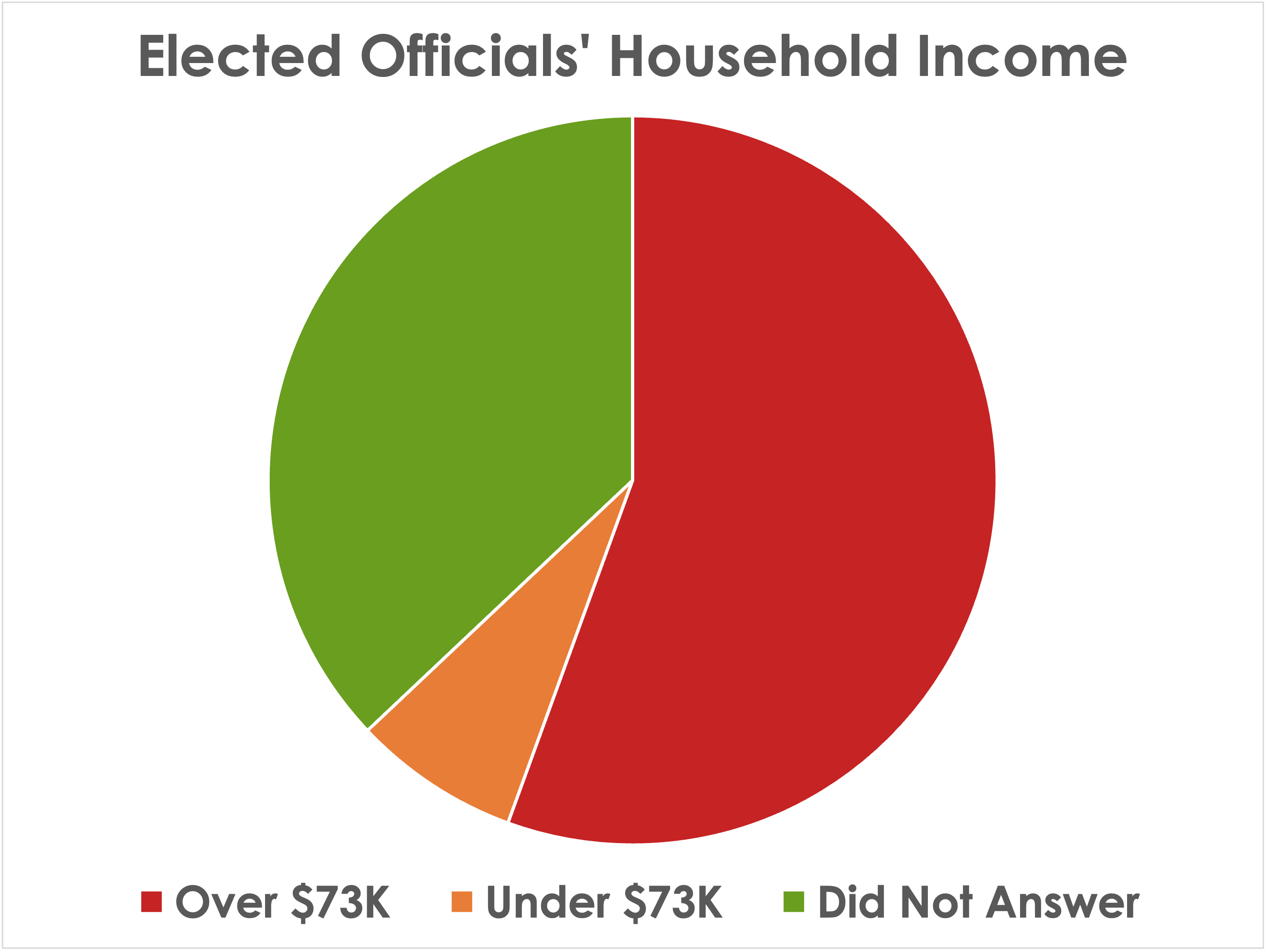
Elected officials’ household income when compared to the median ($73K) per the U.S. Census. Credit: Tony Schinella/Patch
Find out what's happening in Concordfor free with the latest updates from Patch.
Housing was one of the easiest data points to eye since the information was publicly available and home assessment rates and rental status, too, were known of officials and candidates.
The median home value in Concord, according to the U.S. Census, is $246,000. The city uses a $300,000 figure as the average home assessment when portraying estimates to the public. An audit of every elected official’s home found the average was $357,204 or 19 percent higher than the general public. Only nine of the homes were below the average. Candidates running but not elected yet have average assessments of $379,836 or more than 26 percent higher. Only four had homes below the average.
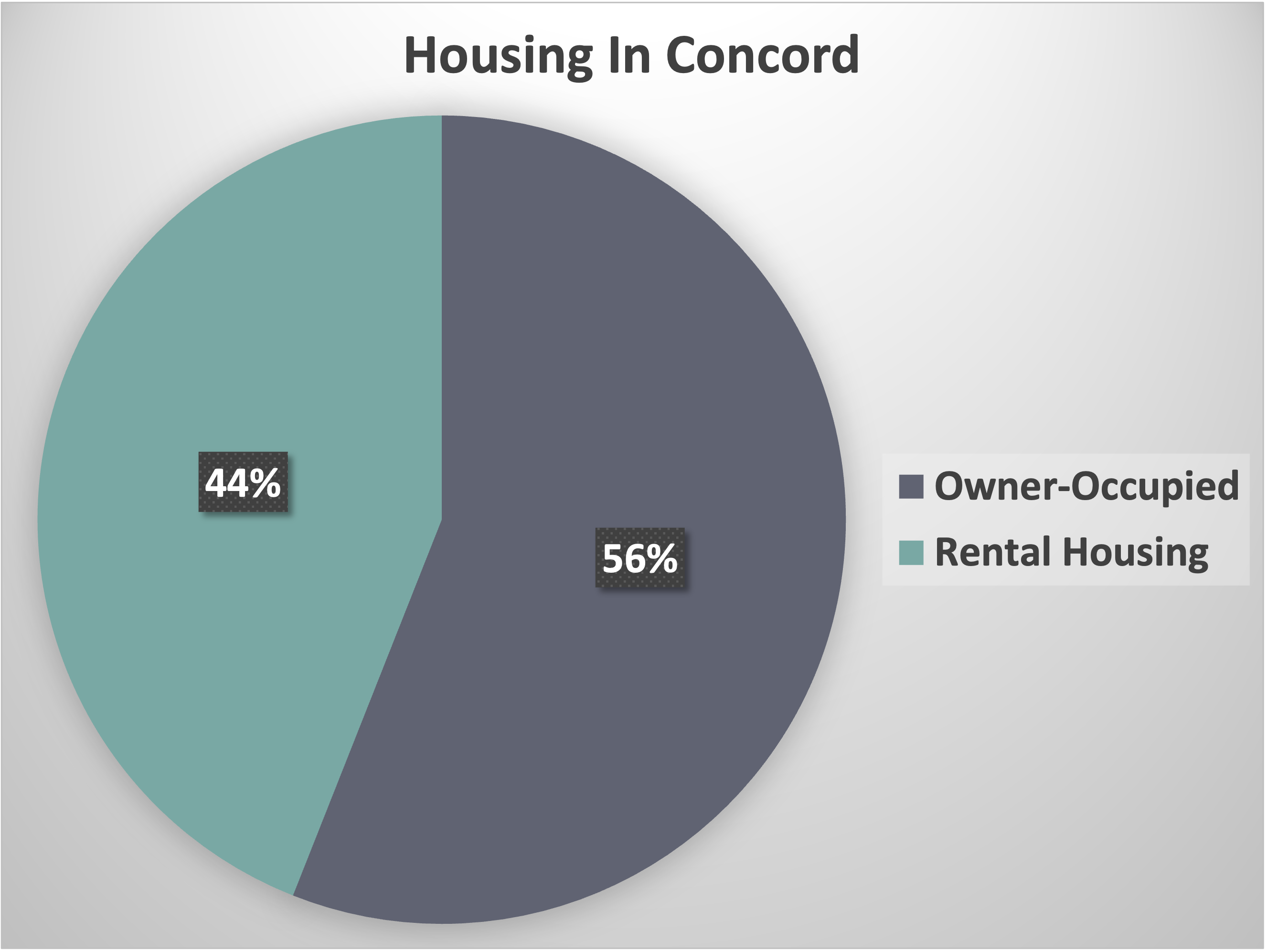
Housing in Concord: Owner-occupied versus rental, according to the U.S. Census. Credit: Tony Schinella/Patch
Owner-occupied housing, according to the Census, makes up 56 percent of the city’s population, while 44 percent are renters. But only a single elected official would be considered a “renter” since they live at home with their parents. Of the candidates on the ballot hoping to be elected, three are renters. Even if all three were elected, and one has actively dropped out of campaigning, they would be nowhere near representative of the community.
While elections in Concord are nonpartisan, party affiliation still affects how many voters in city and school board elections cast ballots.
Concord was once considered a “Rockefeller Republican” town. But the shift left and, in some cases, way to the left, has been the norm in recent decades, and that is shown in the makeup of the city’s political bodies.
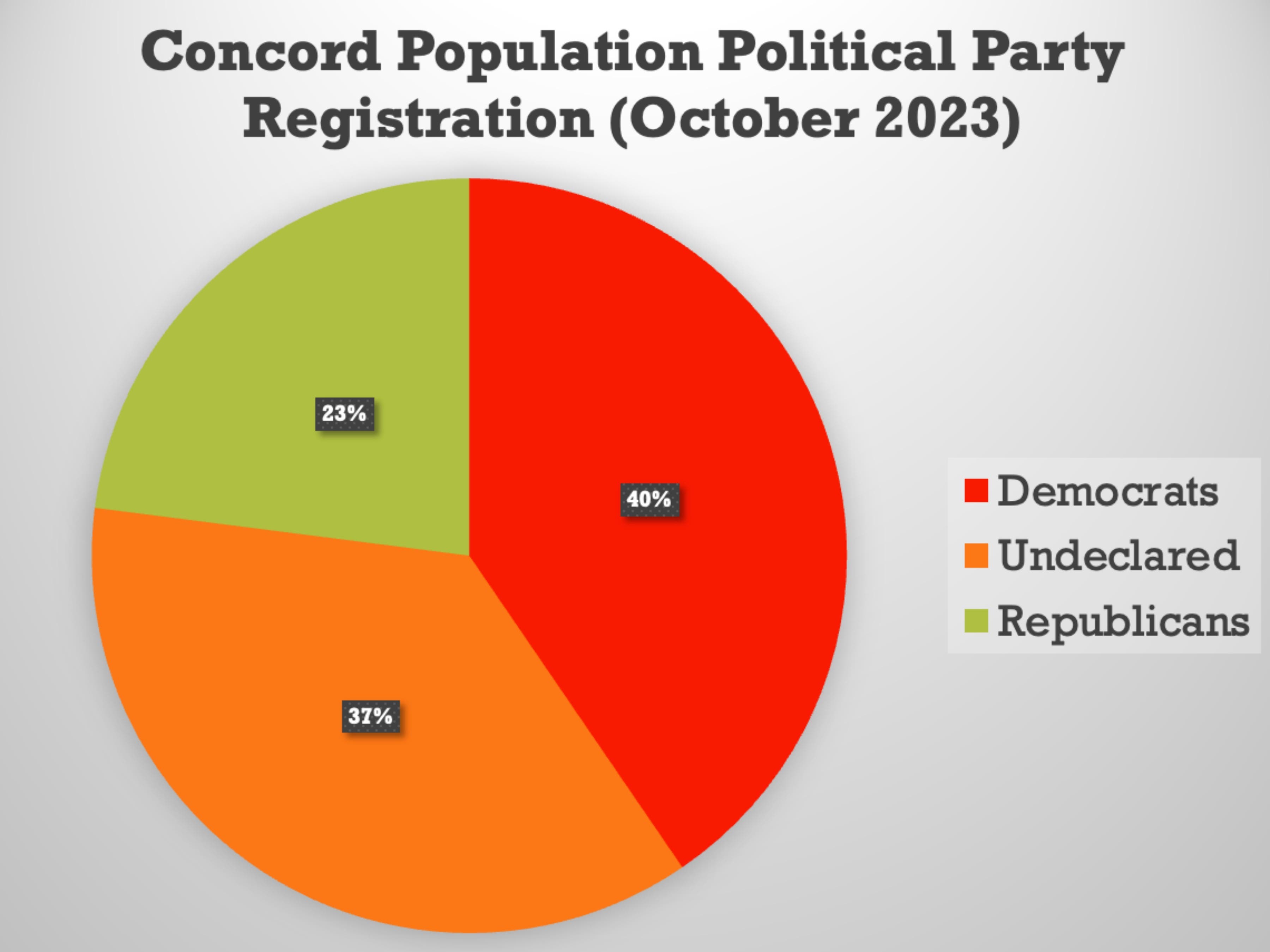
Voter registration breakdown for the city of Concord. Credit: Tony Schinella/Patch
According to data from the city clerk’s office, registered Democrats are 40 percent of the city, while “undeclared” are 37 percent and Republicans are 23 percent.
However, in elected positions, only 7 percent are Republicans. Another 30 percent are undeclared, with nearly two-thirds being registered Democrats.
The new candidates running, however, are more reflective of the city: 44 percent Democrat, 26 percent Republican, and 30 percent undeclared.
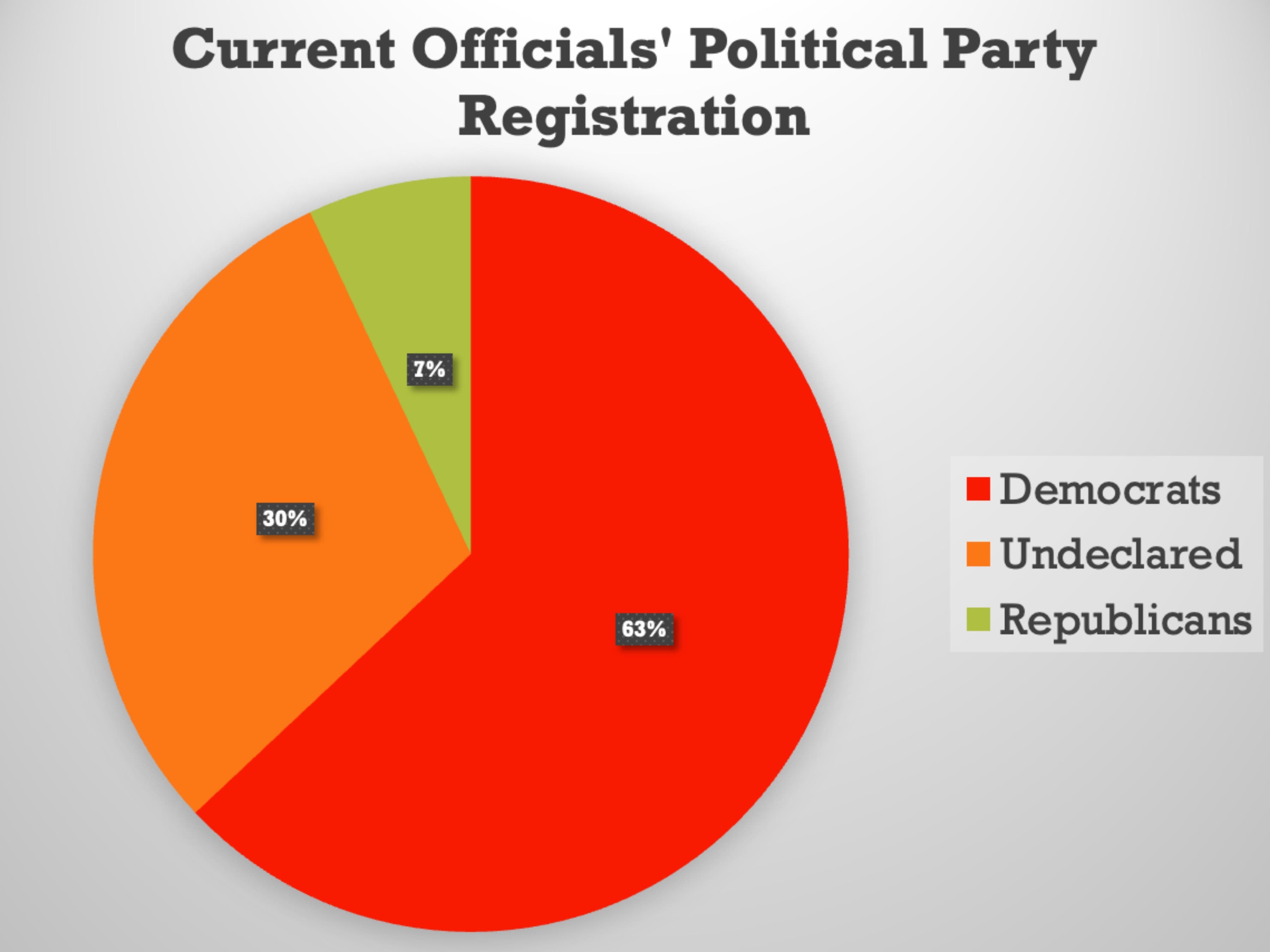
Current elected officials’ political party registration. Credit: Tony Schinella/Patch
Another data point is men and women.
Men make up 51.3 percent of the population of Concord but women fill 59 percent of elected positions in the city. Sixteen men are running compared to nine women who are not incumbents — so there is a possibility that more men than women could be elected after Tuesday.
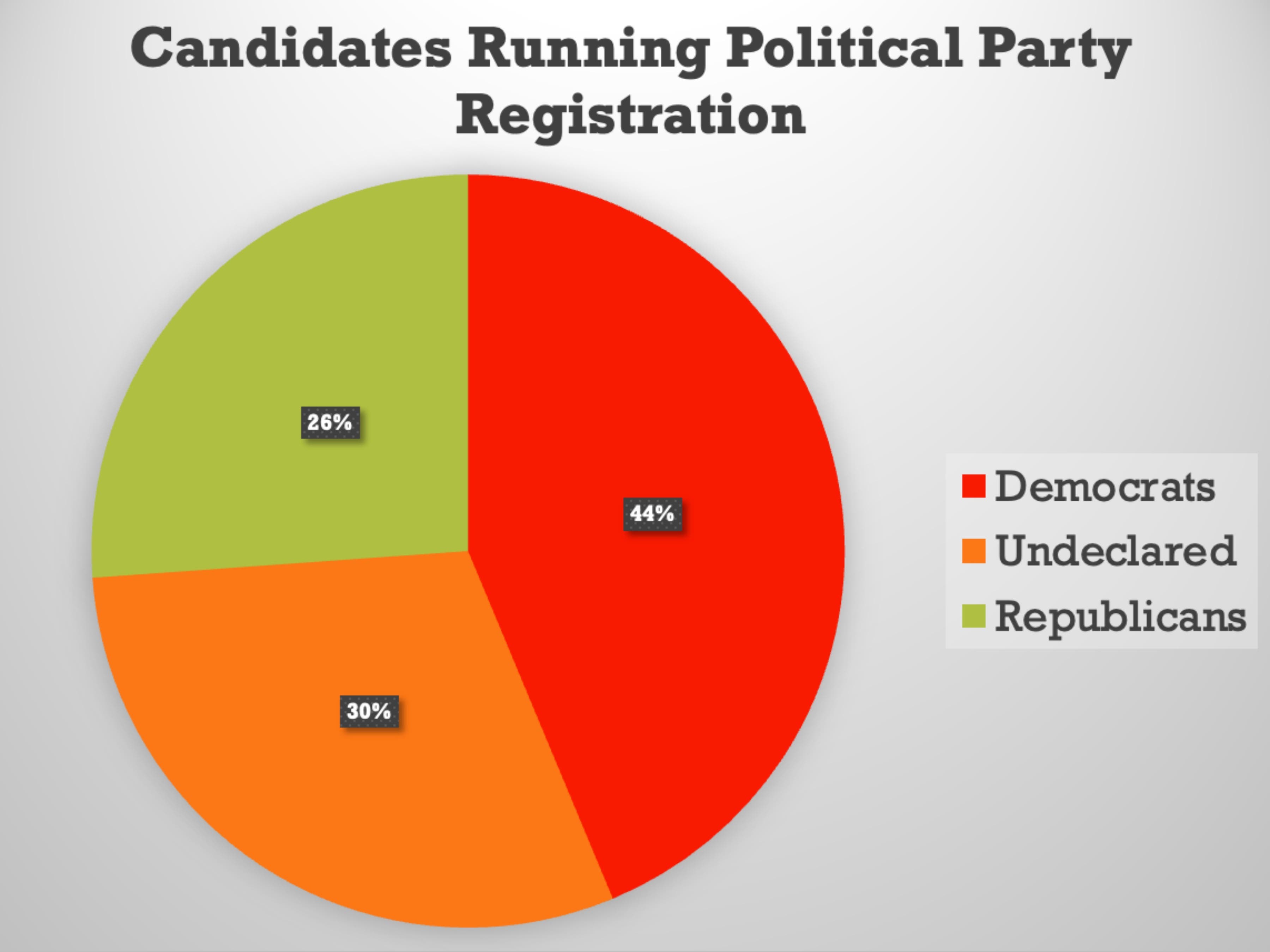
The registrations of candidates who are not elected but are on the ballot in 2023. Credit: Tony Schinella/Patch
The latest Census data said 17.3 percent of the city is over 65, while currently, 22 percent of the elected officials are in that age sector, so the data is pretty close. Another 7 percent of the city are veterans. According to the surveys, there are three veterans, or about 11 percent of elected officials, also close. All elected officials are high school graduates compared to more than 92 percent of the city, while 37 percent have at least a bachelor’s degree. Of the elected officials, all had degrees or some college or post-high school education.
The racial makeup of elected officials and the city, too, was not reflective.
The city of Concord is 88 percent white. At the same time, all its representatives are white or consider themselves white. Some officials noted they had Native American lineage — meaning they are more represented than the 0.7 percent in the city U.S. Census data.
Lastly, more than half of elected officials reported a household income of more than the median of $73,000. Several elected officials refused to respond to repeated requests for demographic information. When looking at their homes, possible mortgages, and spouses and their employment, it is clear that more than the majority of the elected officials who refused to disclose whether they earn more than the median do earn more.
Several of the new candidates running have not lived in the city for very long. One school board candidate moved to the city two years ago. Other council candidates have barely lived for four years.
While there is no residency restriction for length of time like there is for, say, a state Senate seat, which requires seven years of living in the district, the lack of institutional knowledge for some of the candidates was unsettling to some political veterans.
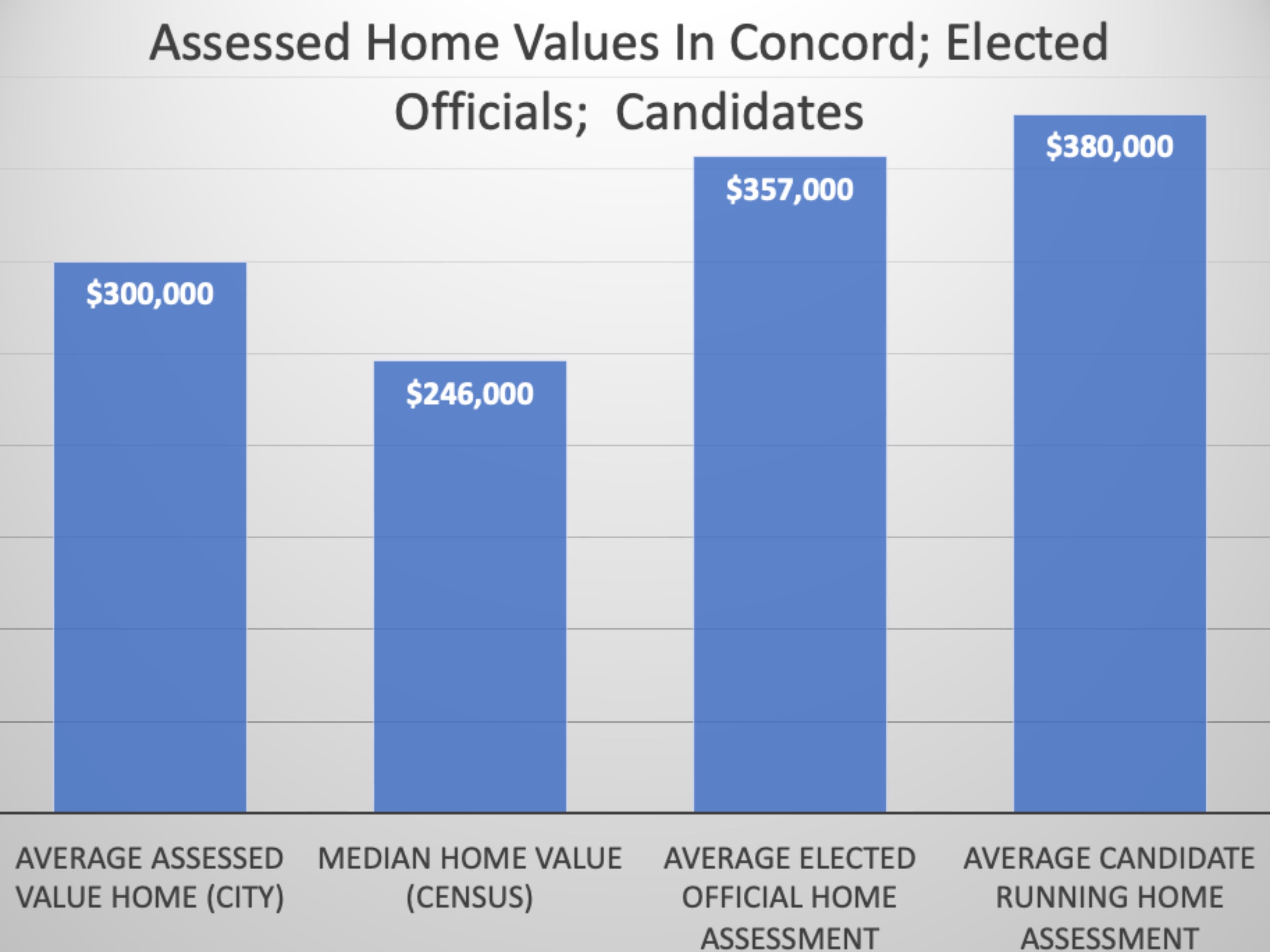
Housing assessments in the city. Credit: Tony Schinella/Patch
Do The Demos Matter?
When looking at the data, some can see how there could be a disconnect between some elected officials and the residents and voters they represent.
In other cases, officials said it depends on each official and what they do as a collective.
Outgoing Mayor Jim Bouley, who chose to step away from the council in August after more than a quarter of a century, said he had served with more than 50 people during that time, and they all came to the council table with different backgrounds and from all walks of life. Some were newcomers to the city, while others were long-time residents. But the most essential trait was they were all concerned about the city's future and made decisions based on the community’s best interest.
“That was the common denominator,” Bouley said, “They didn’t need to agree on everything; they could come from different points and backgrounds. But when you have people who run for their own self-interest, that’s a problem.”
Amanda Grady Sexton, an at-large city councilor who is not up for re-election for two years, said she believed different perspectives on the boards led “to more creative problem-solving.” She said voters were “more likely to trust their local government if they feel that it represents them and understands their needs.” Diversity in representation, too, could lead to higher levels of voter engagement, “which tends to be low in local elections.”
Fred Keach, also mid-way through his at-large term, said he did not see political affiliation on boards, but he could make presumptions based on where some board members were coming from.
But he had noticed a troubling trend — fiscally conservative people who were also socially liberal were pretty quiet lately and appeared “afraid to speak up.” Those voters do, however, make their feelings known at the ballot box.
“Unfortunately,” Keach said, “we’ve devolved into a situation where people are afraid of saying the wrong things … we have political activists and others, with strong, good, and reasonable beliefs, who don’t want to jump into the debate because of (the potential backlash). It’s concerning.”
Keach added there did not appear to be more extensive debates or conversations about “really broad city issues … the direction the city is going in … expanding the tax base. What I hear, instead, are very narrow, specific issues, and that’s troubling.”
Barbara Higgins, who has been both a district and at-large school board member, had worked on boards with more women and more men. She said it was always “nine diverse sets of eyes” regardless of where the board members lived, how much money they made, their sex, or their political affiliation.
In the past, though, she admitted there was a more clubby atmosphere on the school board when all of the members were elected citywide, which is what it was like when she was first elected. Six members at the time could walk to the district office on Liberty Street, she said. They often were all having dinner at Hermano’s on Friday nights. She said, “It was not a reflective representation of the school board. Common ideas and decisions needed to be made together.” The district seats, now called Zones, “took away that West End neighborhood control,” ensuring at least two board members were from each part of the city. She added, “A small group of people with financial resources and means are not the only ones who get elected … it was not healthy … the zones were a terrific addition.”
Since then, several neighborhoods and school communities have had better representation, regardless of their incomes or areas where they lived.
Ward 1 City Councilor Brent Todd, who is running unopposed this year, said the key word was “representative” since the average resident did not always have the time, interest, or wherewithal to perform the work councilors were doing. It took time, he said, to listen to the concerns of residents and guide them through the process of solving problems.
“In my view,” Todd said, “the most important (trait) a councilor can bring, or a member of a board or group, was to have an open mind and be a good listener. Those people would generally be in a group setting and be able to work very well within that group.”
Charging forward with a preconceived notion or an opinion about everything, without listening to other councilors or the public councilors were working for, was disconcerting. Todd said many of the council’s decisions had “long-term ramifications” that were not different from the ones families made at their kitchen tables, discussing whether to take a vacation or fix a leak in the roof when there were limited dollars to spend.
“The concept was the same,” he said. “The only difference is with the city council, we are doing it on behalf of the residents, and the budget is $110 million.”
Jennifer Kretovic in Ward 3, who is also unopposed, said there were different elements in this community and all communities focused on women running for office. Some voters in Concord, she said, would only vote for women. Kretovic said some of the candidates were raising the theory or concept there was an “old boy’s network” on the council and it was not true. Gender did not matter as long as the people at the council table were doing their jobs.
“There are more women than men,” she said. “And I have never experienced this.”
Kretovic said none of the men on the board, including Bouley, have ever called her and tried to persuade her to vote a certain way.
Kretovic said while some might be concerned with some of the data not being as diverse as the community, other sectors showed the opposite view. Some councilors lived on fixed incomes and were retirees, while at least one of working age this year was unemployed. There were small business owners, too, on the council, and they were often the last paid in the business cycle. Even in a secure job like being a lawyer, many have to have several active clients with billable hours in order to get paid, which was not always a given, Kretovic said.
“There is a ton of variety at the time,” she said. “Half the councilors don’t know where their income is coming next year. A few, too, have disabilities … some say we aren’t representing the community. But those with disability and ADA accessibility issues are 100 percent aware of the challenges our disability community faces every day. There is diversity; it may not be racial, but it is in other ways.”
Kretovic questioned many of the same people who were critical of councilors and said others not having honest conversations themselves should stop making judgments. She said voters she had spoken with while door-knocking in recent weeks were concerned about some candidates on the ballot, especially those affiliated with the progressive movement connected to some councilors already on the board.
Both Bouley and Higgins believed newcomers to the city and long-time residents deserved a seat at the table.
Higgins said the “wide-eyed enthusiasm” of newer candidates was refreshing. But it was concerning that often at the board table, the same questions “come up, again and again and again, over and over.” She guesstimated 90 percent of the questions were often based on members not growing up in Concord or not attending school here.
“They have a role,” she said, “but we are constantly rediscussing issues.”
Bouley called it “healthy” for people to be participatory. It was good to have a “cross-section of public participation from all walks of life,” he said. But, Bouley added, “I also think that just because somebody who has lived here a long time should not be dismissed because there is value in institutional knowledge.”
Keach found some of the newcomers to be “a concern.” And, however, framed the question differently: “Why aren’t more long-term established getting involved? I think that’s a bigger problem.”
Too many people are sitting on the sidelines complaining and not getting involved. The length of time someone lives in the city should not be a huge issue; “a couple of years shouldn’t disqualify them,” he said. But long-term residents who feel alienated from the process “really need to get involved … that’s the way to fix the problem.”
Todd added it was important to have community interest, drive, motivation, and interest in giving back to the community. But to be effective, councilors had to leave the biases at home.
Kretovic raised concerns about some newcomers, noting they did not understand all of the work put into some of the major projects before the city. She pointed to the Main Street project as a good example of something that was worked on for decades before grant money was secured and it was built. A new community center at Dame School, which cost $8 million, was in the works for years, too. Now, the clubhouse at the Beaver Meadow Golf Course needed to be replaced. The new building, she said, would be a multi-use community center for the northern part of the city. The contentious nature of some of the newer councilors at meetings challenging the project showed their lack of understanding of the years of work put into it.
“It really pisses me off,” Kretovic said. “The building is falling down. That is what is pushing the project forward.”
Some, she said, have pointed to the Penacook Community Center as an alternative without acknowledging the building was being torn down for a Boys & Girls Club and a branch library for the village.
Todd, too, said he hoped city elections would stay nonpartisan in the future since the party interests, like candidates backed by special interests, could sway elections by spending a lot of money on their candidates. He said it would be a disservice to the voters and the process to have partisan elections like other cities.
Debates From 12 Of The 13 Competitive Races
- Candidates For Concord Mayor Prepare To Lead After Jim Bouley: Watch
- 5 Concord At Large City Council Candidates Vie For 2 Seats: Watch
- Newcomer To Concord, Concerned Father Both Seek Zone A School Seat
- An Incumbent, 2 Challengers Seek Concord School Board Zone C Seat
- An Open Ward 2 Concord City Council Seat Brings Out Newcomers: Watch
- In Ward 4 Concord City Council Race, It's Experience Vs. Experience
- Ward 5 Concord City Council Candidates Talk Trash, Taxes, Engagement
- Financial Advisor Seeks Ward 6 Concord City Council Seat: Watch
- Long-Time Concord City Councilor In Ward 7 Faces A Challenger: Watch
- Lifelong Resident, Long-Timer, And Newcomer Run In Concord's Ward 8
- Open Ward 9 Concord Council Seat Brings Out Political Veterans: Watch
- 3-Term Incumbent Councilor Gets A Challenger In Ward 10: Watch
2023 Municipal Candidate Profiles
- Byron Champlin, Mayor Of Concord Candidate
- Nathan Fennessy, Concord City Council At Large Candidate
- Taylor Hall, Concord City Council At Large Candidate
- Matthew Hicks, Concord City Council At Large Candidate
- Judith Kurtz, Concord City Council At Large Candidate
- Kevin Porter, Concord City Council At Large Candidate
- Jess Campbell, Zone A Concord School Board Candidate
- Kassey Cameron, Zone C Concord School Board Candidate
- Brenda Hastings, Zone C Concord School Board Candidate
- Brent Todd, Concord City Council Ward 1 Candidate
- Michele Horne, Ward 2 Concord City Council Candidate
- Rob Kleiner, Concord City Council Ward 2 Candidate
- Jennifer Kretovic, Concord City Council Ward 3 Candidate
- Sarah Beauregard, Ward 4 Concord City Council Candidate
- Karen McNamara, Ward 4 Concord City Council Candidate
- Stacey Brown, Concord City Council Ward 5 Candidate
- Noemi Wierwille, Concord City Council Ward 5 Candidate
- Keith Nyhan, Ward 7 Concord City Council Candidate
- Jim Schlosser, Concord City Council Ward 7 Candidate
- Dennis Soucy, Concord City Council Ward 8 Candidate
- Andrew Georgevits, Ward 9 Concord City Council Candidate
- Kris Schultz, Concord City Council Ward 9 Candidate
- Jeff Foote, Ward 10 Concord City Council Candidate
- Zandra Rice Hawkins, Ward 10 Concord City Council Candidate
Campaign 2023 Stories
- Champlin Spends $10K On Concord Mayoral Run: 2023 Election Update
- Lemieux: Council Candidates Should Be Questioned About Langley Parkway Phase 3
- Herschlag: Golf, A Follow Up To Charlie Russell’s Letter
- Jackson: Why I'm Endorsing Guglielmo For Zone A School Board Seat
- Concord Firefighter Union Backs Fennessy, Kleiner, McNamara, And Nyhan
- Russell: A New Library Or Golf Course Clubhouse For Concord?
- Herschlag: We're Voting For Michele Horne In Ward 2
- Nearly A Dozen Concord Candidates Fail To File Financials On Time
- City Of Concord: 2023 Election Info
- Some Concord Council Candidate Signs Not In Compliance With NH Law
- Concord School District Hosts 2 Meetings Concerning New Middle School
- Concord’s Longest-Serving Mayor Named 2023 Citizen Of The Year
- More Concord Candidates Explain Why They Are Running In 2023
- More Concord Council Candidates Jump Into The Fray On Last Filing Day
- As Final Filing Day Approaches, Concord Municipal Races Get Crowded
- New Candidates Emerge For Concord Mayor, City Council, School Board
- Dad Upset About Crossdressing Art Teacher Runs For Concord School Seat
- Candidates Enter Concord City Council Races On First Day Of Filing
- New Candidates Emerge In 2023 Concord Races As Signup Date Approaches
- Champlin Confirms Concord Mayoral Run; Some Out, Others Thinking
- Second At Large Concord City Councilor Considers Mayoral Run
- Concord At-Large Councilor Champlin Eyes Mayoral Run
- Herschlag: Our Mayor Is Not Seeking Another Term
- Concord’s Longest Serving Mayor Won’t Seek Re-Election In November
Have you got a news tip? Please send it to tony.schinella@patch.com. View videos on Tony Schinella's YouTube.com channel or Rumble.com channel. Check out the #FITN2024 NH Patch post channel and follow our politics Twitter account @NHPatchPolitics for all our campaign coverage.
Get more local news delivered straight to your inbox. Sign up for free Patch newsletters and alerts.