Crime & Safety
Superior Court Judge Denies Request To Suppress Evidence In Concord Double-Murder Case: Follow-Up
Judge John Kissinger said evidence against Logan Clegg in the Stephen and Djeswende Reid murder case would have been found lawfully.


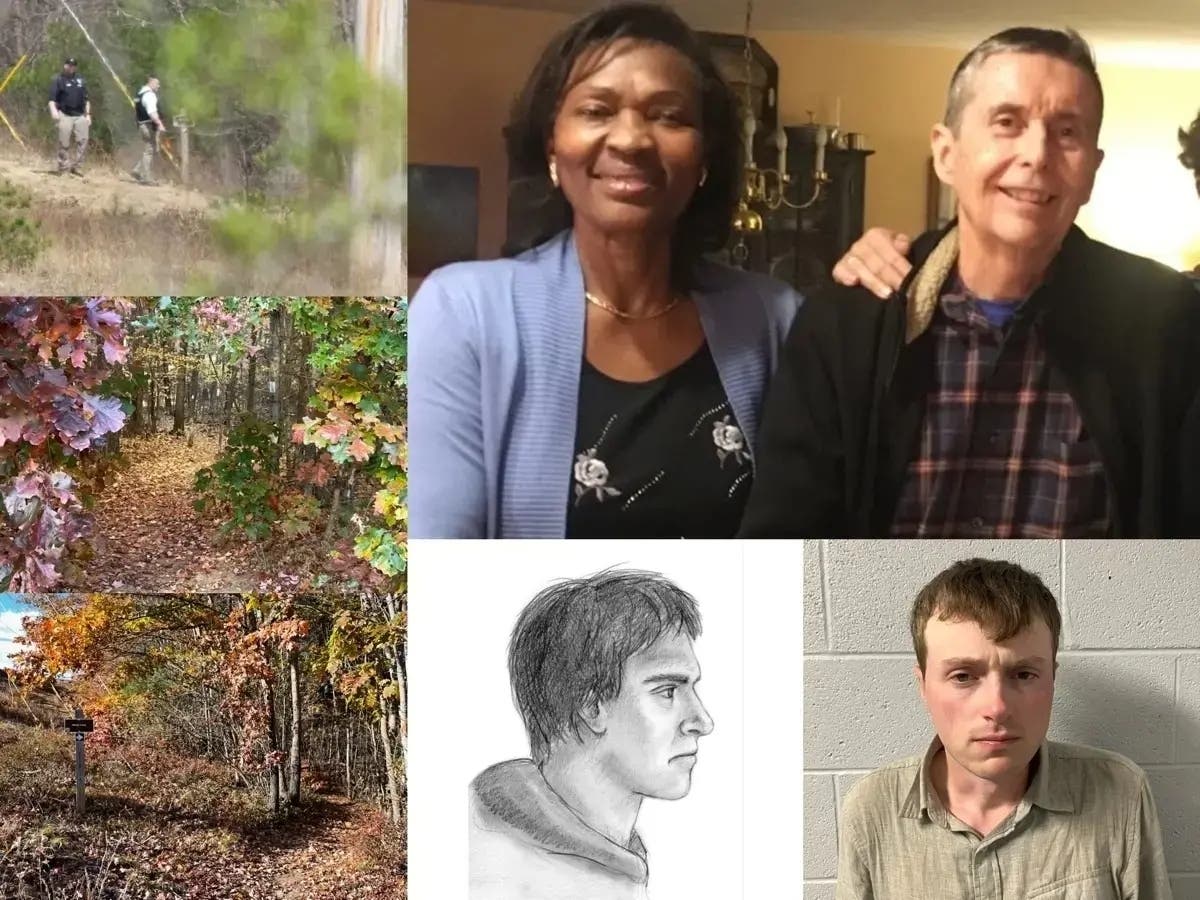
CONCORD, NH — A Merrimack County Superior Court judge has ruled evidence used in the prosecution of a homeless man who killed a Concord couple in 2022 remains admissible under the legal doctrine of inevitable discovery, following a remand from the New Hampshire Supreme Court.
Judge John Kissinger Jr., in a 40-page ruling, said, “after carefully” considering the parties’ arguments, Clegg’s motion to suppress evidence tied to his 2023 convictions for second-degree murder, falsifying physical evidence and being a felon in possession of a firearm in the deaths of Stephen and Djeswende (Wendy) Reid, was denied.
The Supreme Court previously ruled the trial court had erred in relying on exigent circumstances to justify warrantless requests for cellphone data from Verizon. The high court sent the case back to the trial court to determine whether the evidence would have been admissible under the inevitable discovery doctrine.
Find out what's happening in Concordfor free with the latest updates from Patch.
Read the decision linked here.
Prior to the trial, the court held a three-day evidentiary hearing on the motion to suppress evidence and an unrelated motion to suppress statements.
Find out what's happening in Concordfor free with the latest updates from Patch.
Police, while searching for the Reids, encountered a homeless camper in Concord with the name of “Arthur Kelly,” for whom dispatch could find no information. After the Reids’ bodies were found, the campsite of Kelly, later ID’d as Clegg, had been cleared, and he, essentially, vanished.
Nearly six months later, police learned Clegg purchased a bus ticket from Boston, Massachusetts, to Vermont in Kelly’s name. On Oct. 11, police learned Clegg had booked a flight to Berlin, Germany, scheduled for 12:30 a.m. on Oct. 14, 2022. The cellphone number and mailing address in the flight information led police to Vermont to search for Clegg, as did pings from his cellphone. Pings were found in the Centennial Woods area of the city, as well as his association with the Price Chopper grocery store and the public library, where he was later arrested on Oct. 12, 2022.
Clegg possessed a Glock 9 mm handgun loaded with Sig Luger 9 mm rounds, which were consistent with the bullets in the killings of the Reids.
After being arrested, Centennial Woods was searched by police, and Clegg’s homeless campsite was “quickly” found.
Clegg’s legal team, however, argued the admissions by police essentially amounted to “if we hadn’t done it wrong, we would have done it right[.]”
After reviewing evidence from earlier hearings and additional testimony presented in April, Kissinger concluded police would have obtained the same cellphone records through a search warrant even if they had not used Verizon’s emergency request process. He said investigators showed good faith by seeking the records without a warrant because they believed the process would not provide information quickly enough to locate Clegg before a scheduled international flight. Kissinger wrote police mistakenly believed obtaining a warrant and using the company’s emergency hotline were mutually exclusive, but he found no evidence that investigators deliberately violated Clegg’s constitutional rights. The judge also found evidence recovered from Clegg’s backpack at the time of his arrest at the library and from a campsite in Burlington would have been discovered through lawful means.
Concord police investigators’ fears were Clegg was “uniquely dangerous,” and they were concerned “he might commit another similar crime before leaving the country,” prompting “a particular sense of urgency to act” on the information since Clegg “had murdered two strangers for no apparent reason.”
In the order, Kissinger wrote that the state had shown it was “practically certain” the evidence would have been obtained legally, and police “did not act in bad faith to accelerate the discovery of evidence.” The public interest in allowing jurors to consider relevant evidence outweighed the need to exclude the evidence because of the constitutional violation identified by the Supreme Court, he said, denying Clegg’s motion to suppress.
The ruling leaves intact the evidence underlying Clegg’s convictions while preserving issues for any future appellate review.
The New Hampshire Attorney General’s Office issued a statement saying, “We are pleased with the court’s ruling. The defendant has a right to appeal this ruling to the New Hampshire Supreme Court, and out of respect for the process we will have no further comment.”
Evidence Appeal Coverage
Prosecutors Try To Justify Concord Police Illegal Searches In Clegg Double Murder Case
Cops Didn’t Get Warrant For Concord Murder Suspect’s Phone Data: Docs
State Plans New Testimony In Clegg's Murder Convictions; Submits 6 Potential Witnesses
Prosecutors Get Evidence Do-Over In Concord Couples' Murders
NH Supreme Court Vacates Clegg’s Denial Of Motion To Suppress Evidence In Reid Double Murder Case
Patch Trial Coverage
- Clegg Sent To Prison For Life For Killing Retired Concord Couple
- Jury: Transient Murdered Retired Couple On East Concord Trail In 2022
- No Verdict Friday In Clegg Double-Murder Trial In Concord
- Logan Clegg Double-Murder Case Goes To Jury In Concord
- Clegg Defense Starts In Double-Murder Trial After Judge Rules Enough Evidence To Continue
- Testimony: No Clegg DNA Link To Murders Of Stephen And Wendy Reid In Concord
- Bullet Casings Coming Into Focus In Clegg Trial
- Former Senior Assistant AG Found Bullet Casings A Month After Reids Murdered In Concord
- Clegg Jury Hears From Medical Examiner In Murders Of Concord Couple
- Concord Detective Testifies About Murder Weapon: Day 3 Of Clegg Trial
- Finding The Reids' Bodies: Concord Retired Couple Murder Trial, Day 2
- On First Day Of Trial, Jurors Visit Site Of Concord Double Murder
Prior Patch Coverage
- Concord Homeless Drifter Logan Clegg Double Murder Trial Set
- Homeless Drifter Indicted On 8 Charges In Concord Couple Murder Case
- Concord Double Murder Suspect Brought To NH, Waives Arraignment
- Concord Detectives Use Bullet Evidence, Alias To Find Suspected Killer
- AG: Clegg, Accused Of Murders, Acted Alone In Concord Double Homicide: Watch
- Vermont Fugitive Logan Clegg Arrested On Concord Murder Charges
- Person Of Interest In Concord Double Homicide Case Arrested In VT
- Investigators Eyeing 400+ Tips In Retired Concord Couple Homicide Case
- SUV Has 'No Connection' To Concord Double Homicide Case: Investigators
- Investigators: Toyota SUV Owner Not A Suspect In Concord Homicide Case
- Every Motive Being Eyed In Concord Double Homicide Case: Investigators
- Concord Police Overtime Inches Up In Wake Of Heights Homicide Case
- FBI, Detectives Expand Concord Homicide Case Canvass
- Sketch From Concord Couple Killings Investigation Leads To 100+ Tips
- Concord Retired Couple Killings Reward Increased To $50K: Alert
- Person Of Interest Sought In Concord Retired Couple Killings Case
- Concord Crimeline Posts $5K Reward In Retired Couple Shootings Case
- Concord Police Beef Up Patrols, Visibility In Recreation Areas, Trails
- A Week Later, Police Chip Away At Concord Double Homicide Leads: Video
- Investigators Back At Concord Retired Couple Shootings Crime Scene
- Concord Residents Face A Mix Of Fear, Faith After Couple Shot, Killed
- Search Grid At Concord Homicide Scene Shows Sprawling Clues
- Concord Couple Shooting Update: FBI Working With Investigators
- Police, Fish & Game Search For Suspicious Death Clues In East Concord
- Missing Concord Couple's Deaths Ruled Homicides; Police Seek Tips
- Suspicious Deaths Investigation Underway At Concord's Marsh Loop Trail
- Dozens Of Police Search Concord Heights For Missing Couple: Video
- Missing Concord Couple's 'Disappearance Is Of Significant Concern'
Do you have a news tip? Email it to tony.schinella@patch.com. View videos on Tony Schinella's YouTube or Rumble channels. Patch in New Hampshire is now in 217 communities — and expanding every day. Also, follow Patch on Google Discover.
Get more local news delivered straight to your inbox. Sign up for free Patch newsletters and alerts.