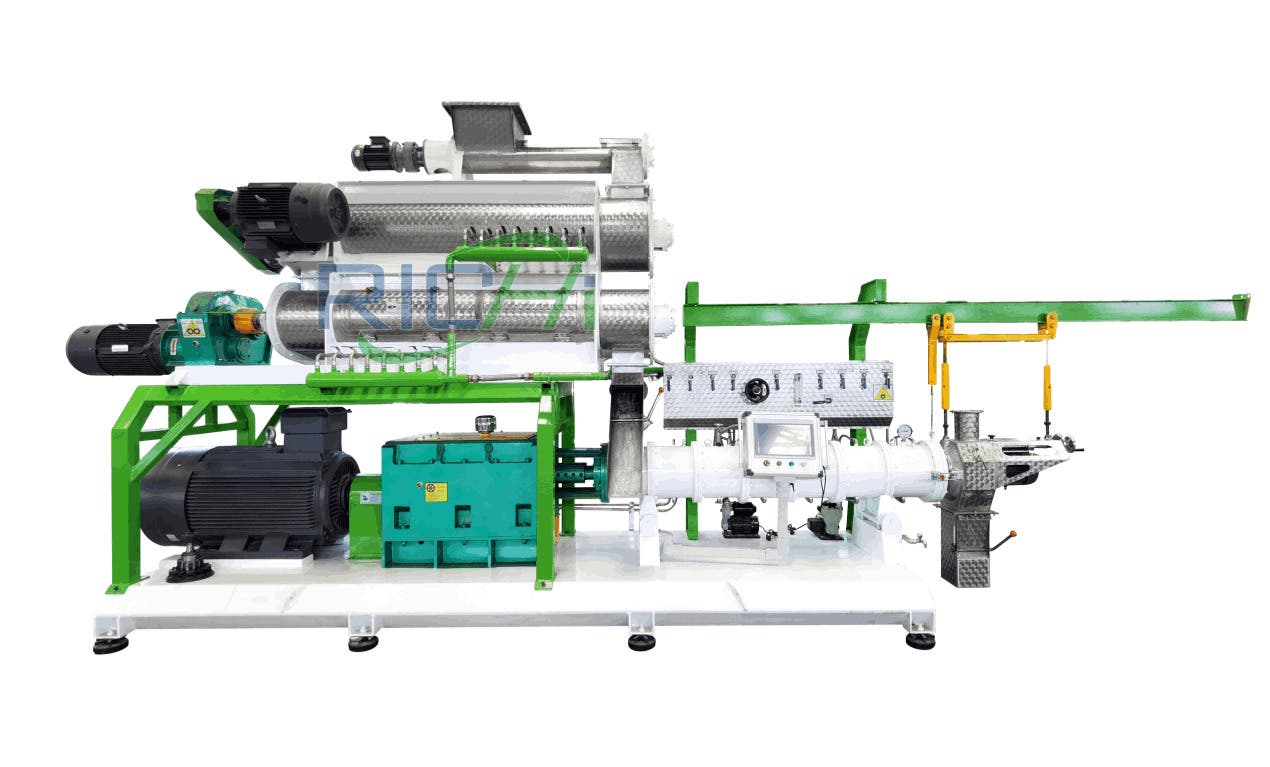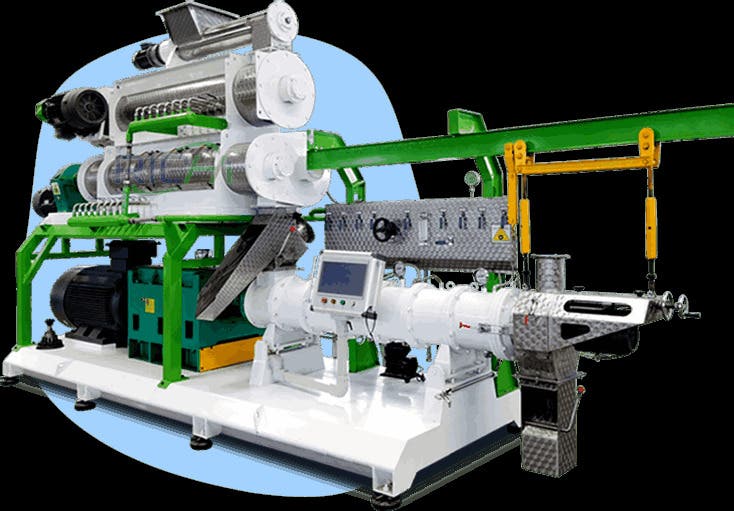
Cattle feed pellets are made by processing a mixture of grains, protein sources, fiber materials, minerals, and other feed ingredients into compact, uniform pellets. Compared with loose feed, pellets are easier to handle, store, transport, and distribute.
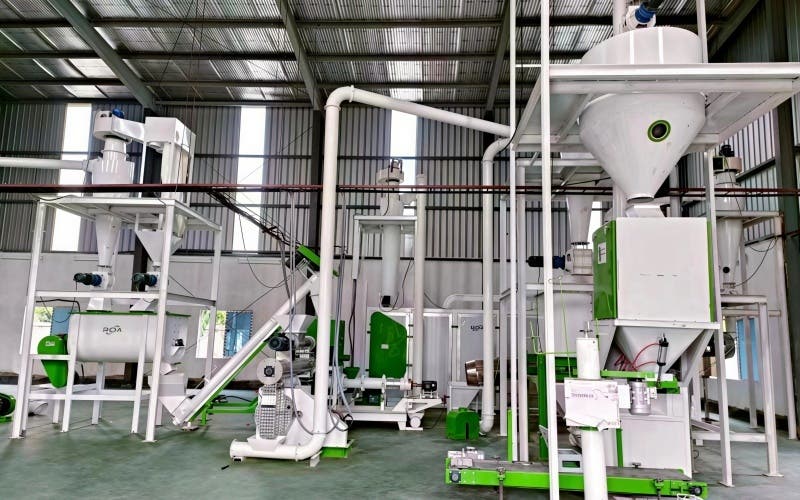
A complete cattle feed production system normally includes grinding, mixing, pelleting, cooling, screening, and packing. The equipment configuration depends on the formulation, production capacity, and condition of the raw materials.
Raw Material Preparation
Cattle feed can contain ingredients such as corn, wheat, soybean meal, rice bran, wheat bran, alfalfa, grass meal, and mineral additives.
The ingredients may have different particle sizes and physical characteristics. Large or coarse materials normally need to be ground before mixing.
A hammer mill can reduce the raw materials to a more uniform particle size, helping the mixer produce a more consistent feed mixture.
Grinding and Mixing
After grinding, the ingredients are weighed according to the feed formula and transferred to a mixer.
Uniform mixing is important because cattle feed may contain relatively small amounts of vitamins, minerals, and other additives. Proper mixing helps distribute these components throughout the feed.
Depending on the plant design, automatic weighing and conveying systems can be used to improve production efficiency and reduce manual handling.
Pelletizing Process
After mixing, the prepared feed enters the pelletizing section.
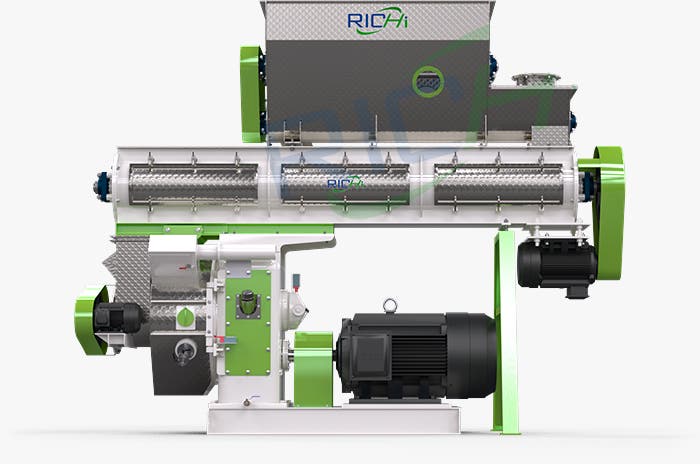
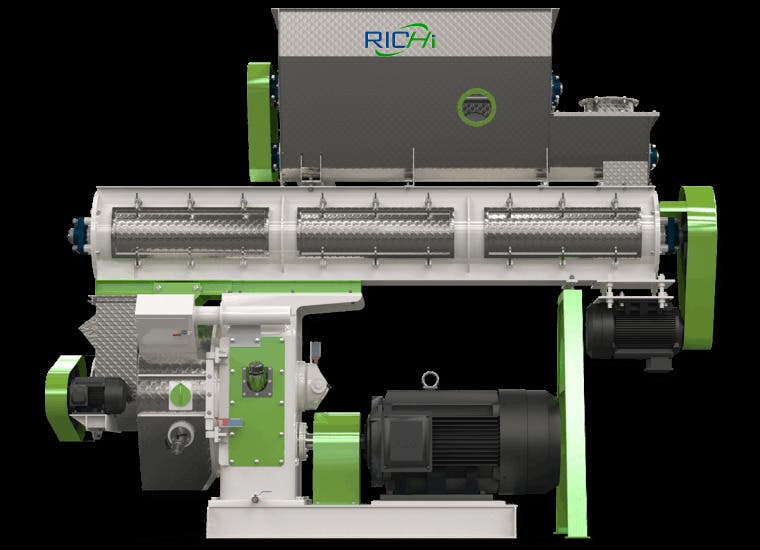
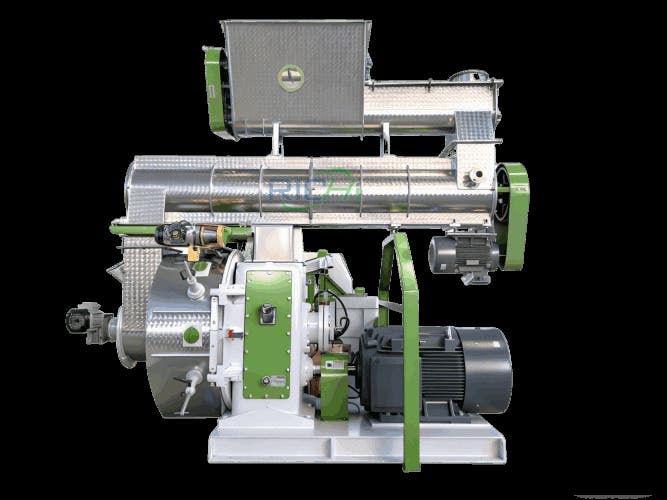
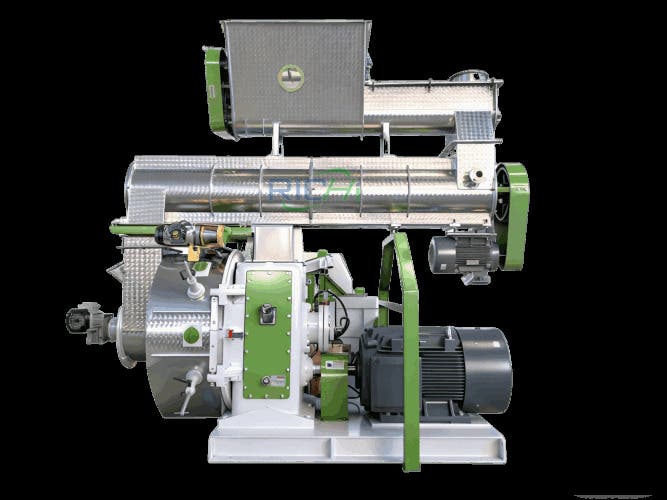
Inside the pellet mill, rollers compress the feed material against a die. The material is forced through the die holes and formed into cylindrical pellets.
The die diameter determines the approximate pellet diameter. Different cattle feed products may require different pellet sizes according to animal age, feeding method, and formulation.
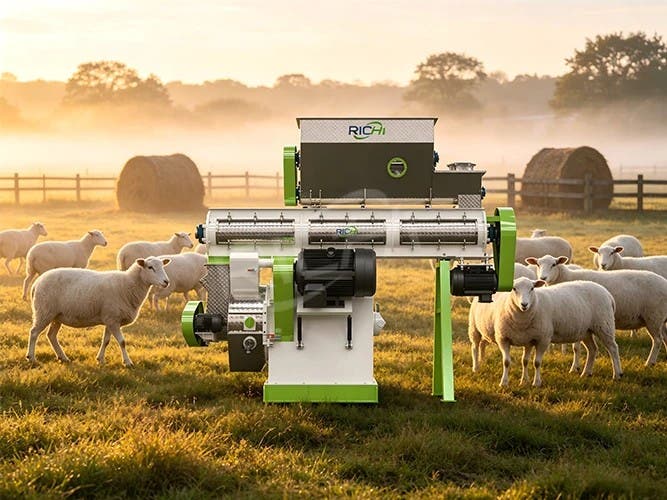
A properly selectedcattle feed pellet machine should match the required production capacity and raw material characteristics.
Cooling and Screening
Fresh pellets leave the pellet mill with elevated temperature and moisture. They normally need to be cooled before storage or packaging.
A counterflow cooler or another suitable cooling system can reduce pellet temperature and help stabilize the finished feed.
After cooling, a screen separates fines and undersized pellets from the finished product. Depending on the production system, separated fines can be returned to the process.
These downstream stages become increasingly important for commercial feed plants where consistent pellet quality and continuous production are required.
Choosing the Production Capacity
The required capacity depends on the amount of cattle feed consumed or sold each day.
A small farm producing feed for its own cattle may only need a relatively small system. A commercial feed producer supplying multiple farms may require several tons per hour.
The capacity should be calculated from actual feed demand rather than selecting the largest available machine.
Businesses comparing livestock feed equipment can also review a 5T/H chicken feed pellet machine for salewhen considering different capacity ranges and production configurations. Although cattle and poultry feed formulas are different, many basic processing stages are similar.
Automation and Material Handling
Automation can significantly change the configuration of a cattle feed plant.
A basic system may use manual ingredient feeding and bagging. A larger facility can use automatic weighing, conveyors, centralized control, automatic feeding, and automatic packaging.
Material handling is also important because the grinding, mixing, pelleting, cooling, and packing sections need to maintain a continuous flow.
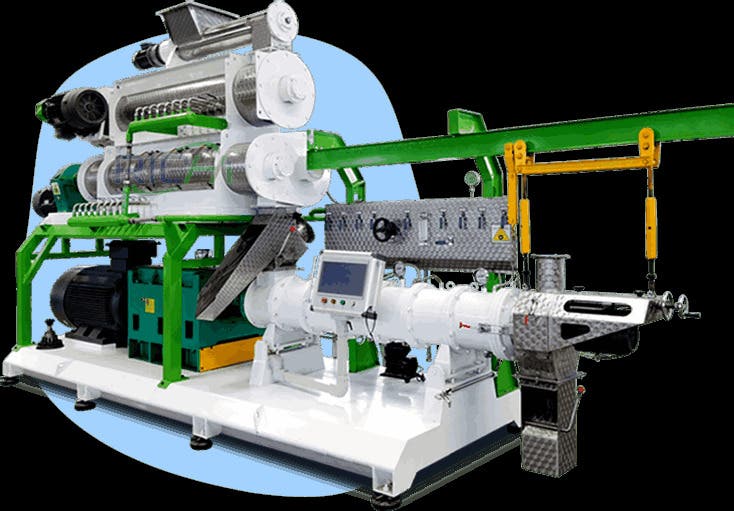
A properly designedfeed pellet machinesystem can connect these stages and reduce unnecessary manual material transfer.
Example Equipment Configuration
A typical cattle feed pellet production line may include:
- Raw material receiving and cleaning
- Crushing or grinding system
- Ingredient weighing system
- Feed mixer
- Pellet mill
- Pellet cooler
- Vibrating screen
- Conveyors
- Finished feed storage
- Packing machine
Not every project requires all of these machines. A farm that already has a mixer and grinder may only need the pelletizing and downstream sections.
Planning Before Purchase
Before selecting equipment, buyers should determine the feed formula, available raw materials, moisture content, required pellet diameter, production capacity, operating hours, and level of automation.
These details allow the equipment configuration to be matched more accurately to the actual production requirements.
Cattle feed pellet production is therefore best planned as a complete processing system rather than as the purchase of a single machine. For additional information about livestock feed processing equipment and production layouts, read here.