Fish feed production requires more than simply compressing ingredients into pellets. The feed must have the right size, density, water stability, and nutritional characteristics for the target species. For this reason, extrusion technology has become an important option for manufacturers producing floating and sinking aquatic feed.
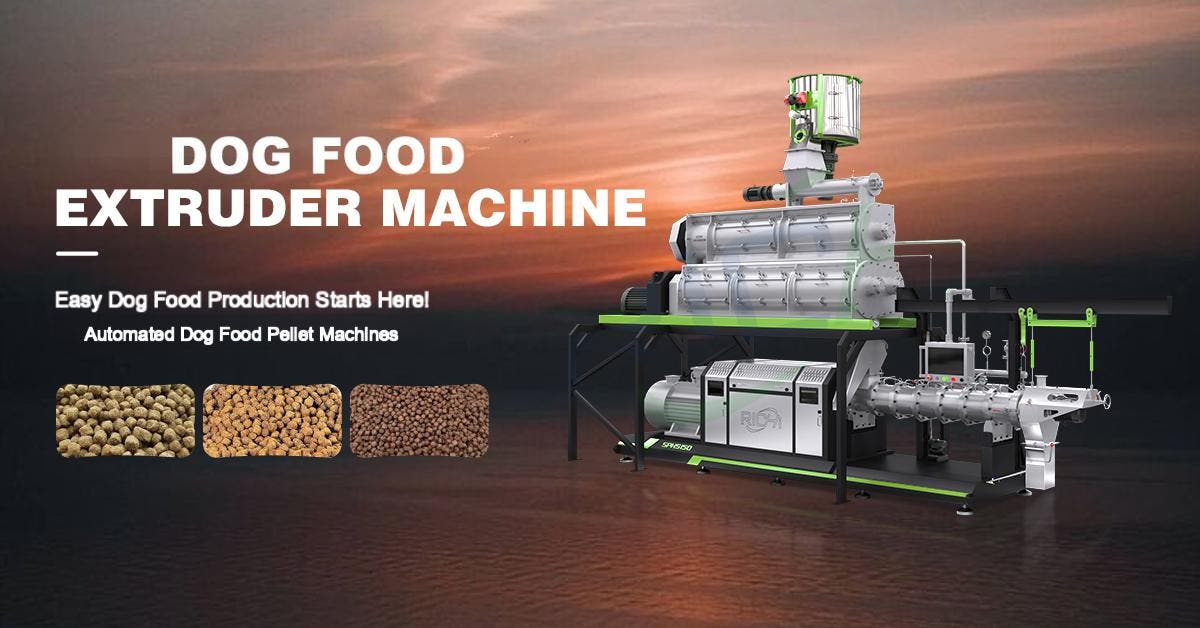
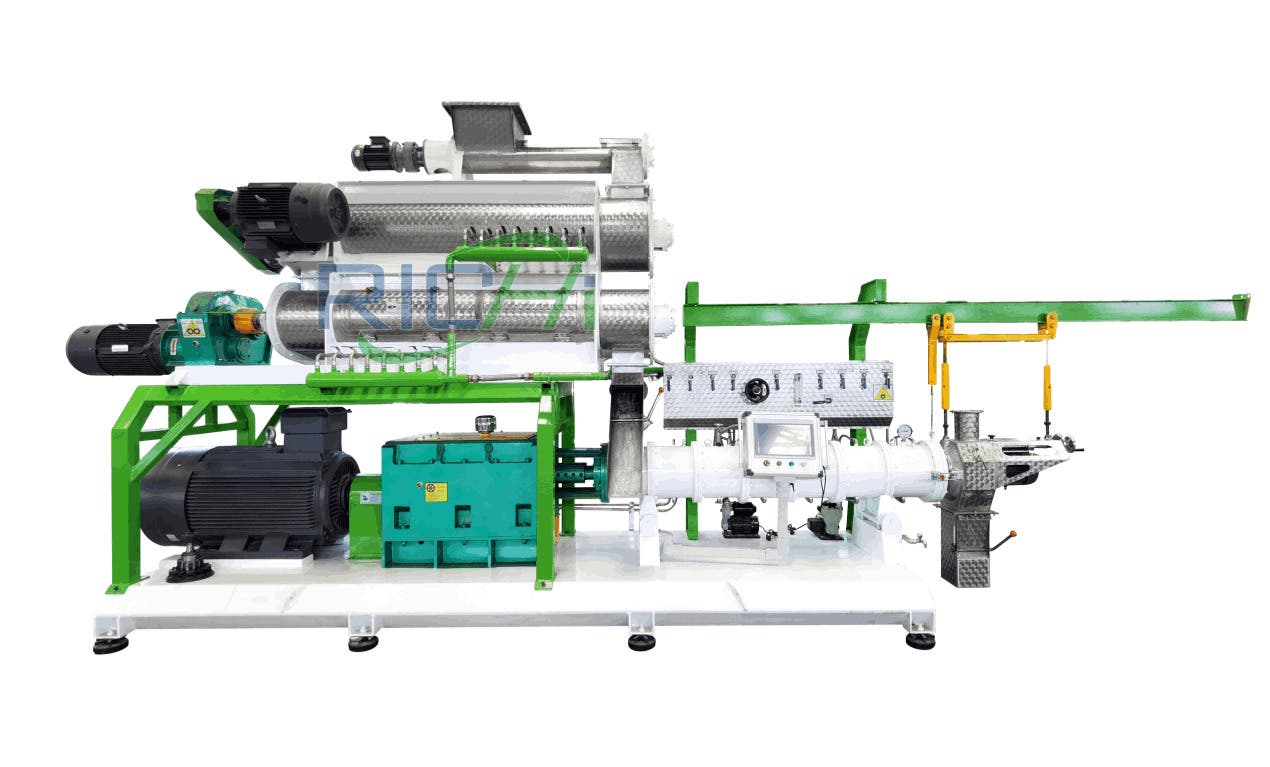
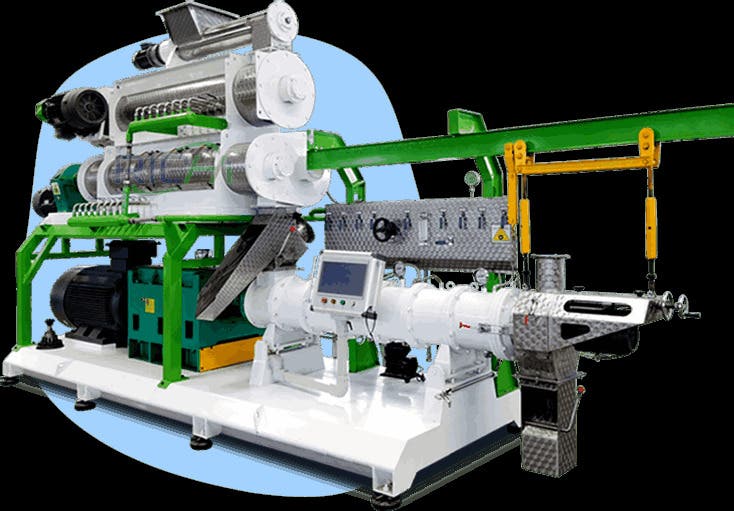
A twin screw extrusion machine for fish feed provides continuous mixing, cooking, and shaping in one processing system. Its flexible screw configuration also allows manufacturers to adjust processing conditions for different formulations and product requirements.
Why Use Twin-Screw Extrusion for Fish Feed?
Fish feed formulas can contain ingredients with different moisture levels, particle sizes, and processing characteristics. A twin-screw extruder can handle these ingredients while providing controlled mixing and shearing inside the extrusion chamber.
The screws continuously move and mix the material as it passes through the machine. Depending on the formulation and operating conditions, heat, moisture, and mechanical energy can help transform the feed mixture into a uniform extruded product.
This makes twin-screw technology useful when a feed manufacturer needs to produce different recipes or pellet specifications on the same production system.
From Raw Ingredients to Extruded Feed
Before extrusion, the ingredients normally go through several preparation stages.
Grinding reduces ingredients to a suitable particle size, while batching and mixing create a consistent feed formula. Water or steam can then be added during conditioning or extrusion according to the processing requirements.
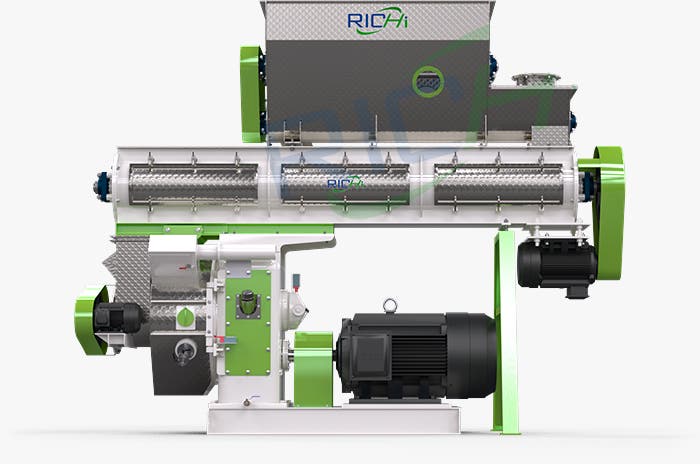
The prepared mixture enters the extruder at a controlled rate. Inside the machine, the twin screws transport, mix, and compress the material before it reaches the die.
The die determines the basic shape and diameter of the extruded feed. Different die openings can be used when the manufacturer needs to produce feed for different fish sizes.
Controlling Floating and Sinking Characteristics
One of the important advantages of extrusion is the ability to produce different types of aquatic feed.
By adjusting formulation, moisture, temperature, screw configuration, pressure, and die conditions, manufacturers can influence the density and structure of the finished pellets.
Floating feed generally requires a more expanded structure, while sinking products require different processing conditions to achieve the desired density.
A 5-6T/H floating fish feed extruder machine can therefore be configured around the specific product requirements rather than using one fixed processing condition for every formula.
The exact operating parameters should be established through material testing and production trials because different recipes respond differently during extrusion.
What Happens After Extrusion?
Fresh extruded feed usually contains considerable moisture and heat. Depending on the product, it may need to pass through a dryer to reduce moisture to a suitable storage level.
Cooling follows drying and allows the finished feed to reach a more stable temperature before screening and packaging.
Some products may also require oil or other nutritional coatings after drying. The final processing arrangement depends on the feed formula and the intended application.
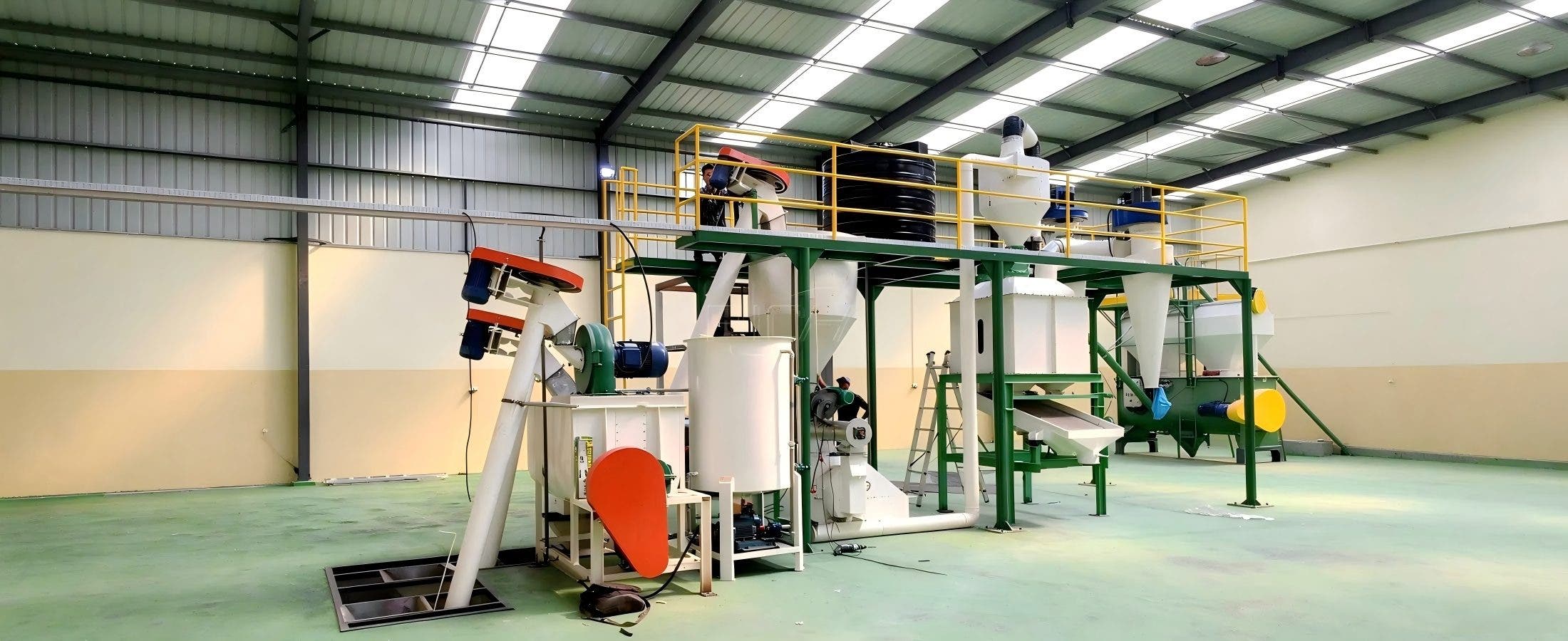
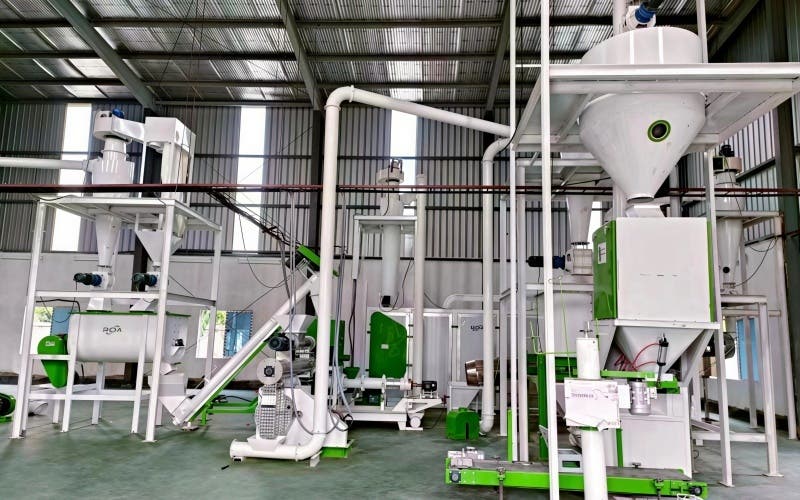
A complete production system can connect grinding, mixing, extrusion, drying, cooling, screening, coating, and packing into a continuous process.
Choosing the Right Extrusion Configuration
The extruder should match the required production capacity and feed specifications.
For example, small fish feed operations may require only several hundred kilograms per hour, while commercial manufacturers can need several tons per hour. The screw diameter, motor power, feeding system, die configuration, and downstream equipment should all be selected according to the target output.
The required pellet diameter also matters. Small fish and juvenile species generally require smaller feed particles, while larger fish can use larger pellets.
Manufacturers should therefore define the target species, feed size, formula, production capacity, and floating or sinking requirements before selecting the machine.
Building a Complete Fish Feed Production System
The extruder is only one part of the production process. A commercial project may also require grinders, mixers, conveyors, steam or water systems, dryers, coolers, screens, coating equipment, and packing machines.
When these components are properly matched, the production line can maintain a more stable material flow and reduce unnecessary manual handling.
A suitable pellet production linecan also be designed with different levels of automation, depending on production capacity and labor requirements.
For businesses planning a new fish feed project, the equipment configuration should be based on the actual formula, capacity, pellet specifications, and local operating conditions rather than machine capacity alone.