Introduction
A poultry feed manufacturing business can be a promising opportunity for entrepreneurs, farmers, and agricultural investors. With increasing demand for poultry meat and eggs, producing quality feed for local farms can create a stable business opportunity. A small poultry feed mill is an attractive option for investors who want to enter the feed industry with a manageable initial investment and gradually expand production as demand grows.
However, building a successful feed mill requires careful planning, suitable equipment, reliable raw materials, and effective quality control. Understanding these factors before investing can help reduce operating costs and improve long-term profitability.
(click here:pelletisingmachine.com/small-scale-poultry-feed-mill/)
1. Determine Your Production Requirements
The first step is to identify your target customers and estimate their feed consumption. Will you produce feed for broilers, laying hens, chicks, or multiple poultry categories? Different products may require different formulations, particle sizes, and processing methods.
You should also estimate daily output, operating hours, and future production needs. Selecting equipment based on realistic demand helps avoid unnecessary investment in oversized machinery while ensuring sufficient capacity for your business.
2. Choose the Right Feed Production Process
The production process depends on the finished feed products you intend to manufacture.
Mash feed production generally involves raw material cleaning, grinding, batching, mixing, and packaging. It requires fewer processing stages and may be suitable for businesses with limited investment budgets.
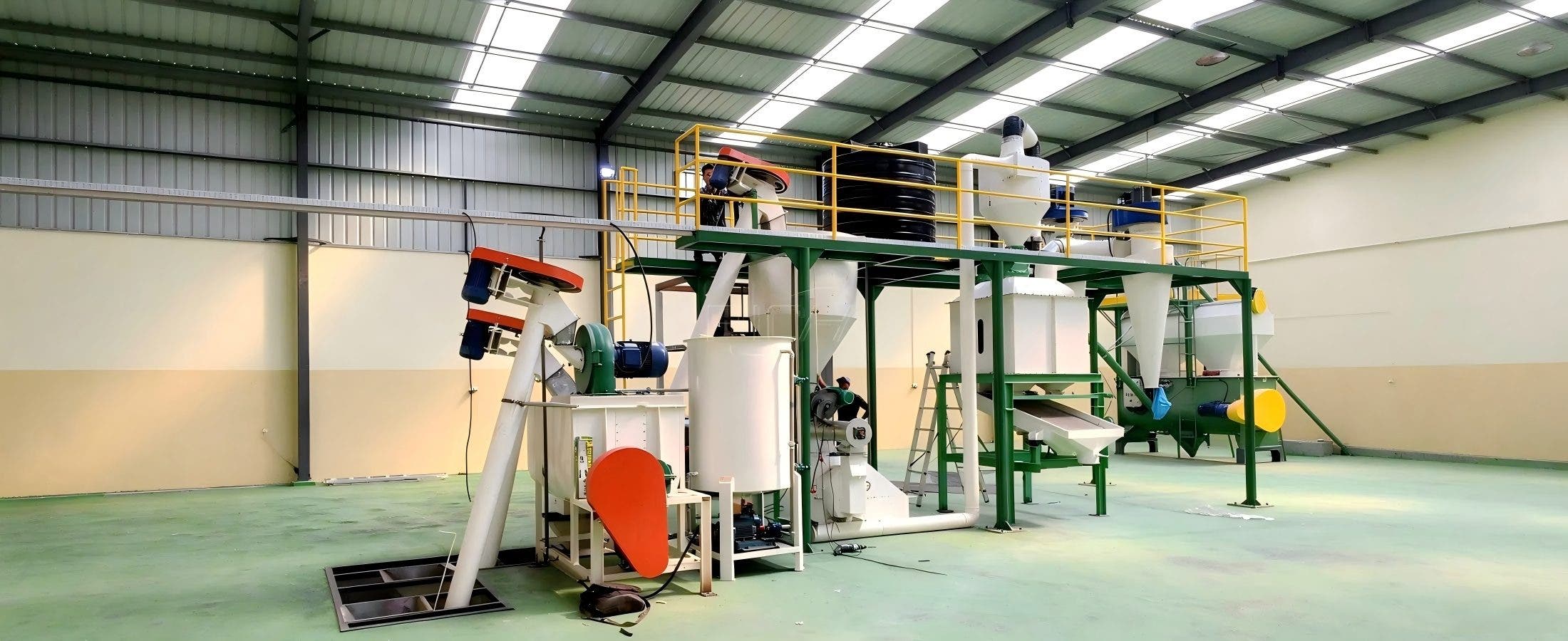
Pellet feed production requires additional equipment to compress mixed ingredients into pellets. The typical process includes cleaning, grinding, batching, mixing, conditioning, pelleting, cooling, screening, and packaging.
If you plan to manufacture feed for young poultry, a crumbler may also be required to produce smaller feed particles.
The best process should match local customer preferences, nutritional requirements, and your available budget.
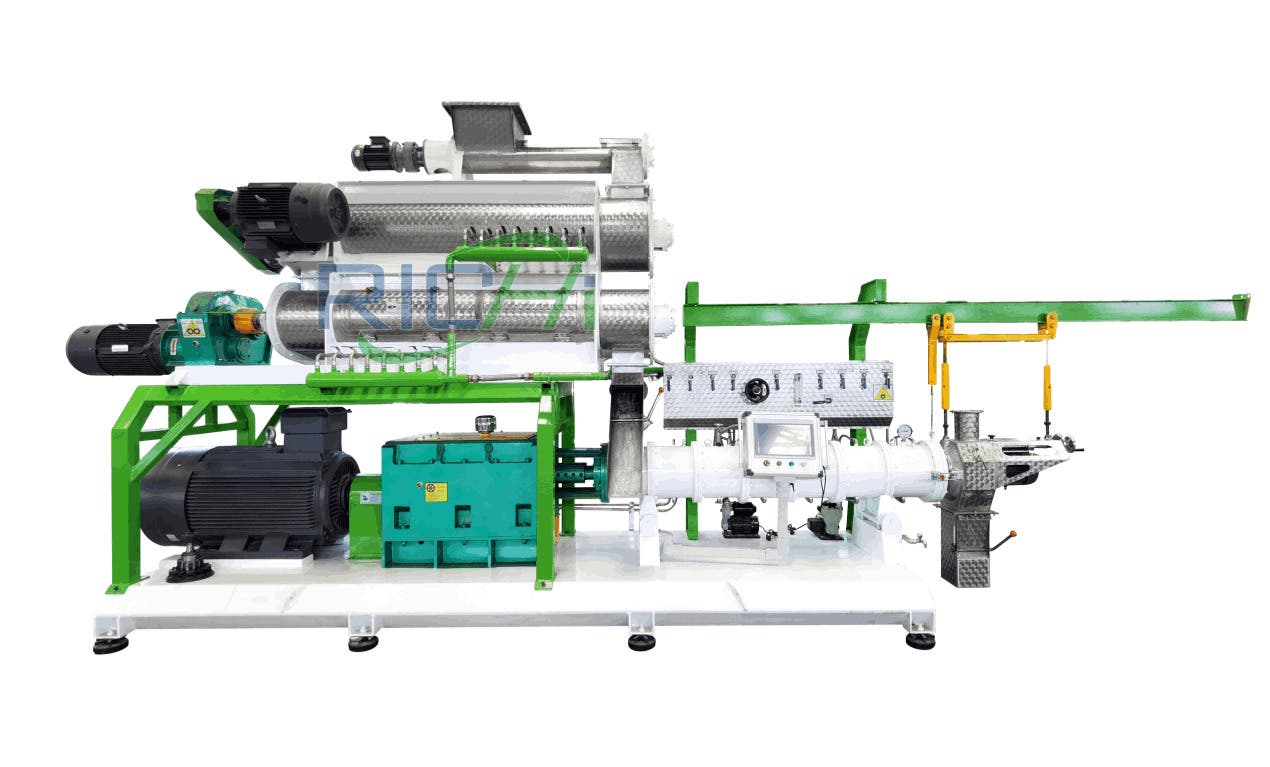
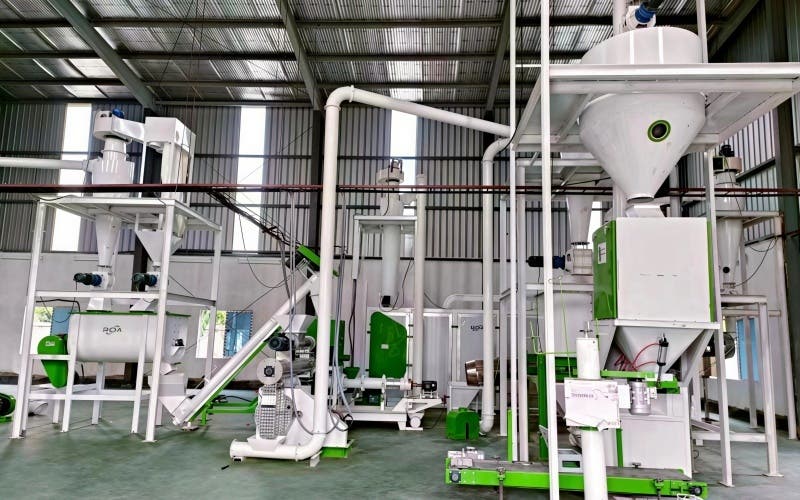
3. Essential Equipment for a Small Poultry Feed Mill
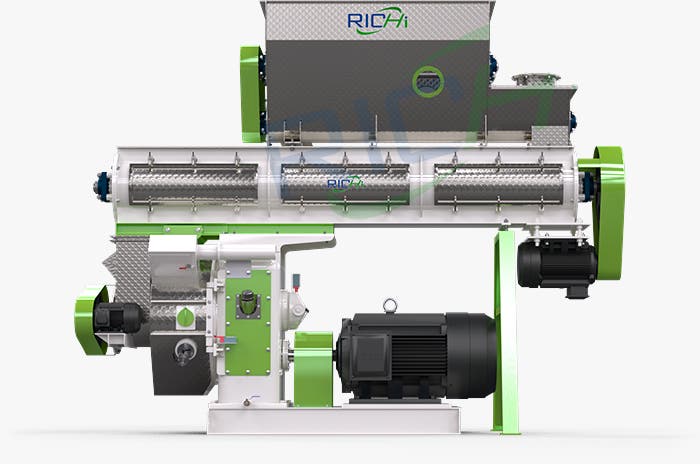
A practical equipment configuration may include the following machines:
- Hammer mill: Grinds corn, wheat, and other suitable ingredients into the required particle size.
- Feed mixer: Distributes ingredients evenly to improve nutritional consistency.
- Batching system: Measures ingredients according to the feed formulation.
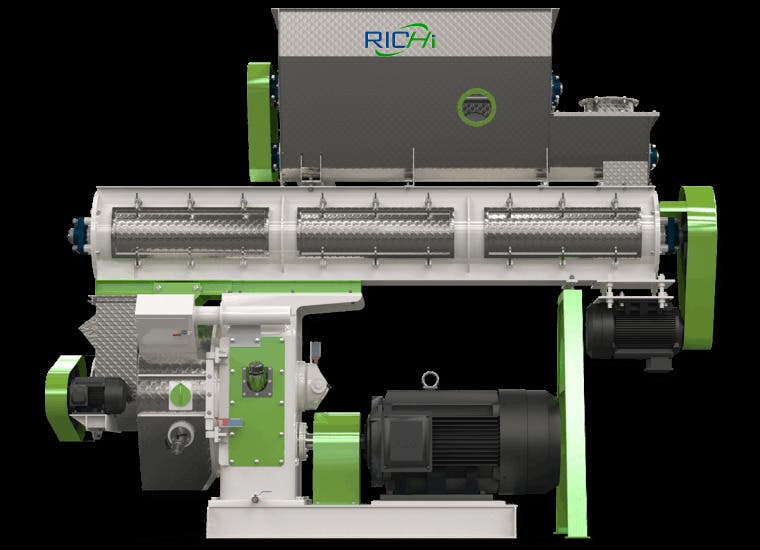
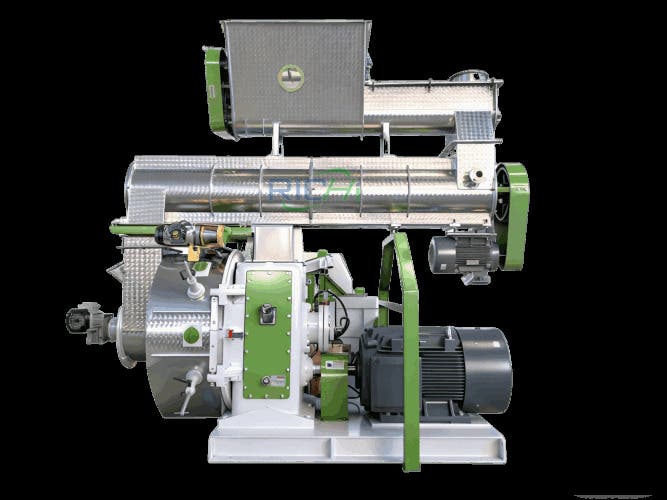
- Poultry feed pellet mill: Compresses conditioned material into pellets of the required diameter.
- Pellet cooler: Reduces pellet temperature and moisture before storage.
- Vibrating screen: Separates fines and helps maintain consistent product quality.
- Packaging machine: Weighs and packs finished feed for distribution.
Not every factory needs all these machines. A mash feed plant, for example, may not require a pellet mill or cooler. Equipment selection should be based on the production process and expected output.
4. Control Investment and Operating Costs
The total investment depends on equipment capacity, automation level, factory construction, material handling systems, installation, and transportation. Investors should also budget for raw materials, labor, electricity, packaging, spare parts, and other working capital requirements.
To control costs, compare complete equipment configurations rather than focusing only on the price of the main machine. A low initial purchase price may not represent the best value if the equipment has limited capacity, high maintenance requirements, or inadequate technical support.
Automation can also improve efficiency. For example, automatic batching can reduce manual weighing and help maintain consistent ingredient proportions. Small businesses can begin with essential automation and upgrade additional systems as production demand increases.
6. Work With an Experienced Equipment Supplier
Building a feed factory involves more than purchasing individual machines. Equipment capacity, material flow, electrical systems, and production controls must work together.
RICHI Machinery provides poultry feed processing machinery and customized production line solutions for different investment and production requirements. Depending on the project scope, support can include process design, equipment supply, installation and commissioning, operator training, and after-sales technical assistance.
An integrated solution can help investors select compatible equipment, plan the factory layout, and prepare for future expansion.