Albany, NY|Local Classified|For Sale|

How Goat Farms Can Improve Feed Efficiency With Pellet Production
Goat farming is becoming increasingly commercialized in many regions. As herd sizes grow, farmers need more efficient ways to prepare balanced feed while controlling raw material and labor costs.
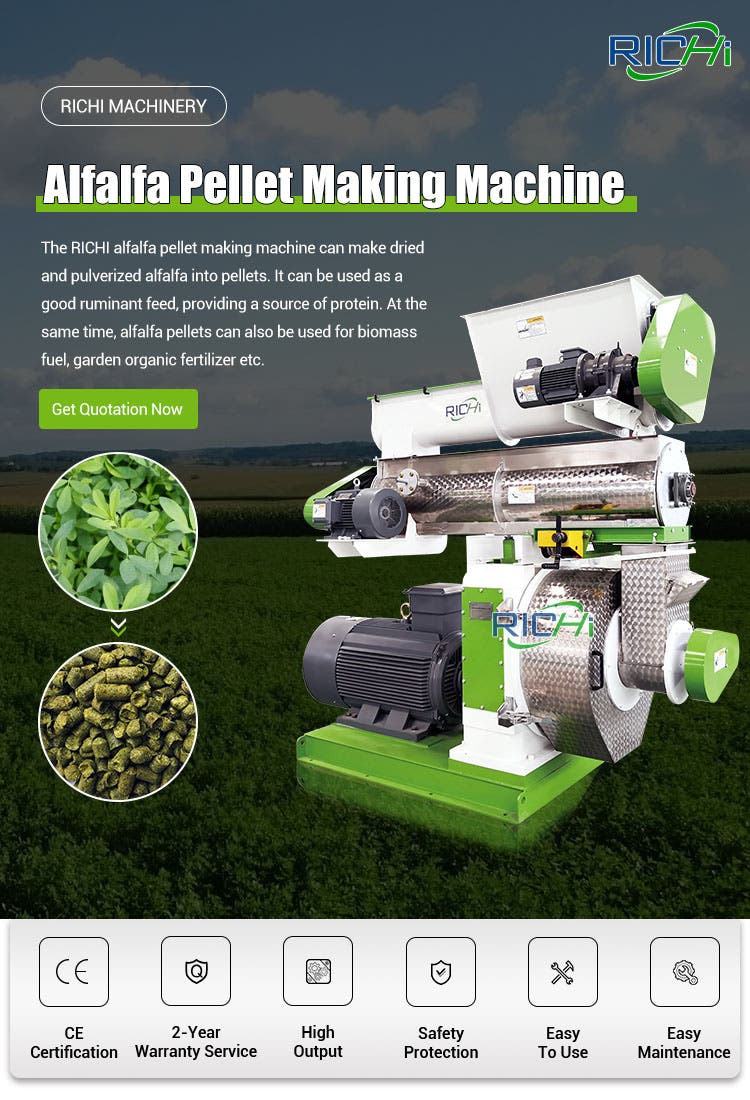
Pelletized feed can be a practical solution. Grass, alfalfa, hay, grains, bran, soybean meal, and mineral ingredients can be processed into compact pellets that are easier to store, transport, and distribute.
For small and medium-sized farms, however, the main challenge is choosing equipment that matches the actual feeding requirements rather than simply purchasing the largest available machine.
Why Are Goat Feed Pellets Useful?
Goats can consume a wide range of forage and agricultural materials. However, feeding several ingredients separately can make ration management more difficult.
Pelletizing allows different ingredients to be mixed according to a specific formula and compressed into a relatively uniform product.
This can provide several practical benefits.
Pellets are easier to handle than loose mixtures and can reduce ingredient separation during transportation. They can also help farmers make better use of locally available agricultural materials.
For growing goats, dairy goats, and breeding animals, different formulations can be prepared according to their nutritional requirements.
What Raw Materials Can Be Pelletized?
A goat feed formula may contain:
- Alfalfa
- Grass
- Hay
- Corn
- Wheat
- Barley
- Wheat bran
- Rice bran
- Soybean meal
- Rapeseed meal
- Mineral additives
- Vitamin premixes
The exact formula depends on the type and growth stage of the goats.
Forage materials such as grass and hay may require cutting and grinding before pelletizing. Grains generally require crushing to achieve a suitable particle size.
Moisture is also important. Material that is too wet can create feeding and pelletizing problems, while excessively dry material may have poor binding characteristics.
How Does the Production Process Work?
A basic goat feed pellet production process usually includes several stages.
Grinding
Coarse materials are first reduced to a suitable particle size.
A hammer mill can process grains, grass, hay, and other agricultural materials after appropriate pretreatment.
Mixing
The ground ingredients are combined according to the feed formula.
Uniform mixing is important because each pellet should contain a reasonably consistent proportion of the nutritional ingredients.
Pelletizing
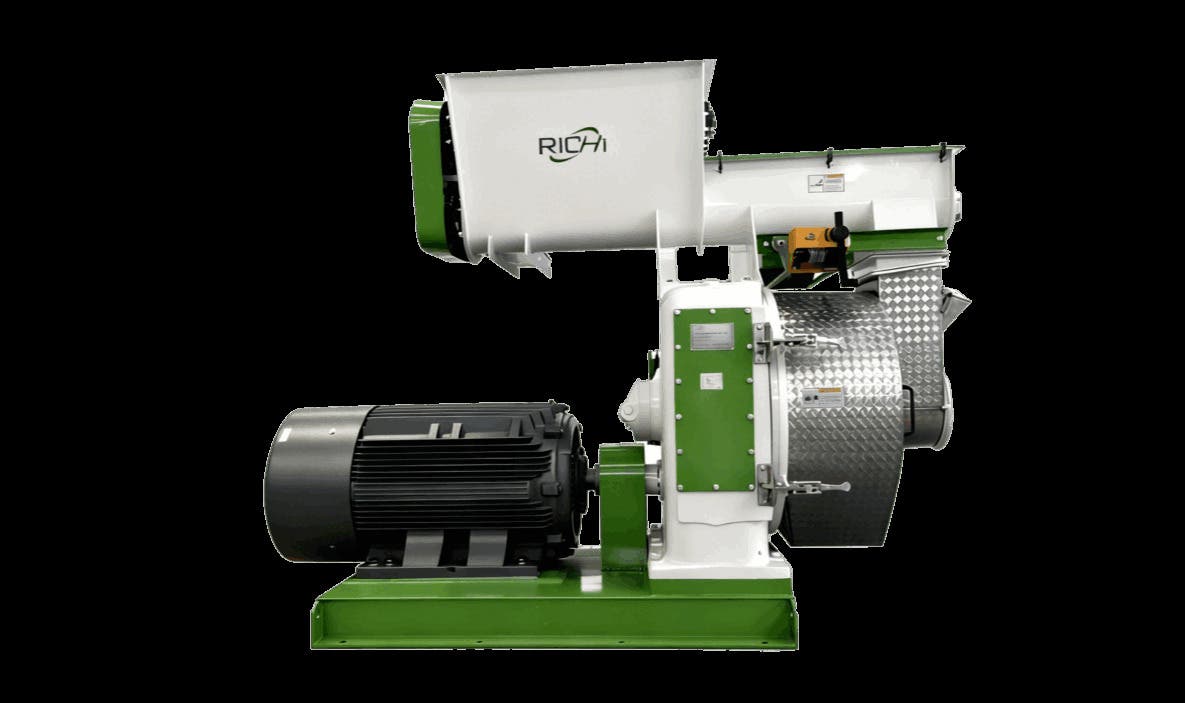
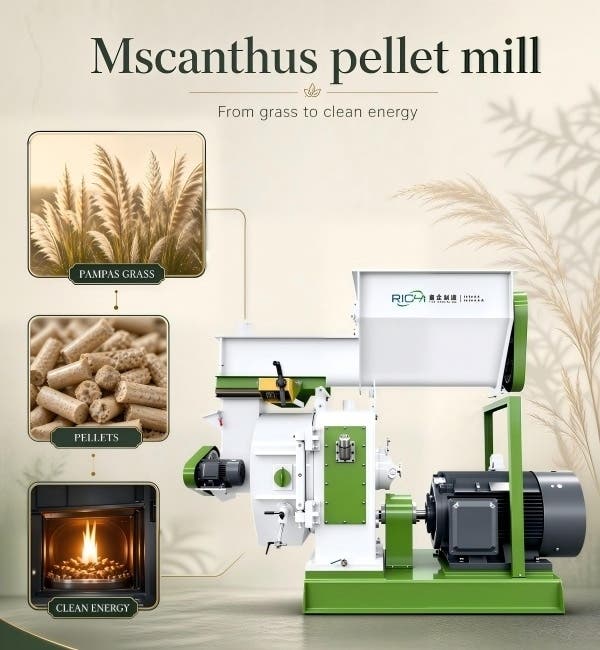
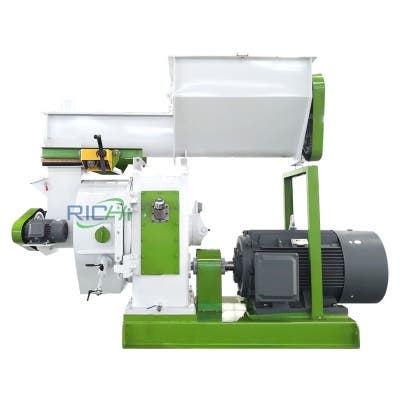
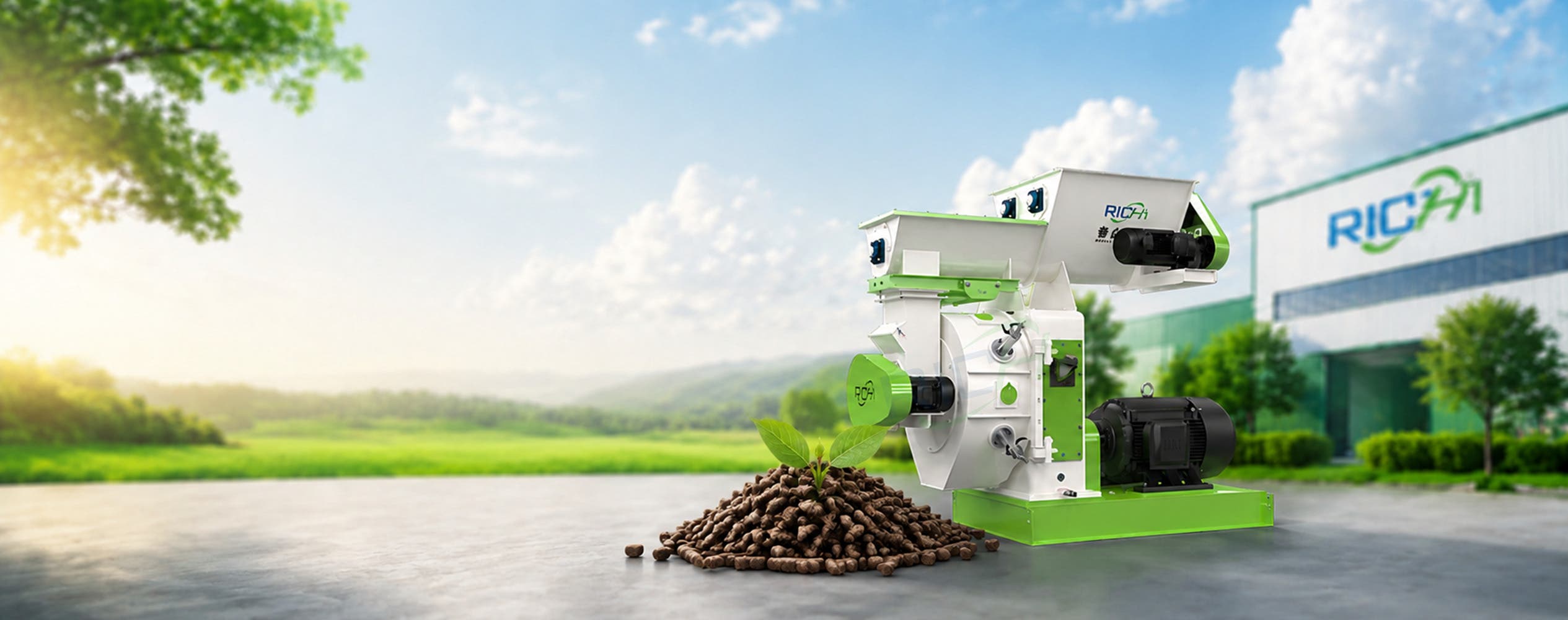
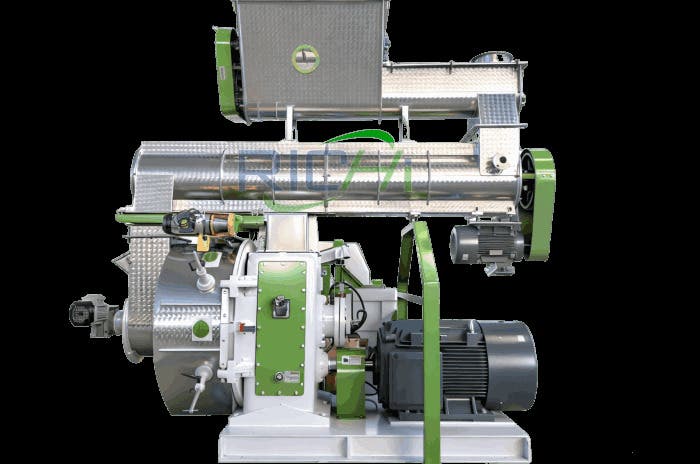
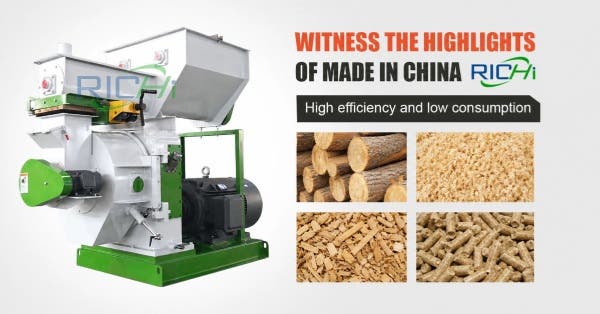
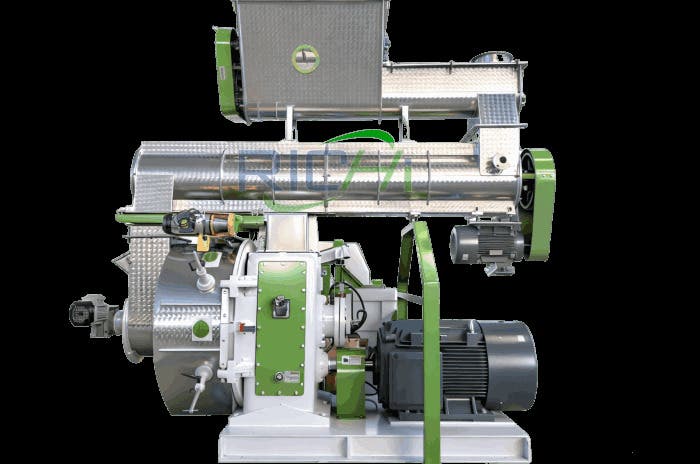
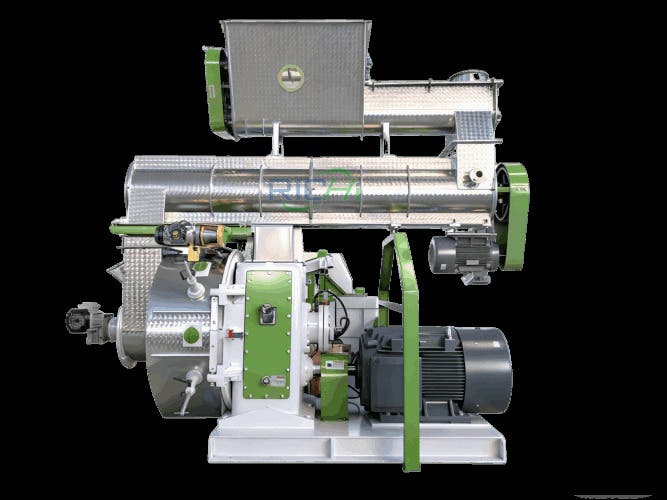
The prepared mixture enters the pellet mill, where pressure forces the material through die holes.
The die determines the basic pellet diameter, while the cutting system controls pellet length.
Cooling and Screening
Fresh pellets are warm after compression and should be cooled before storage.
Screening can remove fines and oversized particles, improving the consistency of the finished product.
How Should Farmers Choose the Machine?
When selecting a goat feed pellet making machine, farmers should first determine their daily feed requirement.
A small farm with several hundred goats may only require a compact system, while a commercial livestock operation may need several tons per hour.
The main factors to evaluate include:
- Required capacity
- Main raw materials
- Raw material moisture
- Pellet diameter
- Available electricity
- Working hours
- Desired automation
- Future expansion
The equipment should also be compatible with the actual forage materials used by the farm.
A system processing mostly corn and soybean meal will have different preparation requirements from one processing large quantities of grass and hay.
What About Production Cost?
The total cost depends on the equipment configuration.
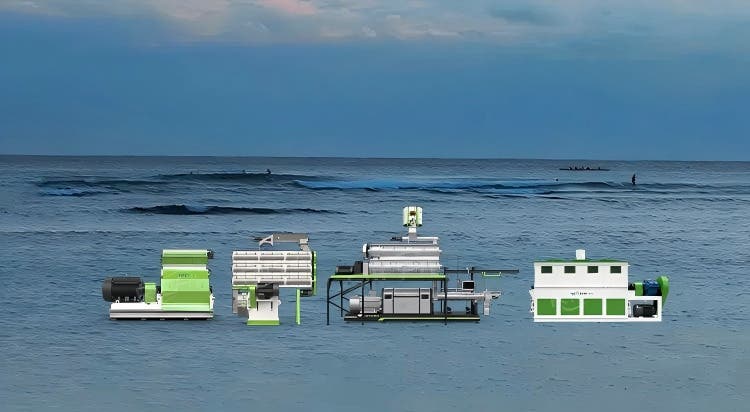
A small setup may include a crusher, mixer, pellet mill, conveyor, and cooling equipment.
A larger production line can include automatic weighing, storage bins, conditioning, screening, packaging, and centralized control.
When comparing quotations, buyers should check whether the quoted price includes auxiliary equipment.
The cheapest pellet mill is not necessarily the most economical solution if it requires frequent maintenance or cannot provide stable production.
Long-term operating costs such as electricity, spare parts, die replacement, roller maintenance, and labor should also be considered.
Can Other Livestock Feed Be Produced?
Yes. Similar pelletizing technology can be used for other livestock feed applications.
For example, farms producing sheep feed may use alfalfa, grass, hay, grains, bran, and protein meals.
A sheep feed pellet machine 2 ton per hour can be selected when the required production capacity is around this level, although the actual output depends on the formulation and raw material characteristics.
This demonstrates why machine capacity should always be evaluated together with the intended material.