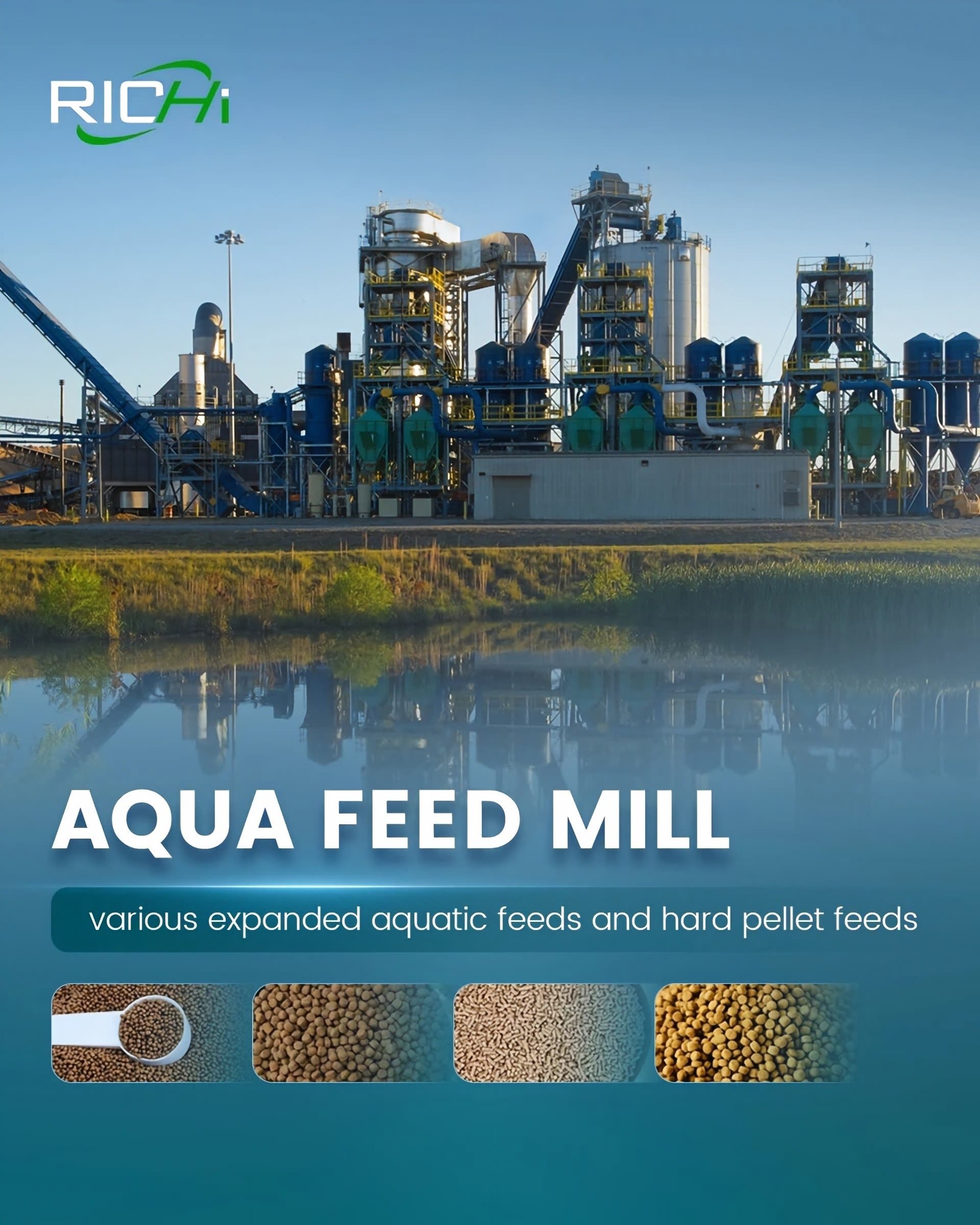
The rapid development of global aquaculture has created a growing demand for nutritious, stable, and cost-effective fish feed. As fish farming becomes more intensive, farmers are paying increasing attention to feed quality because feed directly influences fish growth, feed conversion, production costs, and water quality.
Among different aquatic feed products, floating fish feed has become especially popular. Unlike sinking pellets, floating pellets remain on the water surface for a certain period, allowing farmers to observe feeding behavior and adjust the feeding quantity. This can help reduce overfeeding and make daily farm management easier.
However, producing high-quality floating fish feed requires specialized processing technology. Raw materials need to be cleaned, ground, batched, mixed, conditioned, and extruded under carefully controlled conditions. The freshly extruded pellets must then be dried, cooled, coated if necessary, screened, and packaged.
A professionally designed floating fish feed mill plant can integrate all these processes into one efficient production system. Depending on the required capacity and product specifications, the plant can be configured for small farms, commercial feed manufacturers, or large-scale aquaculture feed factories.
This guide explains the complete manufacturing process, major equipment, pellet quality requirements, and important considerations for establishing a floating fish feed production facility.
How to Control Floating Performance
Floating performance depends on multiple factors.
Moisture
Moisture influences extrusion stability and expansion.
Insufficient moisture may make processing difficult, while excessive moisture can reduce expansion.
Temperature
Temperature influences starch gelatinization and material viscosity.
Stable temperature control is necessary for consistent pellet quality.
Pressure
Pressure affects material transformation inside the extrusion chamber.
Consistent pressure helps produce uniform pellets.
Screw Speed
Screw speed influences residence time, shear force, throughput, and pellet structure.
Die Design
The die determines pellet diameter and affects the extrusion conditions.
Formulation
The composition of raw materials, especially starch-containing ingredients, strongly influences pellet expansion.
All of these factors must be considered together.
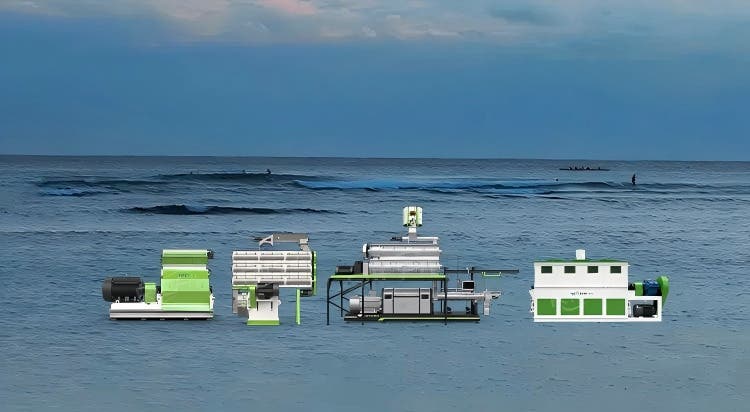
Equipment Configuration of a Floating Fish Feed Mill Plant
A complete floating fish feed mill plant may contain the following major equipment:
- Raw material receiving system
- Storage silos or bins
- Cleaning equipment
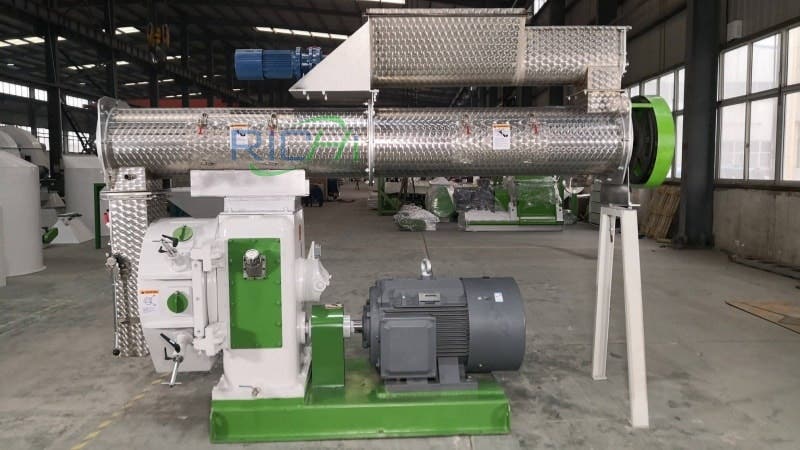
- Hammer mill
- Batching system
- Feed mixer
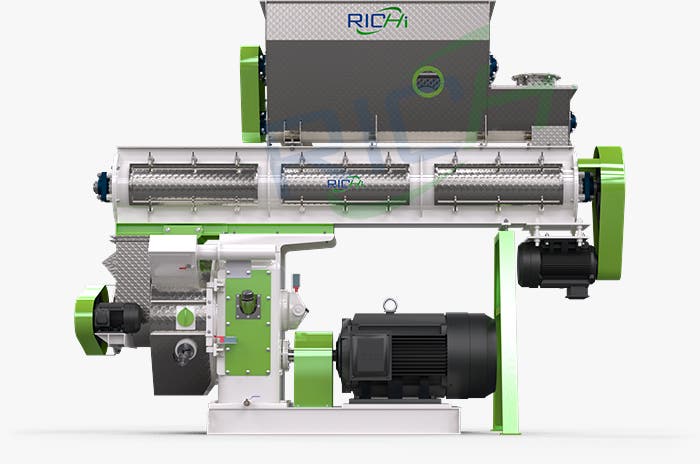
- Conditioner
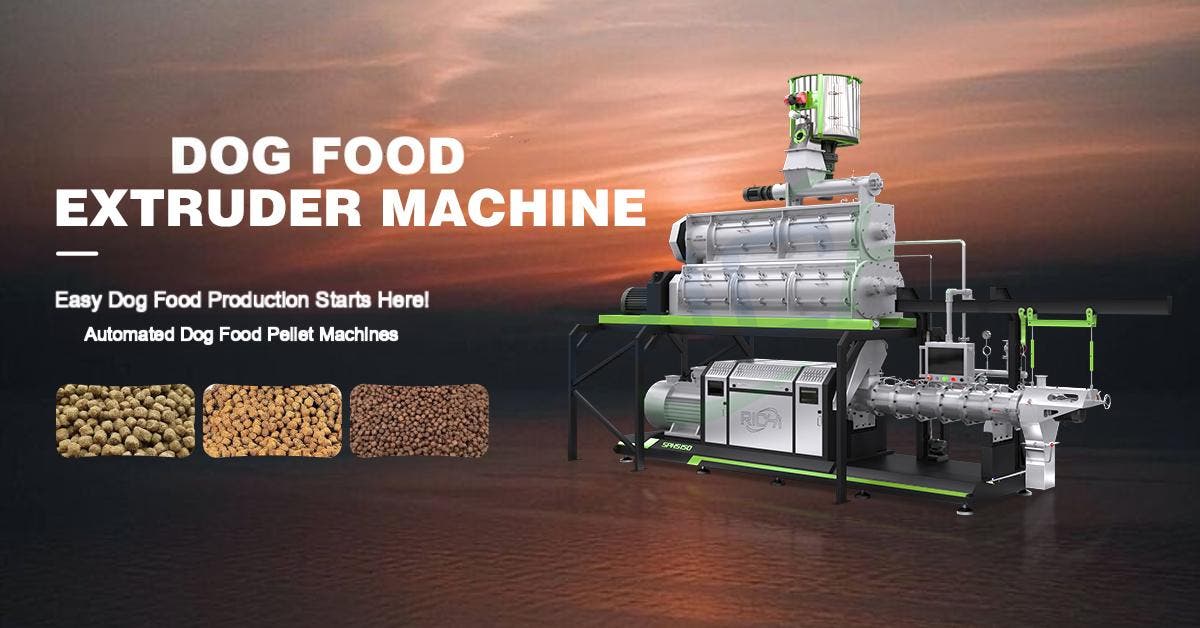
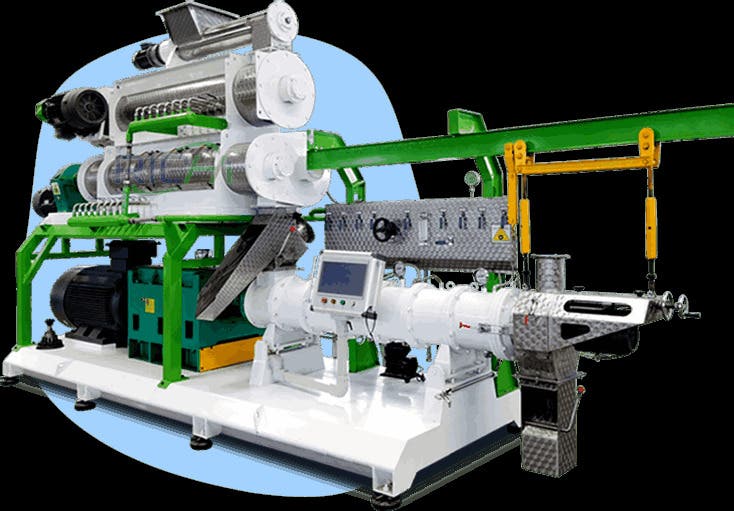
- Fish feed extruder
- Pellet cutter
- Dryer
- Cooler
- Oil coating machine
- Vibrating screen
- Automatic packaging machine
- Conveying and elevator systems
- Electrical control system
The exact configuration depends on the required capacity, raw material characteristics, feed formula, pellet size, automation level, and factory layout.
pelletisingmachine.com/floating-fish-feed-plant/
Conclusion
A professionally designed floating fish feed pellet plant integrates these processes into a coordinated production system. By selecting suitable equipment and optimizing every processing stage, manufacturers can produce floating feed with consistent pellet size, controlled density, good water stability, and reliable nutritional quality.
For investors, establishing a floating fish feed plant is not simply a matter of purchasing an extruder. Production capacity, raw materials, feed formulas, factory layout, drying requirements, automation, energy consumption, maintenance, and future expansion all need to be considered together.
With appropriate process design, reliable equipment, professional installation, and effective quality control, a modern floating fish feed production facility can provide a strong foundation for serving the growing global aquaculture market.